
Interview with Jean-François Rial,
CEO of Voyageurs du Monde
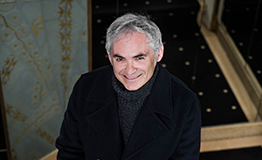
Should we continue to travel? How do you define a beautiful journey? At what cost and by what means should we travel? Jean-François Rial answers all (or almost all) the questions you might have before setting off.
Voyageurs du Monde presents itself as a socially responsible company, and you describe yourself as a strong environmental advocate: what are your arguments, given the planet’s climate and ecological situation, for continuing to have your clients travel by plane?
Should we continue to travel in the current climate context? This question is increasingly present in public debate, and that is a good thing. My answer is yes, without any ambiguity, but it deserves some clarification. Considering banning air travel or restricting its use through a social credit system, as is already the case in China, would be a serious denial of democracy. On the other hand, doing nothing about the CO2 emissions from air transport as a whole, on the grounds that other activities are a far worse factor in climate change, is just as absurd. I support a solutions-based approach to environmental issues.
Do these solutions exist for air transport?
Technically, yes. The shift toward synthetic fuels is gaining ground – just look at what Air France is already offering with its voluntary additional contribution. I am not talking here about hydrogen, a complex hypothesis that would only work for medium-haul flights and will not be operational within the timeframes recommended for the ecological transition by the Intergovernmental Panel of Climate Change Experts (IPCC): namely, reducing emissions by 50% by 2030 – in seven years – and achieving neutrality by 2050. Nor is it about biofuels made from agricultural waste, the volumes of which are currently insufficient to hope to replace kerosene – unless, perhaps, the recycling of seaweed is included; I’ll leave it to the specialists to weigh in on that point. The synthetic fuel I’m talking about is a blend of green hydrogen and CO₂, and the key advantage is that it can already be used across today’s global aircraft fleet, with no modifications needed.
As a bespoke travel agency, what exactly do you suggest?
We didn’t wait for the alarm bells to ring before taking action, and today our efforts complement those of airlines, hotels, and car rental companies around the world. Our commitment is played out on two fronts. First of all, we are exploring all available means to reduce our travellers’ carbon footprint. A few examples: we systematically favour train travel whenever it is a realistic alternative to flying – typically within Europe. For air travel, we opt for direct flights, as well as the most fuel-efficient aircraft. We’ve now developed a calculation tool that allows us to factor this essential criterion into the selection of the flights we offer. In addition to the classic trio of price, schedule and flight duration used to compare different routes to a destination, Voyageurs du Monde travel specialists can now also compare the volume of emissions generated by each journey. The difference in emissions generated can reach 50% on what appears to be an identical flight. This is far from insignificant. For ground travel, we offer electric vehicles whenever possible. When it comes to accommodation, we’ve always favoured small-scale hotels that are environmentally and socially responsible. At the Satyagraha House, our Voyageurs House in Johannesburg, 50% of our electricity consumption is supplied by a solar installation. Finally, our two boats operating in Egypt – the Flâneuse du Nil and the Steam Ship Sudan – have undergone significant technological upgrades aimed at reducing their energy consumption. The Flâneuse du Nil is equipped with around 50 solar panels, which now provide 80% of the energy needed for the boat to run smoothly, including air conditioning, hot water and lighting. In addition, a set of recycled electric vehicle batteries – an ingenious system developed by the French start-up Carwatt – continuously optimises electricity consumption, thus allowing for a reduction of CO2 emissions by more than 270 tonnes per year. On the Steam Ship Sudan, solar panels power a twin-screw propeller. The result: this century-old ship has halved its CO₂ emissions. A major overhaul of our energy system on this boat is also planned for summer 2024. It will enable carbon emissions to be halved once again.
What is the second area of action you were referring to?
The aim is to help offset all carbon emissions associated with our travel through reforestation projects. That’s a goal we’ve now achieved 100%, and one we continue to improve on. Considered insufficient by some, tree planting remains one of the most effective solutions while we wait for the decarbonisation of the air transport sector, which, once again, cannot be achieved within the timeframe set by the Paris Agreement. One important clarification: for this absorption to be genuine and meaningful, the projects must be additional and long-lasting. They shouldn’t have any purpose other than reforestation, and the programme aims to run for at least thirty to forty years, if not longer. These plantations mainly concern mangroves, an ecosystem with many benefits: it helps absorb carbon, desalinates, increases biodiversity, and indirectly helps revive local fishing. These projects therefore have a considerable ecological, social and societal impact. They are monitored by independent audits, in which we participate, and are applied in South America, India and Indonesia through our Insolites Bâtisseurs Philippe Romero Foundation. We hope to influence other operators in the sector, and also that this strategy of large-scale tree planting will be extended to sectors beyond air transport, as the global IPCC targets for limiting climate warming – even by two degrees – will not be met. We therefore need to continue and accelerate our reductions in CO₂ emissions. I therefore suggest considering the planting of 300 billion trees over ten years across the world. This would allow us to “buy time” and at least meet the two-degree target, if not the 1.5-degree goal.
What other initiatives are undertaken by the Insolites Bâtisseurs Philippe Romero Foundation?
It is involved at various humanitarian, societal and environmental levels. Voyageurs du Monde now allocates nearly €2 million to causes that are close to our hearts: aid for migrants (with SOS Méditerranée and the Refettorio in Paris, among others), education, support for countries in the Global South, and the fight against global warming.
You regularly mention the services of Voyageurs du Monde. What makes them stand out?
These services are at the heart of our business. Our job is no longer to assemble services; we are a high-end travel service and advisory company. The real added value of our services, together with personalised advice based on highly detailed traveller profiles by our experts, allows us to create journeys off the beaten path. For example: our concierge services at each destination, with their direct connection to the local area, are able to resolve any situation and at the same time give our travellers tips to really experience a country. Add to this, from the outset, the expertise of a travel specialist for Colombia, Montenegro, regions such as Swedish Dalarna or Argentina’s Nordeste, who can organise experiences and encounters tailored to your tastes… The risk of missing out on your journey becomes almost negligible. Among the other services we are constantly developing, I could mention our “Like a local” experiences: expatriates who accompany our travellers behind the scenes of their city, sharing their recommendations and offering cultural insights from an insider’s perspective – something only a local can provide. Finally, we offer a wide range of practical services to make life easier for our travellers, including 24/7 assistance, airport lounge access, fast-track security, early check-in and late check-out, among others. We also provide useful mobile technology tools: an app that brings together all the details of your trip and geolocates them, with access to exclusive content such as a curated selection of restaurants; a portable Wi-Fi device (outside Europe) so you can stay connected wherever you are… This list of services, which is not exhaustive, is, to my knowledge, unmatched elsewhere or at such a high level of quality.
These services likely have a cost that is reflected in the final price of your trips, making them more expensive than those offered by your competitors, is that not true?
Our final profit margin for an entire trip is around 3%. This simply means that the fixed price charged for all these services is very close to their cost price. Once again, the assessment regarding our colleagues is incorrect: for the same level of service, our prices are very similar, give or take a few percentage points. I’m not talking about tour operators who sell holidays. You have to compare what is comparable. The same applies to the analysis that booking directly with local providers through platforms is less expensive. Again, it is important to carefully consider this choice. These local booking agents do not always have the same level of expertise as an specialist accustomed to creating journeys. Moreover, these companies do not always adhere to the ethical charters of sustainable tourism that guarantee respect for local populations and the environment. In the end, this option proves similar in terms of budget, but different in terms of services and spirit. During the Covid pandemic, we saw just how valuable our various services were in reassuring, assisting and repatriating our travellers, especially when it came to organising and following-up on hospitalisations.
Voyageurs du Monde is often associated with high-end travel at high prices. How do you interpret this remark?
I notice that this is one of the main clichés we encounter. We are indeed high-end in the quality of our services, but not in the level of offerings, which our clients are entirely free to choose. Once again, we tailor the trip to suit each client’s budget. We work with several thousand hotels, guesthouses and bed & breakfasts, as well as with all scheduled airlines, and also with low-cost carriers when they serve the destination. Certainly, for a small portion of our clients, the cost of a trip can reach tens of thousands of euro, but on the other hand, 25% of our travellers spend less than €3,000 per person.
Doesn’t the traveller have everything to gain by creating their own trip on the internet, tailored exactly to their needs, without any intermediaries and therefore at a much lower cost?
It is indeed a common idea that needs closer examination, as disintermediation has its limits. Another important factor to consider is “hidden costs”, those small amounts that are not immediately obvious when you check hotel prices directly, but which can significantly increase the overall budget. For example, breakfasts in some cases, local tourist taxes, insurance, etc. I am not talking about the commission charged by your bank for each payment (up to 5%). With us, everything is included – no surprises. In the end, the difference between our prices and buying directly represents a moderate difference. Thus, for a trip costing €2,500, this difference can be up to €300. Of course, the higher the price of the trip, the lower this rate. Another key factor to consider is the time required to create a tailor-made trip. Planning a ten-day long-haul trip and booking all the necessary services requires about fifty hours of work for a destination specialist – seventy-two hours for a novice! You will have visited around thirty websites (compared to four when working with a professional), made ten phone calls (compared to one), written about fifteen emails (compared to five), and made around ten separate payments, whereas with us, you only need to make a single, secure payment. But above all, you will have only purchased basic services, “commodities” as we call them in our field, without having access to any specialist tips on choosing the itinerary and accommodation that best suit the type of traveller you are.
Finally, our value is not always immediately apparent. Let me explain: it does not necessarily stand out because of the way the services are put together – which, nowadays, is accessible to almost everyone – but rather through the follow-up and attention we give to each traveller throughout the journey and even beyond. Being able to rely on our concierge service at your destination and our 24/7 assistance is a reassuring advantage, especially when travelling with children or seniors. Responsiveness, coordination and follow-up are not marketing arguments, but a proven reality experienced daily in the field. The travel insurance we offer is, in this respect, highly comprehensive. Less essential but always appreciated: the little customised touches we arrange on site for our travellers. Our value is ultimately the hidden part of the iceberg that represents our expertise.
The agencies, your various publications, and your entire universe all reflect an approach deeply focused on aesthetics. Why make this choice?
We proudly embrace our commitment to aesthetics, for an obvious reason. Our approach to travel is to bring you as close as possible to the true essence of a country, far removed from clichés. Plato said, “beauty is the splendour of truth”. Truth is the lifeblood of a beautiful journey, a journey woven from wonderful encounters, beautiful moments, and rare, precious emotions. Aesthetics is only one element of this delicate quest for beauty. Personally, I remain convinced that beauty is not subjective; it is universal, just like truth: everyone agrees on the beauty of a sunrise over the Nile, or when gazing at the Bagan pagodas in Myanmar. The aesthetic we cultivate, which is only the visible part of a beautiful journey, has nothing to do with high-end travel: its sole aim is to inspire emotion, as any journey ultimately should.
Doesn’t seeking beauty inevitably place you within the so-called “bobo” trend, a French shorthand for an urban, culturally engaged middle class?
We are not looking to follow a trend, which by definition is fleeting, but simply to travel off the beaten path, to be real, far from the trivial. That does not prevent one from being in tune with the times, especially when these come closer to what is genuine. If this trend is artificial, it will inevitably fall back into cliché. The search for meaning, meanwhile, is a long-term pursuit. It is, in fact, this quest for deeper truth that I experience when I wander through a country that has always been a part of me and inspired me to become a travel agent. Call it authenticity, rarity, spontaneity, encounter, intimacy – everyone chooses their own words, but these concepts are the opposite of what is described as “trendy”.
What are the key elements to keep in mind for a beautiful journey?
First, carefully consider all factors if you wish to compare realistically and effectively! Second, doing without intermediaries has a minimal impact on your budget but can have serious consequences for the quality of your journey – our services, in this respect, are a genuine guarantee of quality. Ultimately, the beauty of a journey lies in its ability to go off the beaten path, to take you into the reality of a country and its people. This is what Voyageurs du Monde works towards a little more each day.