
Reduced emissions, with 100% of the remainder absorbed
"Should we continue travelling in the current climate context?” This question is becoming ever more pressing. Banning air travel or restricting its use through a rating system seems both unrealistic and would be a profound denial of democracy. However, failing to take action on CO₂ emissions from air travel is unacceptable. Between these two extremes, there are ways to continue travelling in a more responsible manner. Here are the solutions that Voyageurs du Monde is exploring for you, day after day.
A Message
from Jean-François Rial
The efforts we began more than a decade ago are now shared by airlines, accommodation providers and our partners, helping to steer the industry towards ecological transition. Our approach is twofold: on the one hand, implementing all possible measures to reduce the carbon footprint of our business. On the other hand, we support certified reforestation projects with proven additional and long-term impact, enabling us to absorb the entirety of the CO₂ emissions generated by our journeys. While we wait for the decarbonisation of the airline industry, planting trees remains the best solution to buy time and limit global warming. I also suggest that we consider planting 300 billion trees worldwide over the next ten years.
Our commitment to reducing
our travellers’ CO₂ emissions
1 An exclusive calculation tool
We have developed a new tool for calculating flight options on a given route to help reduce the carbon footprint of our travellers. In addition to the classic trio of price, schedule and flight duration used to compare the different routes to a destination, Voyageurs du Monde travel specialists can now also compare the volume of emissions generated by each journey. This figure is calculated based on the flight plan, type of aircraft, cabin class, stopovers and the target load factor. On what appears to be the same flight route, the difference in emissions generated can be as much as 50%. Thanks to this tool, we finally have the ability to accurately assess the difference in emissions between two flight options. In this context, the aviation sector is making progress towards synthetic kerosene, particularly in Europe, under a proposed regulation requiring a minimum of 2% e-kerosene (produced from hydrogen and CO₂).
2 Prioritising train travel
When an obvious solution exists, your travel specialist will always suggest the train. Departing from your home to anywhere in Europe, of course, but also once at your destination. Train travel offers a different way of experiencing the world: a gentle transition that allows time to slow down, think, read and talk.
3 Our accommodations are switching to solar power
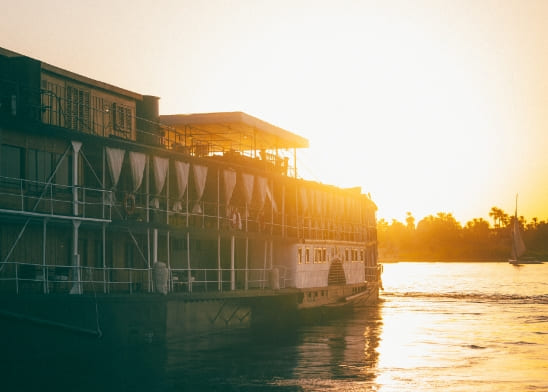
At the Satyagraha House, our South African Voyageurs House, 50% of our electricity is supplied by a solar installation. The same applies to our two boats navigating the Nile in Egypt – the Flâneuse du Nil and the Steam Ship Sudan. The former now generates 80% of its energy through a system combining solar panels and recycled electric-vehicle batteries. On the Steam Ship Sudan, the panels on the sundeck power a more efficient twin-screw propeller. As a result, this century-old ship has halved its CO₂ emissions. A complete overhaul of the boat’s energy system is planned for summer 2024. This will once again halve its carbon footprint.
4 Electric roadtrips
E-4x4 safaris, Scotland by Tesla… Whenever your journey includes a stretch of road (or track), we prioritise local partners equipped with an electric vehicle fleet.

100 %
carbon absorption
What is the carbon absorption contribution? Every journey has a measurable impact on climate change. We accurately assess the volume of CO₂ emissions generated by all the trips you take with us. This calculation model, certified by ADEME (the French Agency for Ecological Transition), determines how many trees need to be planted to absorb the total volume of CO₂ produced. For more than ten years, our growing involvement in reforestation projects now enables us to absorb all CO₂ emissions linked to our journeys. Once this level of contribution has been reached, we continue to absorb carbon by supporting these projects, whose additionality (dedicated exclusively to reforestation) and long-term viability (a minimum of 40 years) are certified by an independent organisation. Our short-term goal is to help absorb twice the emissions we produce, by multiplying reforestation and regenerative agriculture projects.

2,700
trees planted each day
Our investment in reforestation, notably through the Livelihoods Carbon Fund, supports the planting of nearly 2,700 trees every day, around one million a year. Across all brands within the Voyageurs du Monde group, this figure rises to 7,400 trees planted daily, or 2.7 million annually.
A new roadmap
to save our shared future
CLIMATE CHAOS
IS NOT INEVITABLE
For 30 years, warnings about global warming have been issued repeatedly, without any real effect. Despite the commitments made at the Conferences of the Parties (COP), greenhouse gas emissions continue to rise, and the critical threshold of +1.5°C has already been crossed, while emissions have yet to reach their peak.
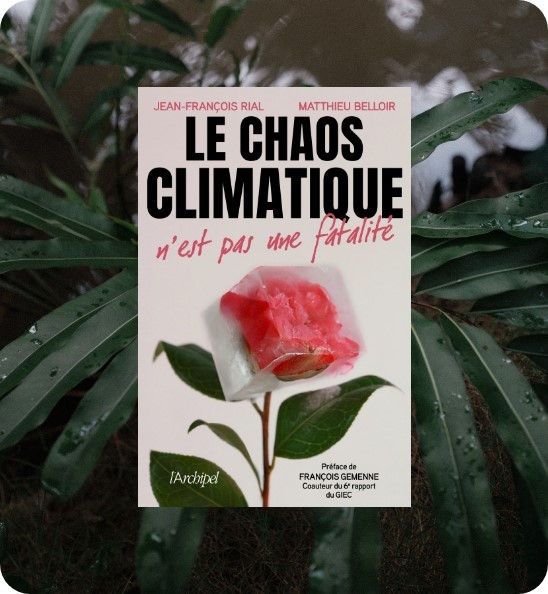
Faced with this predicament, Jean-François Rial, the CEO and co-founder of Voyageurs du Monde and Matthieu Belloir, the CEO and founder of the consultancy firm Conciliances, present an audacious solution in their book “Le chaos climatique n'est pas une fatalité” ("Climate chaos is not inevitable" only available in French currently): multiplying carbon sinks to give societies the time to achieve a fair and effective ecological transition, without delaying the net carbon neutrality target proposed by the IPCC to keep global warming below 2°C.
The authors examine two emblematic sectors – aviation and agriculture – to show just how complex, yet achievable, the ecological transition is. They start from a clear observation: achieving net carbon neutrality requires time that we no longer have.
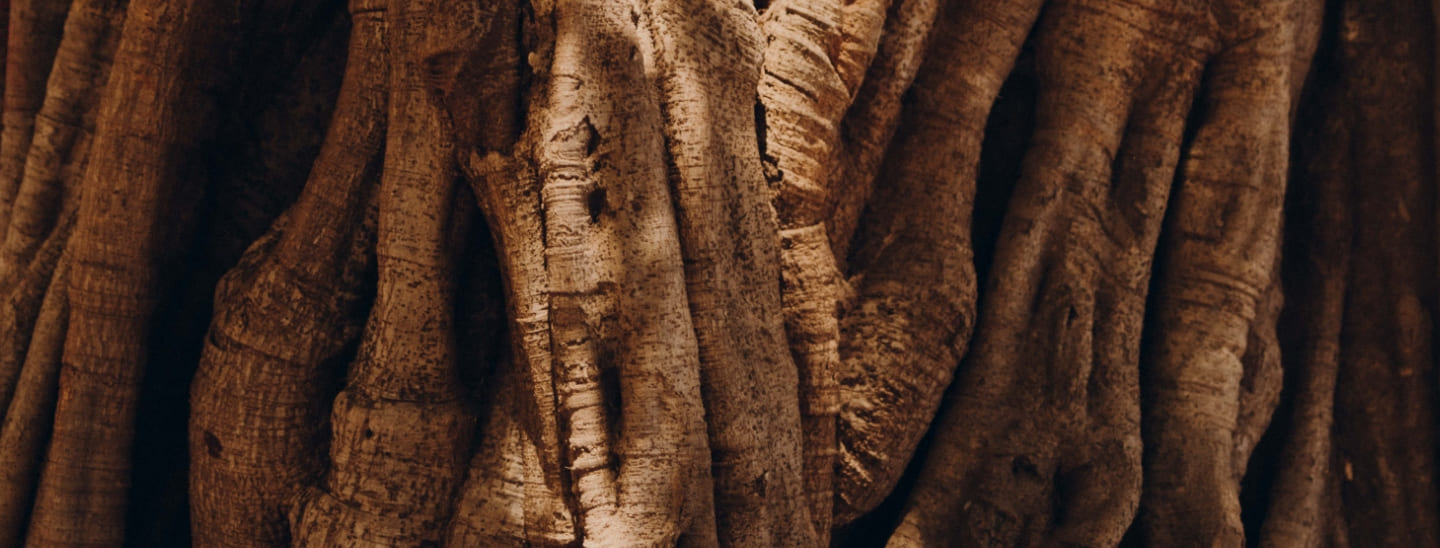
300 billion trees by 2030
The goal set by the IPCC (Intergovernmental Panel on Climate Change), namely to limit global warming to 1.5°C by 2030 compared to pre-industrial levels, is unattainable without genuine action. Staying below the 2°C threshold requires a 50% reduction in our current level of carbon emissions. To achieve this, we advocate the creation of a global coalition to coordinate the planting of 300 billion trees by 2030 (38 billion per year). This approach would help absorb 30% of current emissions.
The outlook
for tomorrow’s aircraft
As the main driver of our business, air travel currently accounts for 3% of global greenhouse gas emissions. This figure is growing exponentially. While technology continues to advance and reshape airline fleets, the most advanced solution to date is synthetic fuel – a blend of hydrogen and CO₂ – which has the technical advantage of being usable today without any modifications to the existing aircraft fleet. Some airlines now offer their passengers the option of making a voluntary contribution to help finance this transition. Voyageurs du Monde also supports the introduction of a tax to accelerate the development of this technology.
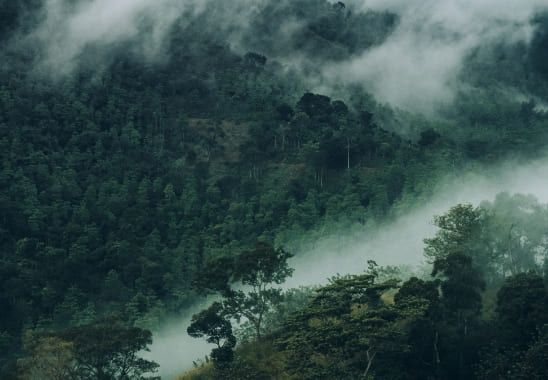
2.87 tonnes
of CO₂
That’s the carbon footprint of a round-trip flight between Paris and New York. That is one and a half times the annual quota that each person should respect in order to maintain a reasonable level of global warming. To absorb the CO₂ emissions from this flight, you would need to plant about twenty trees.

The selection
of reforestation projects
The programmes which we support in India, Indonesia, Peru and Senegal are certified by Verified Carbon Standard, an international non-profit organisation ensuring compliance with UN-defined standards for greenhouse gas reduction. Furthermore, the NGOs running these projects always pursue the goal of fostering autonomous economic development for local communities. Each of these actions meets four key criteria:
• Additionality: the project is carried out entirely thanks to the funding, its only objective is reforestation.
• Sustainability: the project is designed for the long term, with the aim of serving several generations – a minimum of 40 years.
• Local social and economic impact: the project has a positive and lasting effect on the local population.
• Measurability: the project’s absorption and effectiveness are measurable using rigorous scientific methods in line with the highest international standards.
4
Major reforestation projects
For more than ten years, Voyageurs du Monde has been committed to reforestation by funding several tree-planting programmes around the world through our Philippe Romero Insolite Bâtisseur Foundation. These projects primarily focus on mangroves, an ecosystem with numerous environmental benefits: they contribute to carbon absorption, desalinate, increase biodiversity and, as a result, help revive local fishing. These projects therefore have a threefold impact: environmental, social and societal.
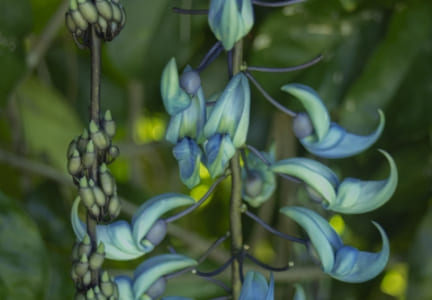
In India
Restoring the Sundarbans ecosystem
The Sundarbans archipelago, located in the state of West Bengal, forms the largest estuarine mangrove forest in the world. Experiencing a faster rise in sea level than anywhere else in the world, the Sundarbans have already lost nearly 30% of their land over the past forty years due to global warming. Alongside the Livelihoods Fund, Voyageurs du Monde supports the NGO News in helping local communities in the Sundarbans. To date, 16 million mangroves have been planted to strengthen the embankments that protect villages and arable land from flooding. The women of the region, trained to manage plant nurseries and set up cultivation areas, are at the heart of the project.
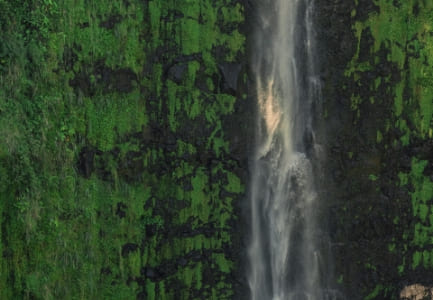
In Indonesia
Stopping deforestation in Northern Sumatra
The province of North Sumatra in Indonesia has been losing its mangrove forests at a steady pace for several decades. Since 1987, half of them have been destroyed to be converted into rice fields, shrimp ponds, and plantations for palm oil production. A study published in the scientific journal Science Direct following the 2004 Aceh tsunami, which caused 220,000 deaths, shows that 30 coastal trees per 100 square metres can reduce a tsunami’s flow by up to 90%. Voyageurs du Monde has partnered with the NGO Yagasu, which supports the economic development of villages, scientific research and the protection of mammals.
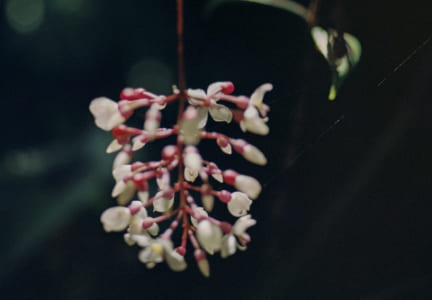
In Senegal
Rebuilding the mangrove
Used as firewood, building material and charcoal, Senegal’s mangroves have been heavily exploited. The severe droughts of the past three decades have worsened the process of deforestation. Since 2006, the NGO Océanium has been working to protect the environment and restore the mangrove ecosystems. With the help of local communities, around 100 million trees have been planted.
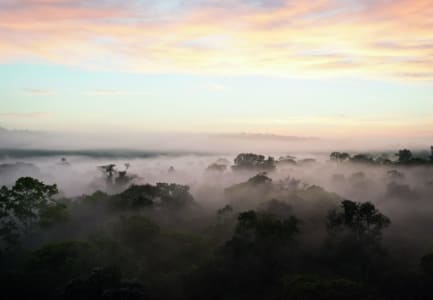
In Peru
Saving the forest and developing agroforestry
Launched in 2008 in the San Martín region, this project was initiated by an agricultural cooperative of over 2,000 small-scale cocoa and sugarcane producers seeking to combat deforestation that began in the 1980s. Supported by the social enterprise Pur Projet, they are establishing an agroforestry model that enables them to develop their crops while preserving the forest in a balanced, sustainable way. In total, more than 2 million trees have been planted. Through this project, producers are improving their sources of income while fostering soil biodiversity.