100% customisable travel idea
Senegal along the water Cruise aboard the Bou el Mogdad
Senegal - Dakar - Senegal River - Langue de Barbarie
On the Senegal River
Your trip
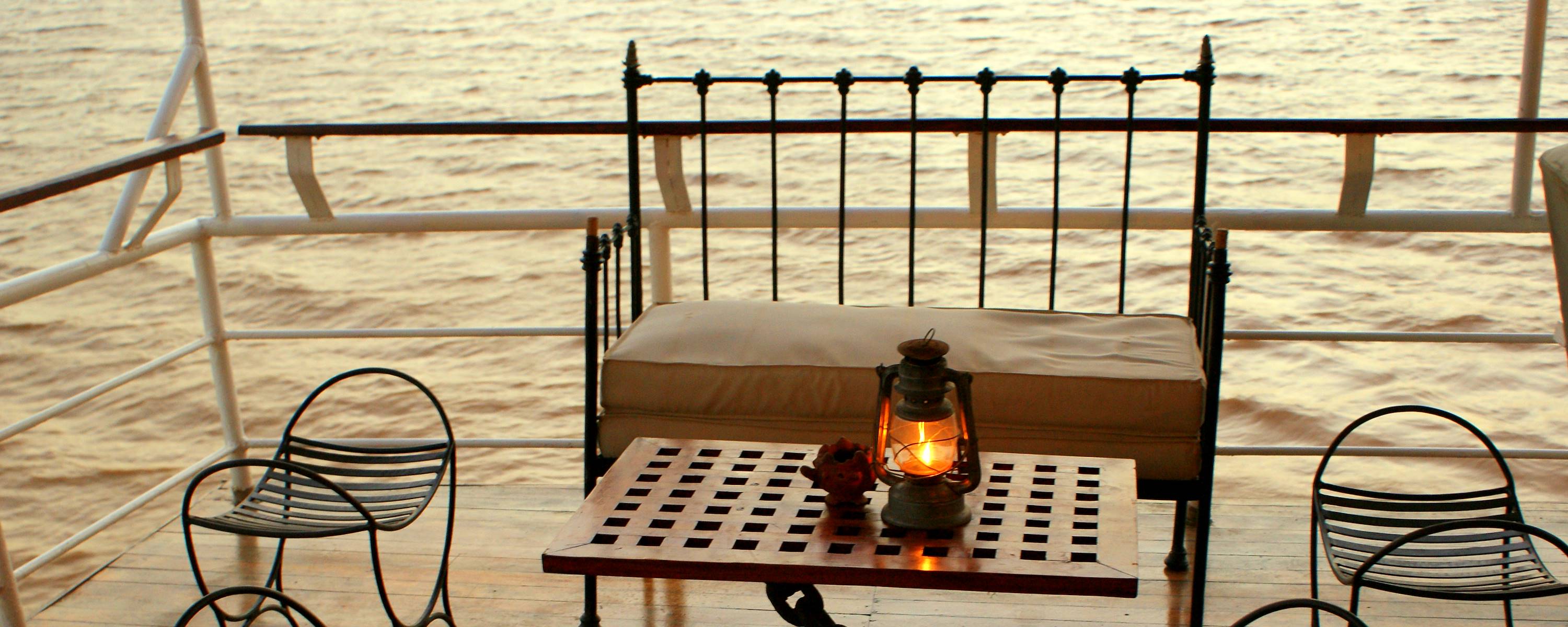
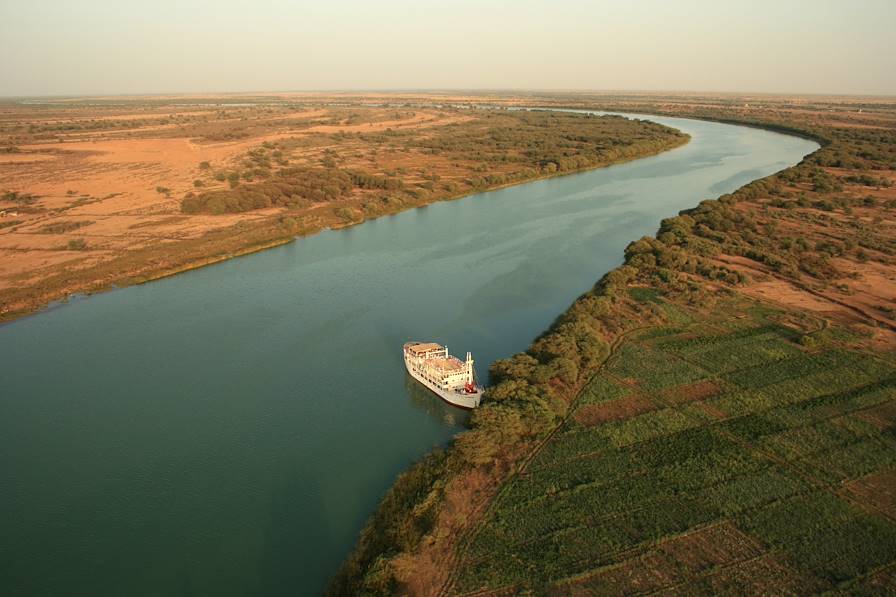
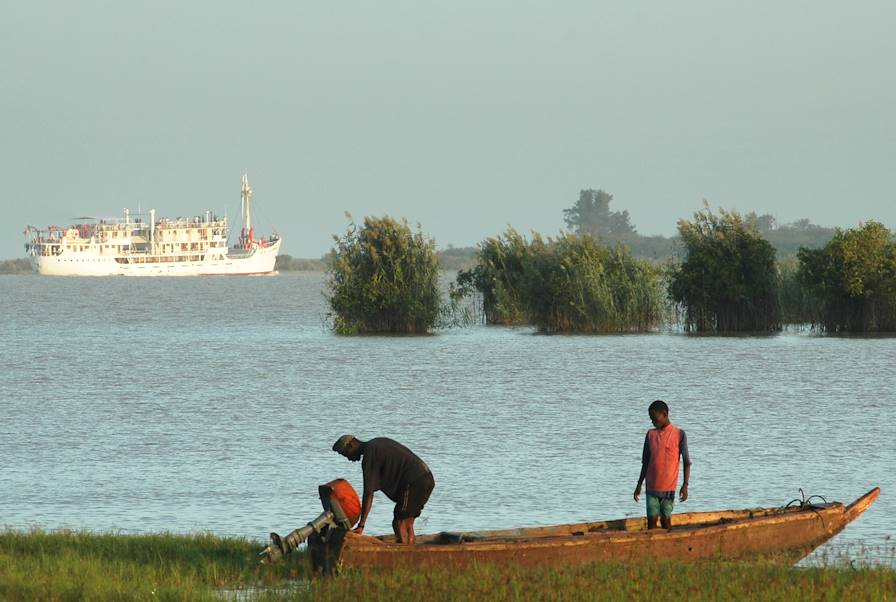
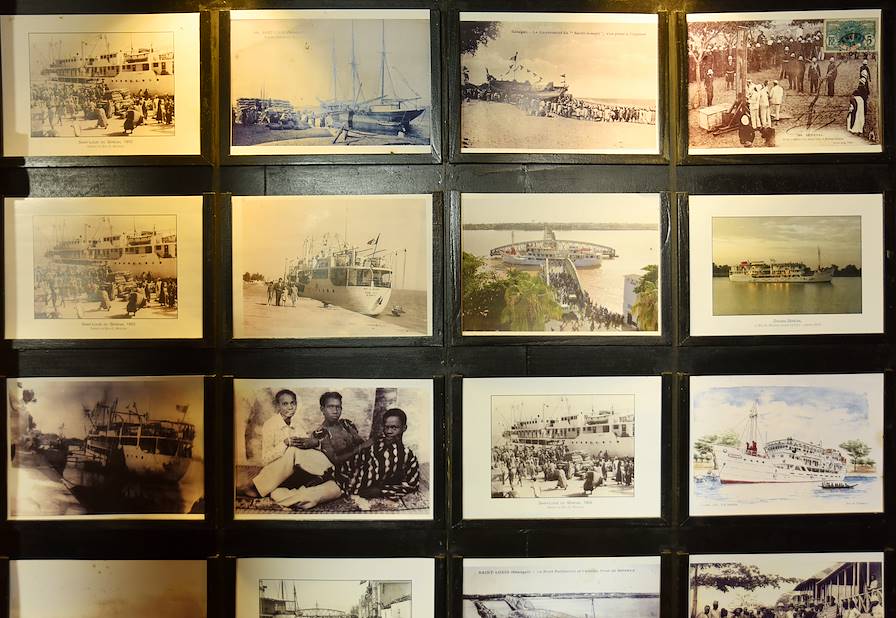
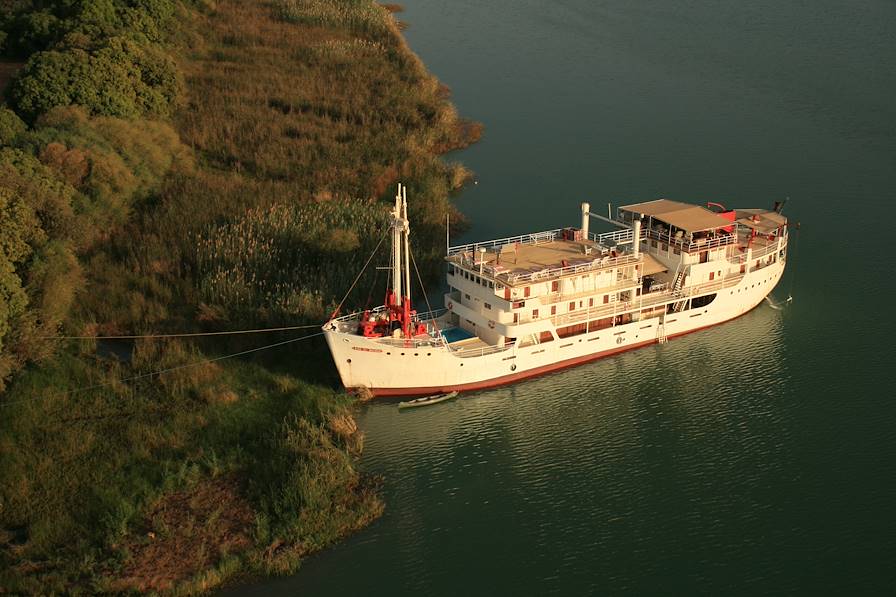
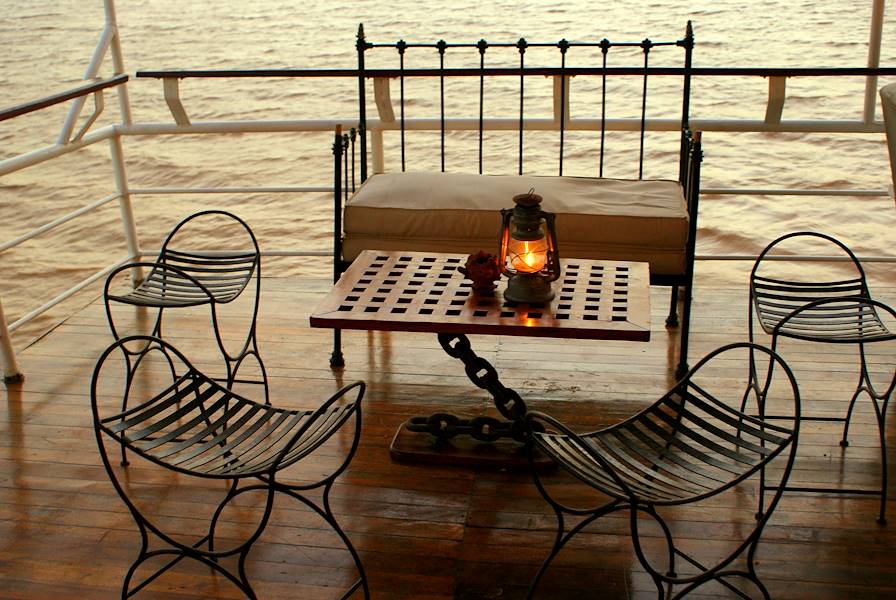
Around 164 feet (50 metres) long and just over 33 feet (10 metres) wide, with a riveted hull and four decks, the Bou el Mogdad plied the Senegal River from the mid-1950s to the late 1960s. A familiar figure in the transport of goods and passengers, it was part of everyday life along the river. So, when it was converted into a cruise vessel and returned to service in 1980, the locals welcomed it back like a prodigal son. With a restaurant, bars, lounge, solarium, swimming pool and massage room, the onboard facilities are comfortable to say the least, without compromising the vessel’s vintage charm. The cabins are well laid out and ventilated, all opening onto exterior walkways; yours includes a private bathroom. The crew knows their job and their river well. The cook, in particular, lovingly prepares meals day after day - one of the great pleasures of the journey. Along the route, visits and walks ashore punctuate the cruise: the Djoudj National Bird Sanctuary (a Unesco World Heritage Site), the colonial trading post of Dagana, Toucouleur villages and more. Landings are made using a barge that accompanies the ship. Safety standards meet international requirements. A cruise aboard the Bou offers a superb introduction to Sahelian Senegal.In Dakar, your hotel is located in the residential district of Fann, on the western corniche, overlooking the Atlantic. Contemporary lines, high-quality facilities and attentive service set it well above the rest. This, too, is Senegal - peaceful yet within easy reach of the city. To help you make the most of your time, we have scheduled a visit to Gorée with a private guide, as well as an introduction to everyday life in Dakar with a local. And should a sudden idea or minor setback arise along the way, you’ll have access to the contact details of our on-site concierge.
Itinerary
100% customisable for you
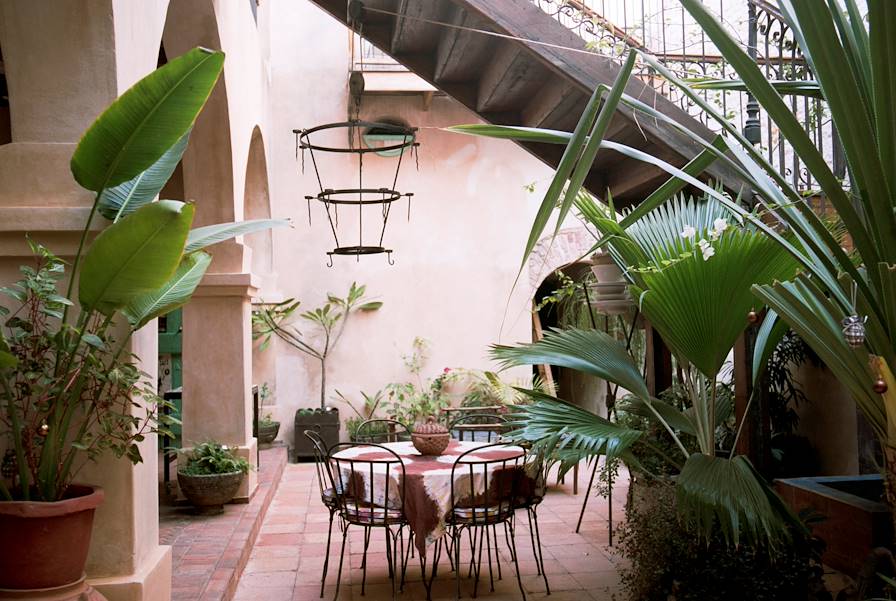
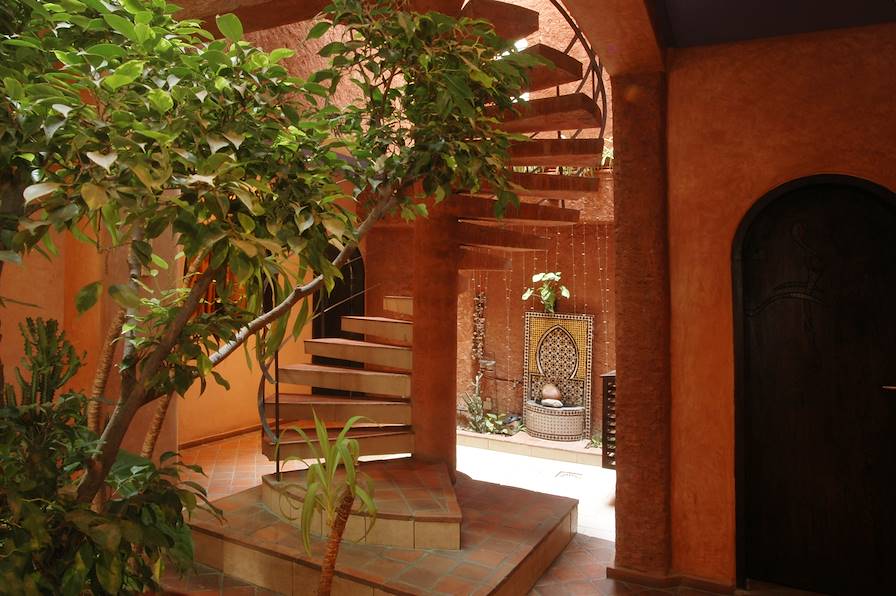
Welcome and assistance with formalities at the airport. Transfer. Settle in for two nights in Fann Hock. With its balconies and rows of arched French windows, the hotel's architecture recalls that of Saint-Louis. A red ochre extension has a more contemporary design. You’ll find this same tone inside. It is combined with stylised traditional patterns. Shadow and light alternate. The rooms are simply but comfortably furnished. The restaurant (serving international African cuisine) opens onto a pleasant terrace. From there, there is a lovely view of the sea and the Soumbedioune fishing port.
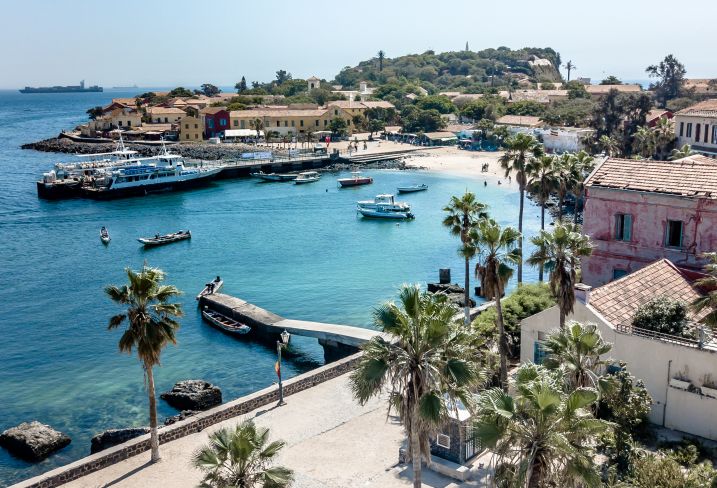
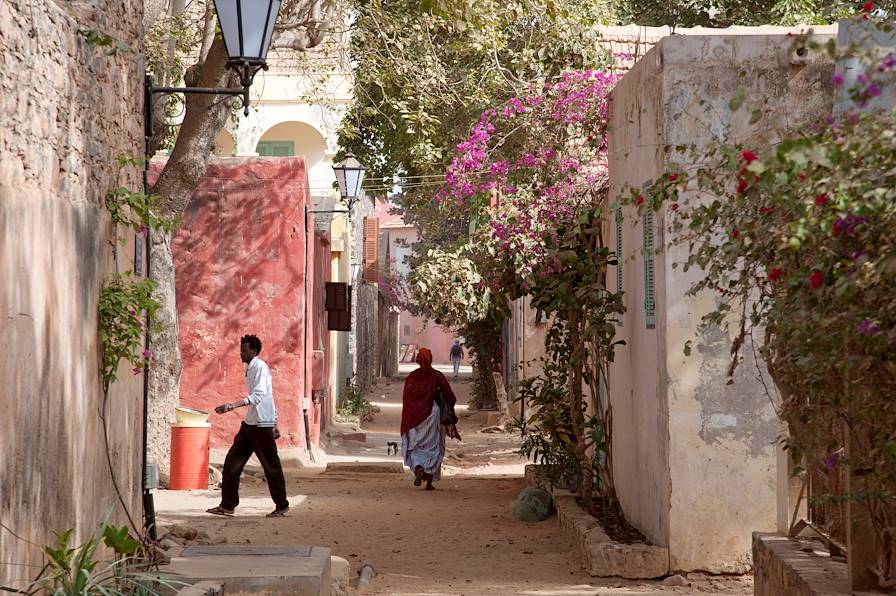
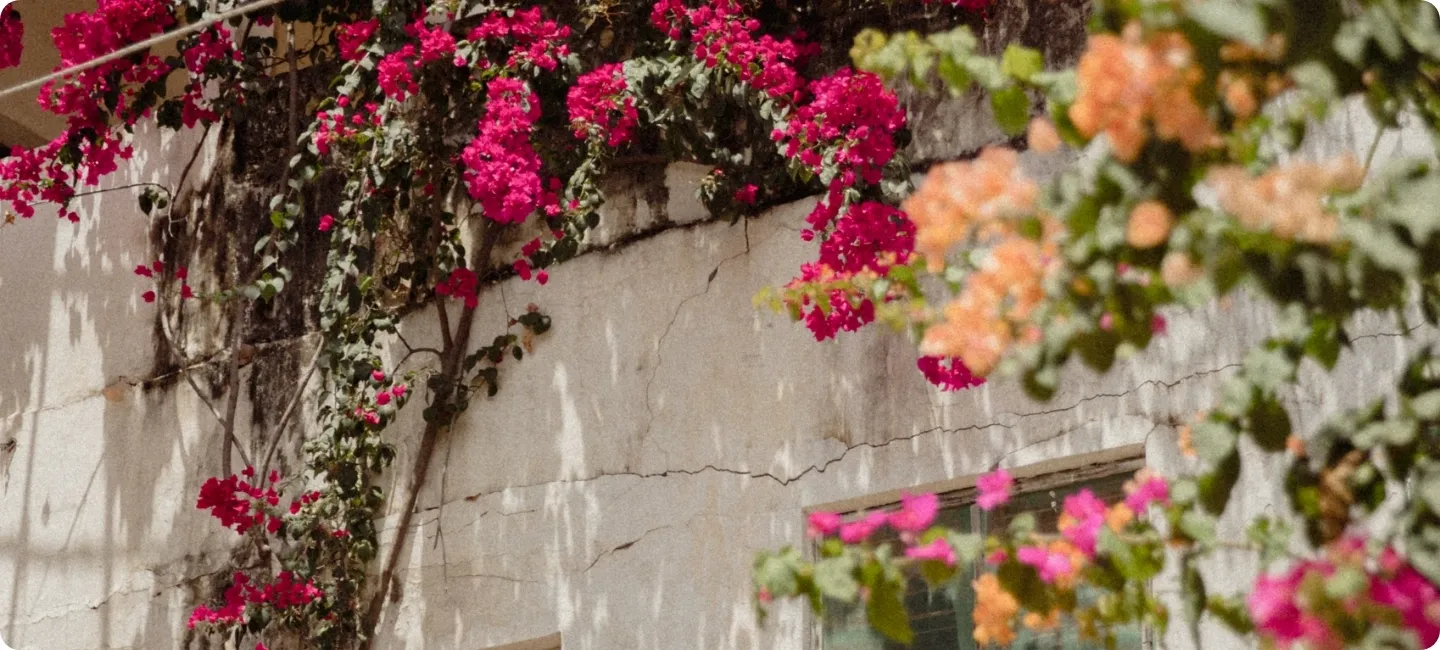
Already scheduled - Gorée, the island for remembering. This tour with a private guide is moving. It moves you through the small old streets paved with basalt; through the memory of the slave trade, for which the island was a major hub; through a bohemian, artistic charm; through the vibrant colours of the bougainvillea; and through the miscellaneous institutions working to forge paths for the future, such as the University of Mutants or the Dapper Foundation. The Fort d’Estrées (19th century), Senegal’s historical museum, and the House of Slaves (18th century) are not to be missed. To the south, you can also see the Castel and its naval cannons. The visit ends peacefully in the shade of the baobabs. The round-trip crossing is made by canoe.
Already included in your itinerary - Dakar like a local. Accompanied by a true-born Dakaroise, deeply familiar with local customs, rhythms and neighbourhoods, you’ll explore the capital. There’s no set itinerary, but after a few discussions about tastes and preferences, you'll get some ideas to help you find your way - on foot or by car. Dakar is in a state of urban ferment. And visual artists, musicians and dancers make the most of a favourable freedom, just as they ride the waves of the day-to-day creativity of ordinary people. It can be seen almost everywhere. Art galleries often amaze with the power of the works they showcase; artisans create something new from something old with virtuoso skill; recycling is a way of creating novelty; style is a constant. We visit places, meet people, sit down to eat, and find ourselves falling in love with this city we were not quite sure how to approach. Visiting like a local is not without consequences. And Dakar is a port; you can feel it in the mix of people and things, in a certain openness towards whatever disembarks.
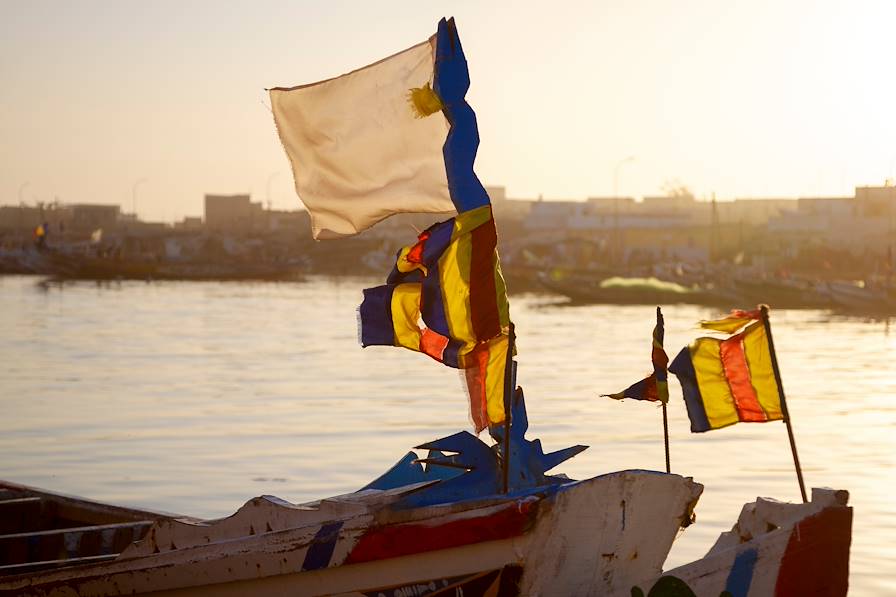
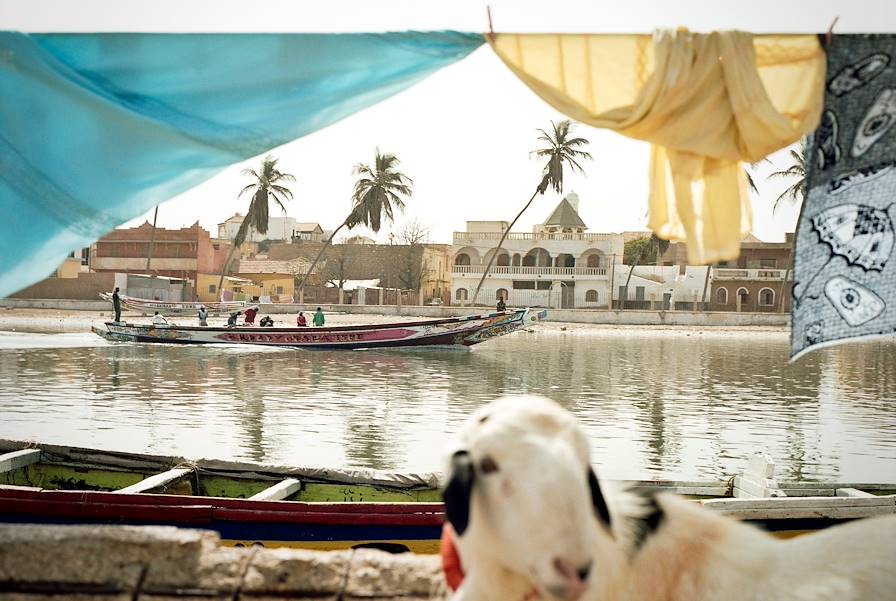
Transfer to Saint-Louis. Boarding and settling in on the Bou el Mogdad. In the afternoon, we’ll visit Saint-Louis, where the colonial influence is still visible everywhere: public and private architecture, the Faidherbe Bridge (1897) and Saint Louis Cathedral (1827). The fishing village of Guet Ndar is picturesque, with long pirogues pulled up on the sand - it’s true - but it’s also of vital economic importance to the city: the crews don’t cross the bar for nothing; they cross it for 30,000 tonnes of fish each year.
Here we go, gliding over the green, blue or coffee-coloured waters of the river. The Diama dam blocks the flow of saltwater upstream. Upstream from here are the Diouling and Djoudj bird reserves. Birds gather there in impressive numbers in winter. At Djoudj, you’ll take a short safari by pirogue. Flamingos are popular, but white pelicans are spectacular and the Gambian goose is anything but ordinary. Ducks and teals are everywhere. Among the anatids, there are whistling ducks as well. With its golden mane, the crowned crane makes quite an impression. The friendly sandpipers take quick, tiny steps along the banks. The purple heron has a long beak set on a long neck, and the cormorant looks stretched out like laundry in the trees where it dries.
The navigation continues. On the Senegalese bank, there are rice fields. And a few warthogs, which must drive the local farmers to despair. In Rosso, it’s the cross-border traffic with Mauritania on the other side of the river. Richard-Toll, Richard’s garden, is emblematic of a major agronomic venture linked to European expansion in the 19th century: acclimatisation - with the Jardin d’Acclimatation in Paris as its showcase. The botanist Jean Michel Claude Richard began experiments in this field here in 1822. His name became associated with the place, and a tradition of intensive agriculture has been maintained there, still seen today in the intensive cultivation of sugarcane. On a smaller scale, there are market gardens and orchards.
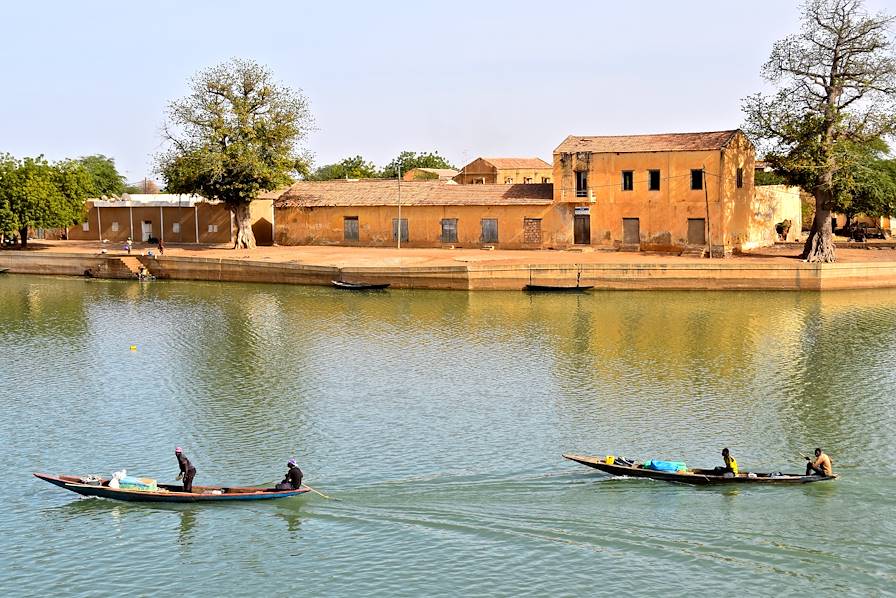
After breakfast, take part in a cooking workshop on the boat. Traditional lunch in Goumel. It might be thieboudienne, the national dish of Senegal: rice cooked in a rich sauce, fish and a variety of vegetables. There will be rice, in any case. Arriving in Dagana, you’ll feel as if you have stepped straight into one of those trading posts where the commercial and administrative life of colonial Senegal once played out. The buildings are the ochre-yellow colour of the earth. The former Fort Faidherbe has been converted into accommodation (stop here to enjoy the pool and have a fruit juice). In the past, gum arabic was loaded here. Apothecaries, for example, would use it to make lozenges. Things seem to move a little slowly, until children run past.
The day unfolds as you discover everyday life along the riverbank. In the morning, you’ll take a short hike and visit a Fulani herders’ village on the edge of the Goumel forest. You’ll discover woven straw huts and long-horned zebu with crescent-shaped horns. Then you’ll enter Toucouleur country. Above the riverbanks, earthen villages await exploration by barge. These establishments, believed to have been founded in the 13th century, are probably the oldest in the country. In the evening, you’ll enjoy a méchoui by the water.
In the early afternoon, we’ll reach Morfil Island, the largest in Senegal; Podor lies to the west. Another trading post, with its fort and the Foy house listed as historic monuments. The colonial complex, with its warehouses and trading houses along the quay, is very cohesive and is currently being restored. The name of the island itself hints at the type of goods once exchanged there, as “morfil” means raw ivory. Podor is a provincial town that, in some ways, feels like a small French town with a Sahelian twist. It is the northernmost of Senegal’s cities; here, you are at one of the farthest points of the country. You’ll be able to visit the historic buildings and watch the sunset over Mauritania.
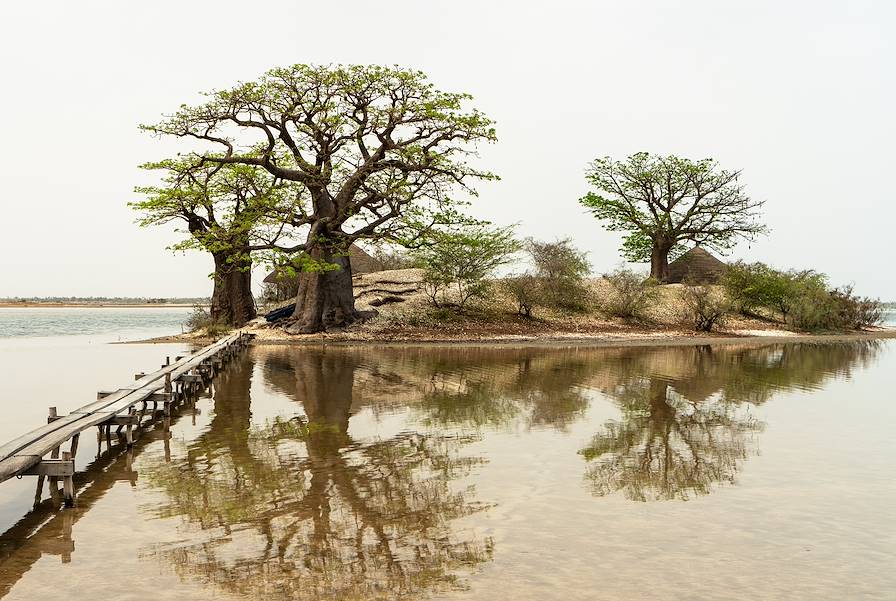
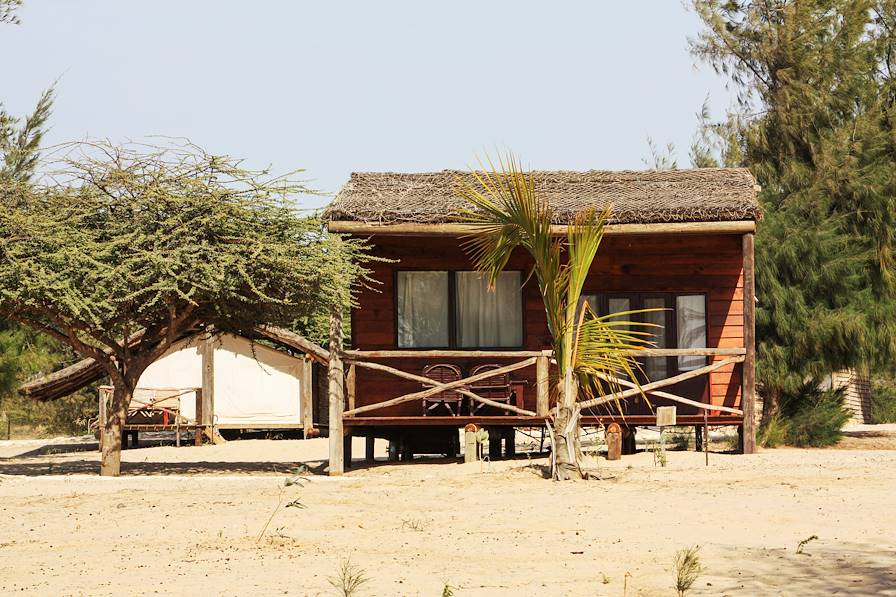
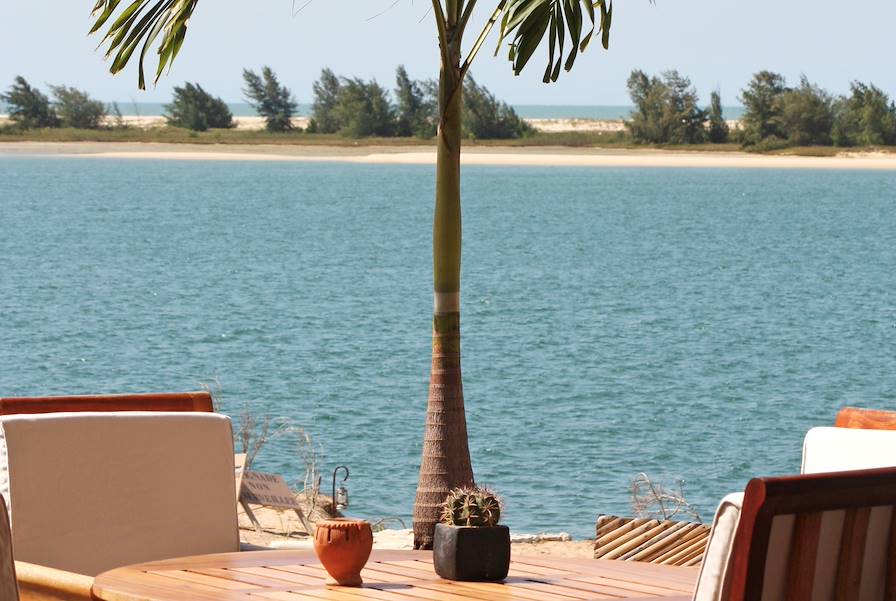
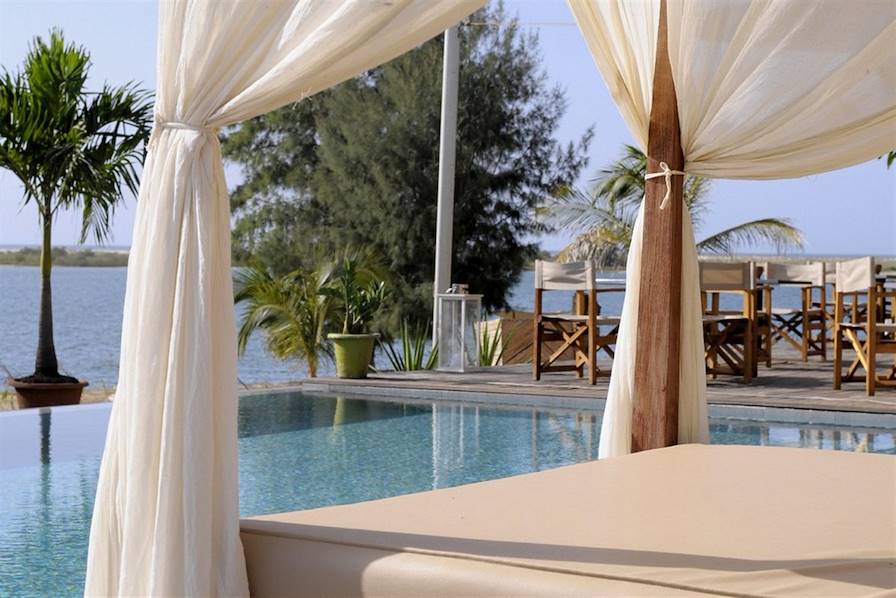
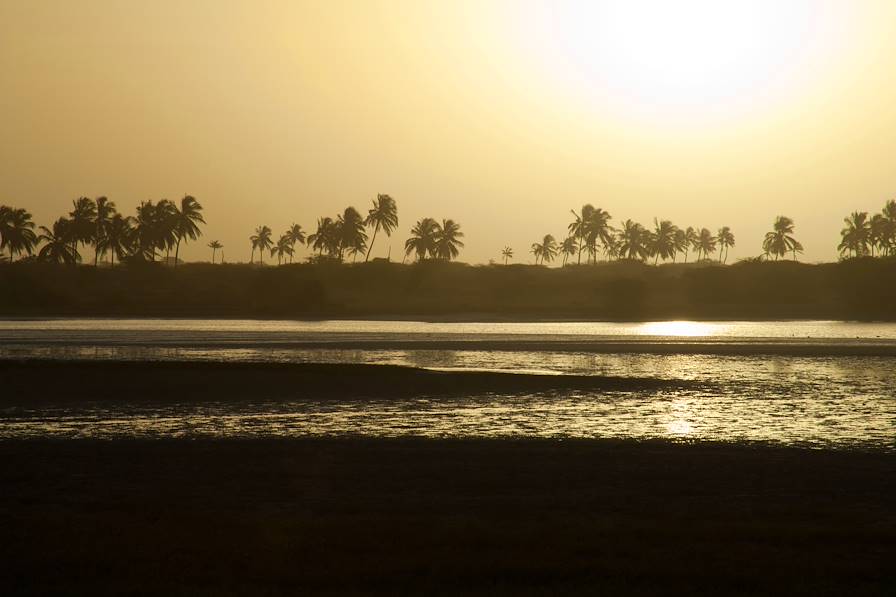
You’ll disembark at Podor and transfer to Saint-Louis, then transfer to the Langue de Barbarie National Park. You’ll spend the night facing the reserve, on the other side of the lagoon. The wooden bungalows on stilts face it. They are charmingly decorated and have a bathroom. A distinctive veranda extends the cottage at the front. In the evening, we’ll watch the pelicans glide by in silhouette against the copper-coloured sky. The restaurant serves fish and seafood, which seems obvious. At the bar, right next to the pool, you’ll notice once again that Africa justifies beer, and that a cold Gazelle is a blessing. On the other bank, there is the bird reserve, but if your heart isn’t set solely on flamingos, herons and terns, you can also enjoy water sports: dinghy sailing, windsurfing, banana boat rides and kayaking. Or try bottom fishing.
Your room is available until your evening departure for Dakar airport.
Transfer to Dakar airport and flight home.
Why visit Senegal with Voyageurs du monde?
Every day, our travel specialists craft bespoke experiences shaped around each traveller's profile, desires and budget. These passionate experts design experiences delivered on the ground by a local network of Concierges and trusted contacts. These fully customisable, made-to-measure trips are complemented by a wide range of high-end services (lounges, 24/7 assistance, travel booklet, app, Wi-Fi, restaurant booking, etc.)
Let us create your tripA few of the advantages of travelling with us to Senegal
- Globally unique concierge service
- 24-hour assistance
- CO2 absorption