100% customisable travel idea
Mountains, sea and History Grand Tour of Albania
Albania - Lin - Korçë - Gjirokastër - Qeparo - Berat - Tirana
100% customisable travel idea
Albania - Lin - Korçë - Gjirokastër - Qeparo - Berat - Tirana
100% customisable for you
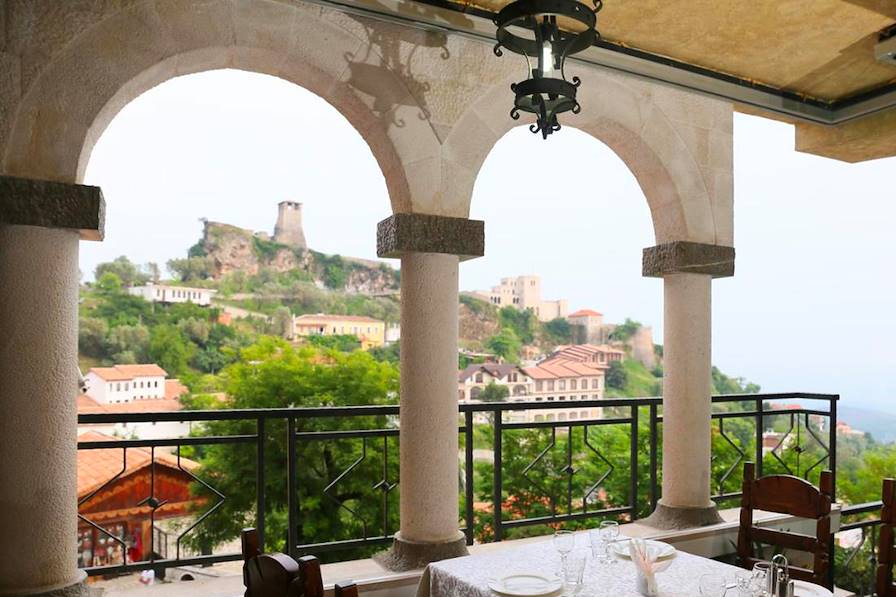
On arrival, you are welcomed and assisted. Collection of your rental car. Drive towards picturesque Kruja, steeped in a medieval atmosphere and famous as the birthplace of Gjergj Kastrioti “Skanderbeg”, the Albanian national hero who bravely resisted the Ottomans in the 15th century.
An overnight stay has been arranged for you. The hotel’s modern, undulating facade hints at an interior with contemporary standards. The rooms, refined and well-equipped, combine understated tones such as grey, brown and white, creating a neutral backdrop enhanced by designer touches and splashes of colour, giving them a distinctive look. From the top of the hotel, the spacious terrace overlooks the city and takes in the slender silhouette of a minaret and the imposing mass of Skanderbeg Castle. The restaurant serves tasty Albanian cuisine. The swimming pool is a pleasant place to cool off and relax. All this lies just 400 metres (1,300 feet) from the cathedral, right in the heart of the old town.
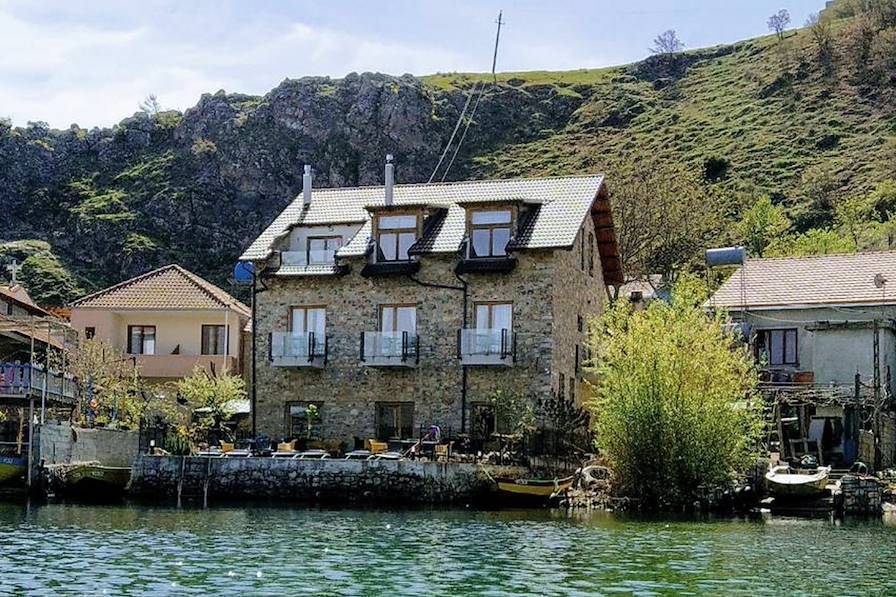
Head southeast to reach Lin, where you settle in for two nights. On a tiny peninsula jutting out into Lake Ohrid stands your stone accommodation, separated from the water by a small garden. At the end of this one, private access to that one. The interior is simple and well laid out, reflecting the comfort that awaits you in your room. On the restaurant menu: lake fish and fruit picked directly from the garden. The welcome is more than a mere formality, it exudes a sense of warm hospitality, while the service is a genuine commitment rather than a duty. Boats and canoes are ideal for short trips on the lake, while bicycles invite you to explore the trails of the hinterland.
On your itinerary - Ohrid in private. Beyond the calm waters of the lake lies North Macedonia and the city known as the “Pearl of the Balkans”. Suspended in the brilliance of time, it reveals a millennia-old past, carefully brought to light through collaboration between art historians, architects and archaeologists, earning it the prestigious status of a UNESCO World Heritage site. Over the centuries, Ohrid has become a vibrant crossroads of Byzantine culture and Orthodox Christianity, and has welcomed prominent figures such as Saint Naum and Saint Clement. A fascinating legend surrounds this land, embodied by the 365 churches and monasteries that dot the landscape, symbolising each day of the year and earning it yet another evocative nickname - the “Jerusalem of the Balkans”. Among the notable buildings are the museum in the Robevi House, the imposing Saint Sophia Cathedral, the ancient theatre, the Church of St. Mary Peribleptos, Samuel’s Fortress, Plaosnik - an archaeological site buried 250 metres (820 feet) beneath the fortress - the old Slavic monastery of Saint Pantaleon, and the Church of Saint John at Kaneo. The day continues with a visit to the Bay of Bones and its archaeological complex, then ends with a tour of the Saint Naum Monastery.
Drive to Korçë and spend the night in a large house in traditional style. The buildings surround a charming cobblestone courtyard, with galleries and geraniums. In the evening, the atmosphere is especially enjoyable. The interiors feature stone walls, brick vaults, exposed beams and carefully maintained floors. A discreet modernity, with carpets, embroidery, wood panelling, and matching furniture. The overall design is balanced and contemporary, with a touch of subtle elegance. The rooms, in keeping with this harmonious decor, offer refined comfort. At the restaurant, you’ll find international cuisine with Albanian influences.
Already on your itinerary - Korçë and Voskopoja in private. During the First World War, Korçë was occupied by French forces. On 2 October 1916, the 1st Regiment of African Chasseurs took possession of the city; the region was administered by Paris until 1920. A lingering atmosphere from this political and military episode remains in some neighbourhoods. If you visit the National Museum of Medieval Art, one of the most beautiful in Albania, it might take up all your time - but that’s perfectly fine. The Resurrection of Lazarus by Onouphrios of Neokastro, archpriest and leading religious painter of the 16th century, is a sheer marvel. As for the Saint Athanasius Church in Voskopojë, an enthusiastic historian described it as the “Sistine Chapel of the Balkans”. Who would be able to miss that? This village, which was a town in the 18th century, also has beautiful old houses lining its cobbled streets.
Head south to Gjirokastër.
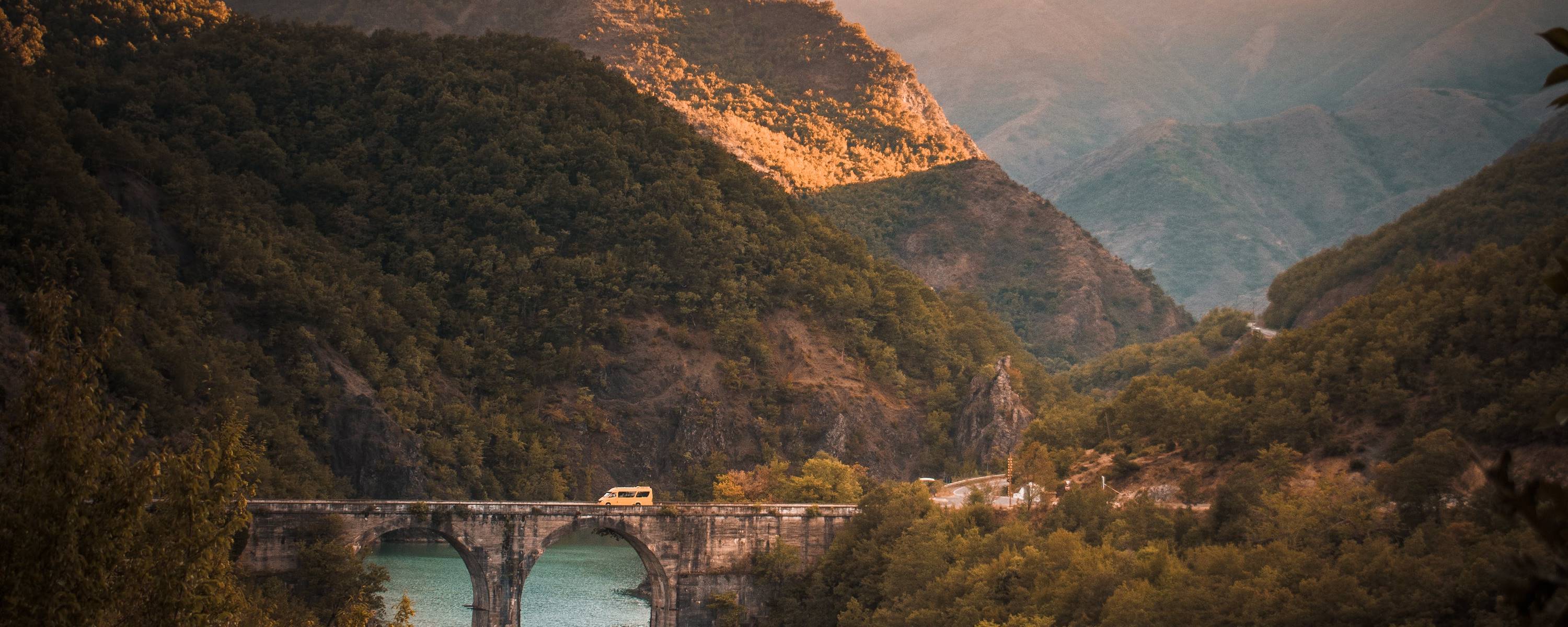
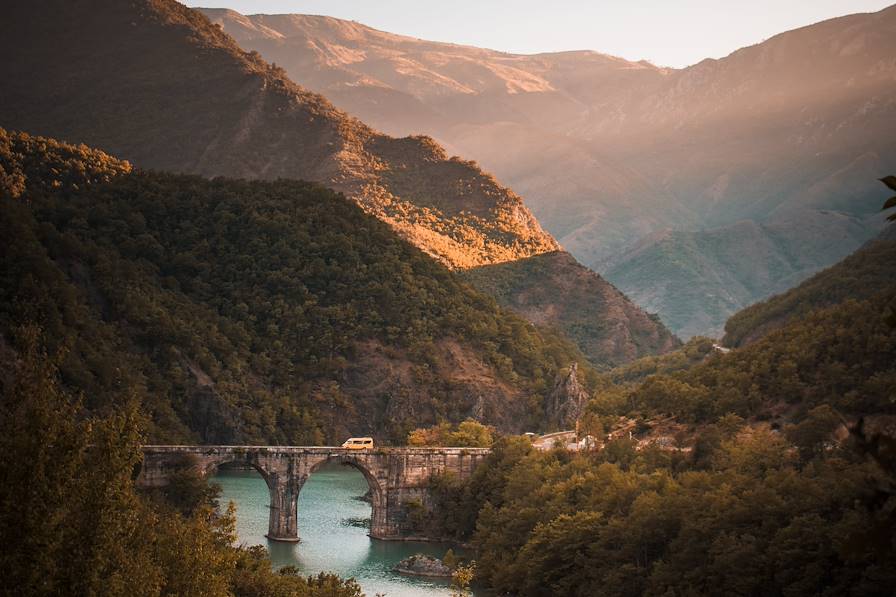
A must-see along the way - the natural springs of Benje, set out in various pools where the sulphur-rich waters are plentiful. This spot, popular with locals, also features a beautiful single-arch Ottoman bridge.
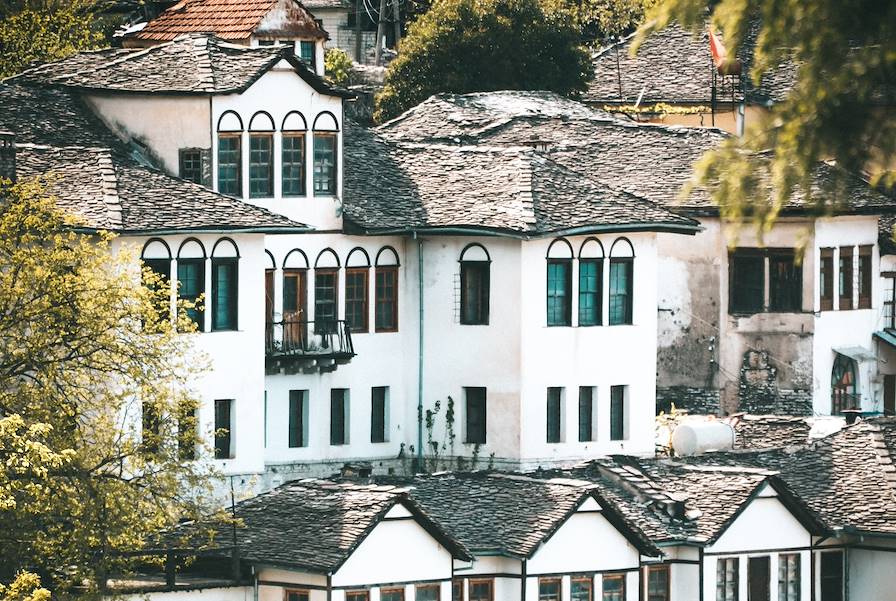
On arrival in Gjirokastër, settle in for two nights in a house in the old town. The hotel conversion has scrupulously preserved the spirit of the place and its original materials. In the rooms, long benches echo the Ottoman style. You will find all the comforts you could wish for here. A sense of moderation prevails, striking a fine balance between modern amenities and old Balkan charm. From your window, you can admire the layered slate roofs of the kullas - a reminder of a time when merchants built these Albanian-Turkish houses in the 17th and 18th centuries.
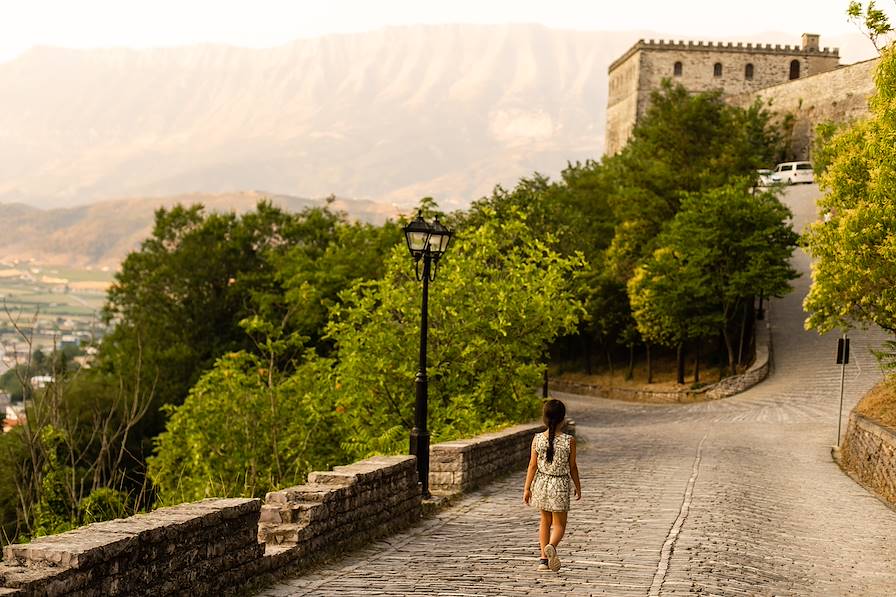
Already on your itinerary - Gjirokastër in private. Stroll through the cobbled streets, from the citadel (12th century) to the bazaar (17th-19th centuries) overlooked by the Xhamia e Pazarit, and then past the mosque (18th century) and the birthplace of writer Ismail Kadare, whose novel Chronicle in Stone comes to life with every step you take. This walk reveals all the reasons why Gjirokastër was listed as a UNESCO World Heritage site: magnificent architecture, preserved in a remarkably cohesive ensemble, rivalled only by Berat. It is a testament to a world with constraints and compromises, imbued with a historical depth and a certain poetry.
Also on your itinerary - a visit to a city farm facing Cajupi mountain. Managed by a local family for several generations, it offers a range of activities, including tastings of regional products such as honey, jams, cheese and wine, a tour of the beehives, and the chance to meet the resident animals.
Head northwest to reach the village of Qeparo on the Ionian coast.
Visits along the way - The archaeological site of Butrint, also listed, where Greek, Roman, Byzantine and Venetian ruins blend harmoniously with the natural surroundings of the national park. The ruins - eloquent witnesses to this ancient city’s illustrious past - include the Sanctuary of Asclepius, a 3rd-century theatre and an imposing 16th-century Venetian tower.
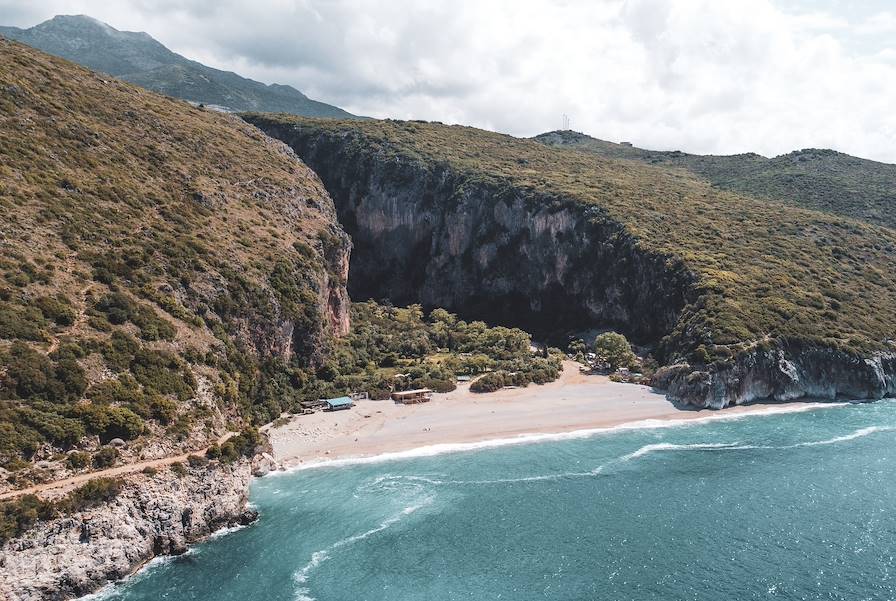
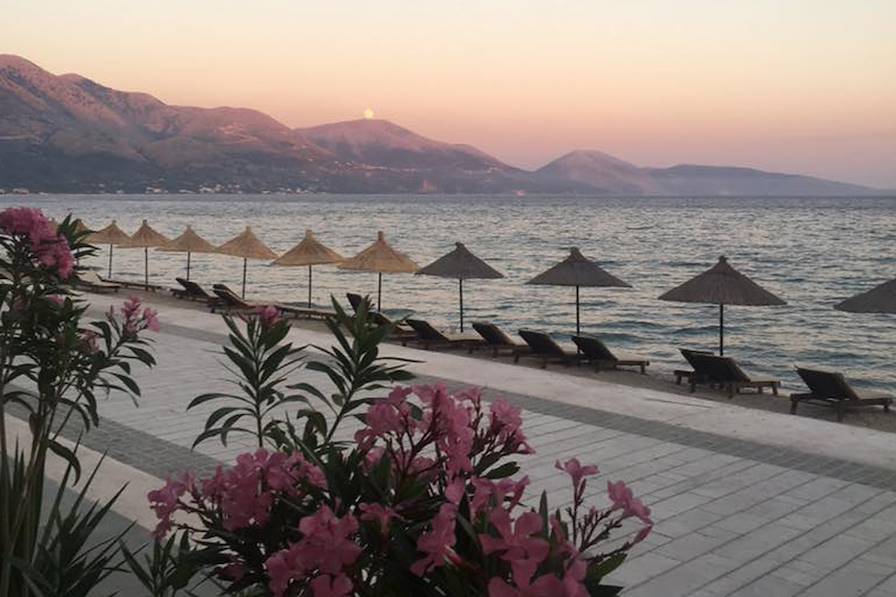
Enjoy a three-night stay in a hotel on the beach. The building spreads its wings with a certain flair. The architecture has found ways to create rhythm and escape the fortress-like complex. The stone in the walls is not only decorative but also a essential component of the structure. The rooms have a natural, pleasant atmosphere. The main living area, however, is outdoors: terraces shaded by reed screens, a massage shelter set directly on the white sand, sunshades, and lounge chairs. The garden, a verdant counterpoint, brings welcome freshness. An outdoor pool completes the scene. As for the restaurant, it offers international cuisine with appealing Albanian touches.
With its old houses, olive trees, and a splendid view of the sea, the village of Qeparo, set at 450 metres (1,480 feet) above sea level on the slopes of Mount Gjivlash, captivates Albanians. The road stretching between Qeparo and Himarë reveals the Ottoman castle of Porto Palermo, where tales of adventure artfully blend colonial banditry, intrigue and international politics. You might come across Ali Pasha of Tepelena, the Royal Navy, French diplomats, and many others there. The Soviets also established a submarine base there - now abandoned. Nearby, the picturesque lanes of the village of Palasë are lined with white houses, with overhanging oleanders that, in the height of the season, fill the air with their fragrance.
Not far away, Llogara National Park reveals its barren, windswept peaks. However, up to an altitude of 2,000 metres (6,562 feet), the hills are covered with pine, oak and ash forests. Hikers explore the area for its physical features and floral diversity, as well as its rich wildlife: chamois on the rocky heights, deer and squirrels, griffon vultures and rock partridges.
We leave the coast for Berat. On the way, about 20 km (12 miles) south of Lushnjë, the Ardenica Orthodox Monastery stands on a hilltop. Founded in the 13th century, it is still the only one in Albania where monks live. It is also the famous site of national hero Skanderbeg’s wedding in 1451, and contains frescoes and an 18th-century iconostasis.
In Berat, you have a two-night stay in the heart of the historic Mangalem district, at the start of the old road leading to the castle. You discover a residence built on the remains of manor houses that once belonged to the Pasha of Berat, Ahmet Kurt Pasha, governor of this former administrative division of the Ottoman Empire. The rooms, with their refined simplicity, are adorned in soothing shades of white, creating a calm and elegant setting. The restaurant, for its part, celebrates the region’s authentic flavours and traditional dishes.
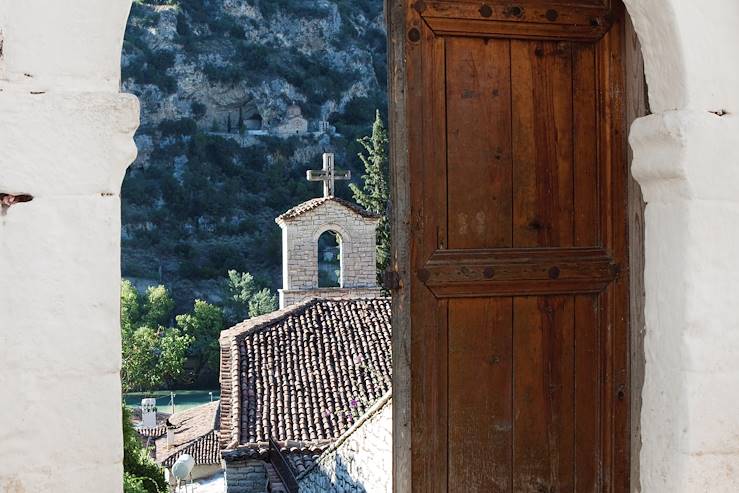
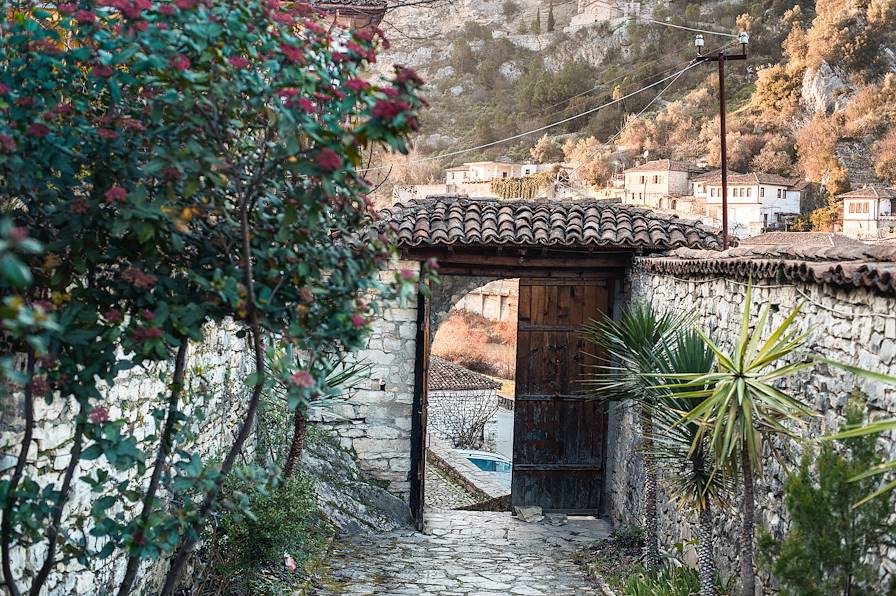
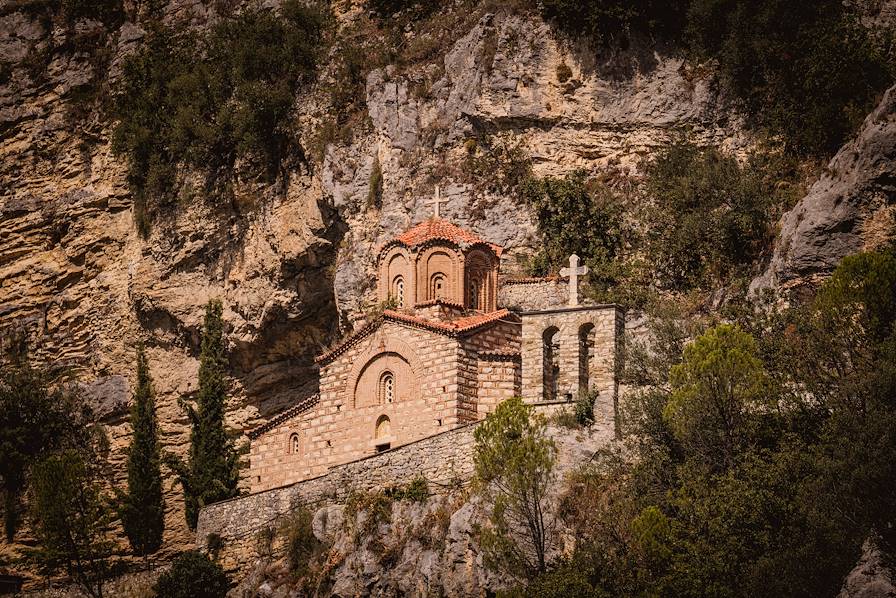
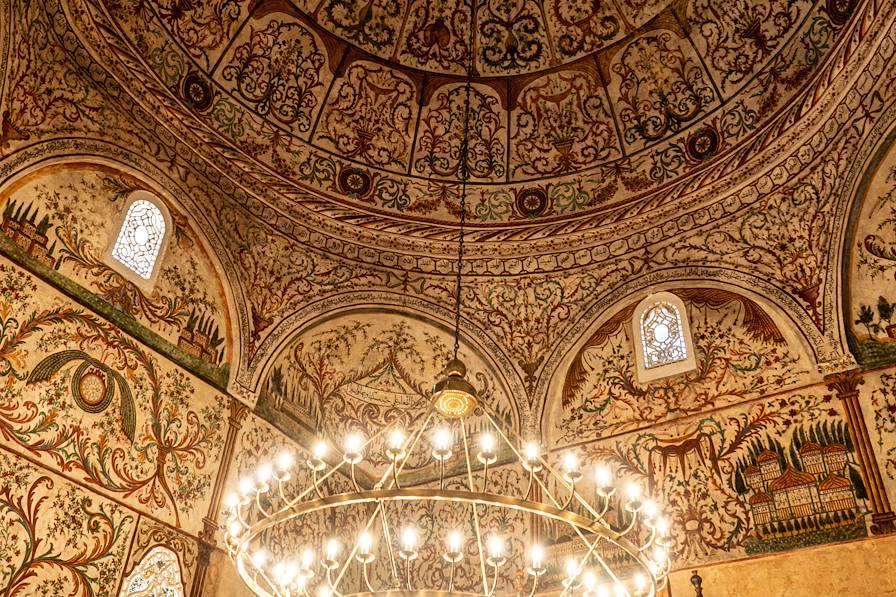
Already on your itinerary - Discovery of old Berat in private. Still UNESCO-listed, the old town truly feels like you’ve stepped into a time machine as you make your way through Mangalem’s winding alleys. The medieval fortress, the Kala, stands majestically over the “City of a Thousand Windows”. Among the must-sees are the St. Mary of Blachernae Church, dating from the 13th century and embellished with 16th-century frescoes, and a slender minaret marking the Xhamia e Mbretit, the King’s Mosque, built in the 15th century by Bayezid II. The richly decorated Halveti Tekke transports you to the 18th century. The proximity of the supposed tomb of the Jewish “messiah” Sabbatai Zevi (1626-1676) adds a mystical dimension to the walk. However, it is the remarkable cohesion of the entire vernacular ensemble that dazzles most. The 18th- and 19th-century houses blend elegantly with urban needs.
Finally, the road leads to the vibrant Albanian capital. Return the car and settle in for two nights in the vibrant heart of Tirana, just a stone’s throw away from Skanderbeg Square and the National Opera. In this lively neighbourhood, restaurants, cafes, art galleries, museums, churches and mosques all meld. The classic hotel is elegantly decorated, while the rooms combine comfort and sophistication. The atmosphere is delightfully retro, with antique wooden furniture and Persian rugs. This gives you an ideal base camp for exploring every corner of the city.
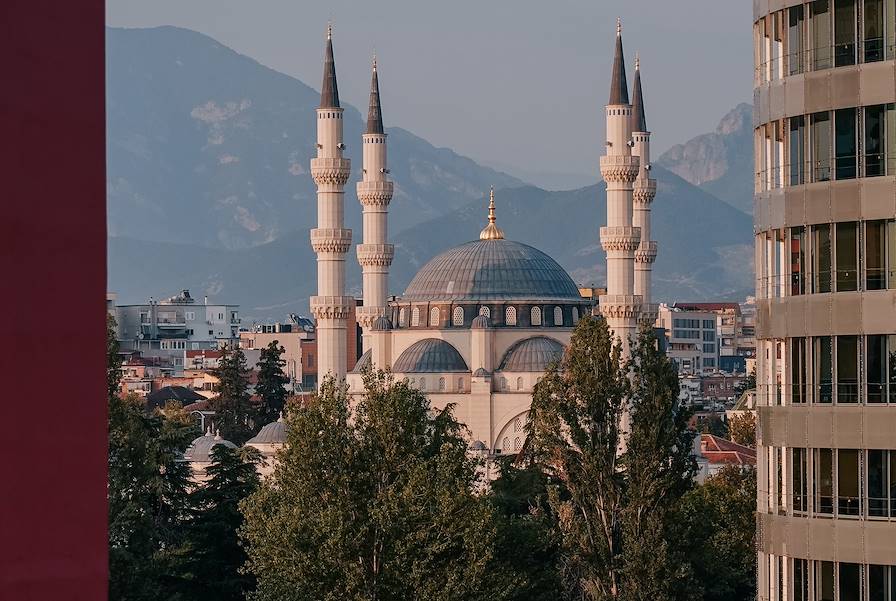
On your itinerary - a private tour of Tirana, a city literally bursting with colour, where many building facades have been repainted in bright colours at the initiative of a former mayor in the early 2000s. Its bright, vibrant colours signal to travellers that Tirana is determined not to be forgotten and aims to secure a prominent place among the Balkan capitals. The urban landscape is shaped by eclectic monuments that reflect Soviet aesthetics and the rationalism of Mussolini’s Italy, an example being the vast esplanade of Skanderbeg Square. However, nearby stand the Xhamia e Et’hem Beut - the Et’hem Bey Mosque - and the Clock Tower, magnificent Ottoman landmarks from the early 19th century (the latter helped people arrive on time for the former). The tour also takes you to the Tabakkane Bridge, dating from the 18th century, on the right bank of the Lana River, and then on to the National Historical Museum, which celebrates the richness of Albanian culture since the Paleolithic Age.
Not to be missed - The Blloku (“Block”) district, a true symbol of post-communist Tirana, with a vibrant feel. Once reserved exclusively for the Regime’s elite between 1961 and 1991, Blloku has since become a lively and sought-after district where ministries, restaurants, bars and trendy boutiques merge.
Transfer to the airport and return flight.
This suggested itinerary can be customisable down to the smallest detail, including duration, stops and content. An à la carte menu of experiences is also available to create a journey that reflects who you are.
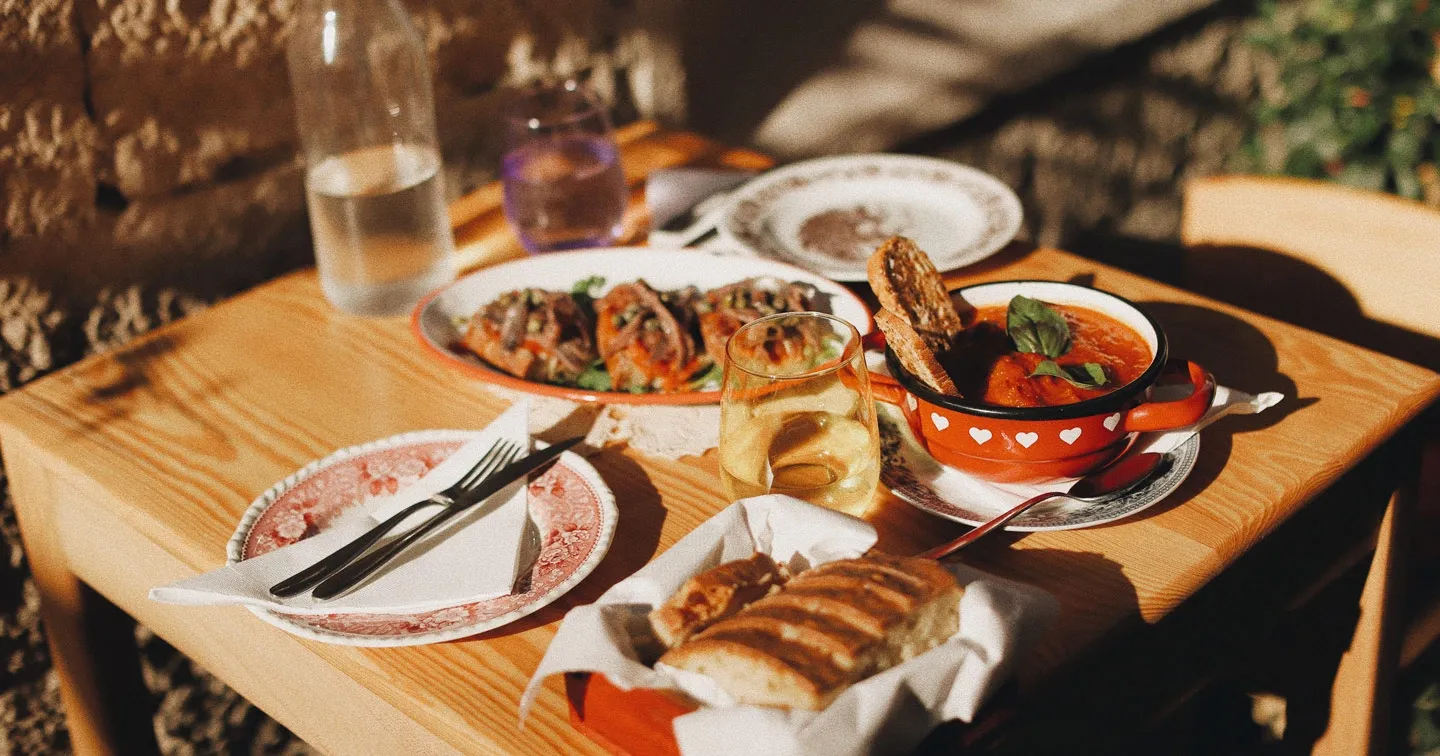
Every day, our travel specialists craft bespoke experiences shaped around each traveller's profile, desires and budget. These passionate experts design experiences delivered on the ground by a local network of Concierges and trusted contacts. These fully customisable, made-to-measure trips are complemented by a wide range of high-end services (lounges, 24/7 assistance, travel booklet, app, Wi-Fi, restaurant booking, etc.)
Let us create your trip
Travel with complete freedom, guided by your interests,
ideas and passions.
250 travel specialists, organised by country and region. Driven by a passion for beauty and never short of ideas, they inspire you and design an ultra-personalised journey: itineraries, accommodation, workshops, encounters, and more.
Always at your service: with a dedicated travel specialist, Concierge service and 24/7 assistance, our teams support you and adapt in real time, for a trip that is both flexible and expertly supported.
With family, as a couple, in a group of ten, on a road trip, by train, by boat, for a weekend or a round-the-world journey... Trips tailored to your preferences, enhanced by clever services, for ever smoother travel.