100% customisable travel idea
On the Namibian tracks A great adventure with your teenagers
Namibia - Etosha - Damaraland - Swakopmund - Namib
Namibia with the family
Your trip
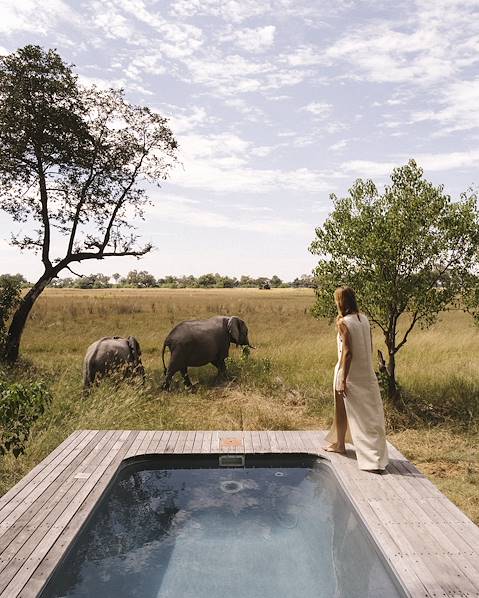
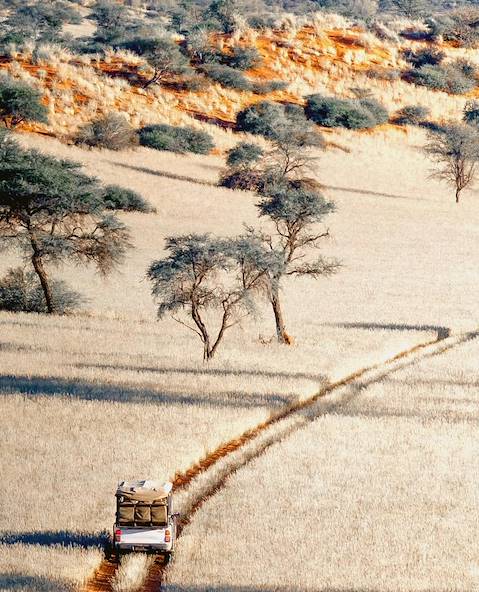
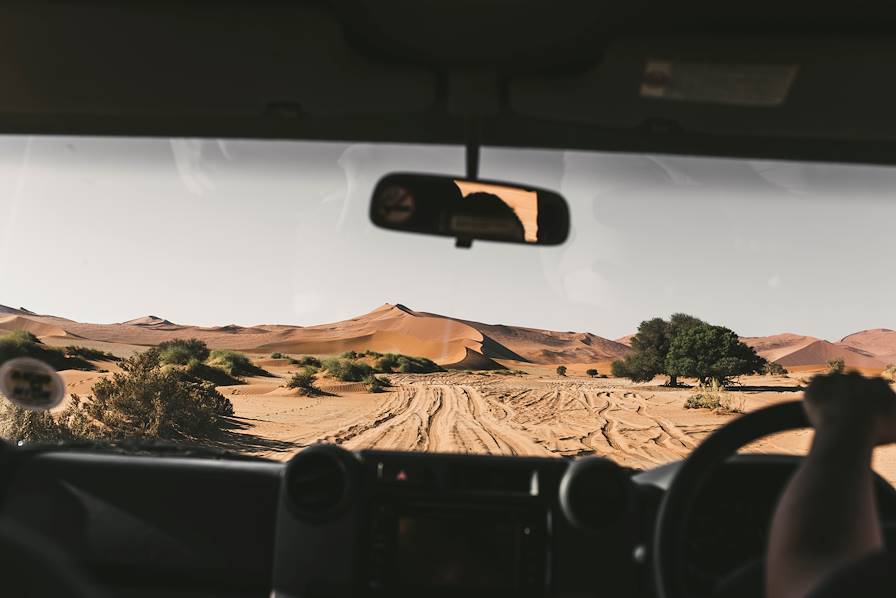
You will follow this itinerary as the official leader and seasoned bush driver. Along the way, your teenagers will be engaged in every possible way, with unique activities helping them to discover the different places and the pace of the trip keeping everyone interested. There is some driving involved, of course, but the distances have been measured and the travel times estimated as accurately as possible. The pace is quite fast, it's true, but you won't spend all your time in the car, far from it! You may even be surprised. What's more, you'll have a vehicle that is perfectly suited to your needs. It’s not that the terrain or tracks are apocalyptic, but some sections can be a little rough. The mobile app includes a GPS that shows you the route to follow at all times, as well as useful recommendations. At each stop, there is a lodge or a camp, almost always with a swimming pool. Namibians are inventive and manage to create real havens in the middle of the most rugged landscapes: comfort is constant, even in the middle of the desert. The activities we have included in your itinerary engage both your mind and your legs. They allow you to experience Namibia's nature in all its facets and enjoy breathtaking encounters with magnificent wildlife, from elephants to beetles. Young people will love it, especially as it is done in an observation vehicle or on foot. All outings can be enjoyed by the whole family. Finally, you will have the contact details of our on-site Concierge. If, by chance, a setback occurs or, on the contrary, you have a change of heart, you can quickly get answers and suggestions.Our advice: trip recommended for ages 12 and up, ideally booked several months in advance.

Itinerary
100% customisable for you
Night on board, arrival the next day.
Private transfer and overnight stay in a residential area on the hills. A true oasis on the edge of the city, the guesthouse flourishes in a lush, tranquil setting. With only 11 rooms, elegance and comfort are blended with flair. They open onto a shared veranda where breakfasts and dinners are served by a top-class chef. In the garden, the whole family soaks up the sun on the terrace before heading off to cool down in the small pool.
Already arranged - your rental 4x4 will be delivered directly to the hotel for added convenience.
Things to see and do - Make the most of this stopover to explore Namibia’s capital. Colonised at the end of the 19th century, the country still bears traces of German influence, especially noticeable in its main city. Here, visit the Art Nouveau Lutheran church, Christuskirche, at the end of Peter Miller Street, and the Alfes Feste State Museum dedicated to the struggle for independence, before heading down Independence Avenue to the meteorite fountain.
Scheduled for the morning: meet with our Concierge in Namibia. You will meet your dedicated contact for the duration of the trip in the comfort of your hotel for a proper briefing. Tips, local customs and traditions: no question is off-limits.
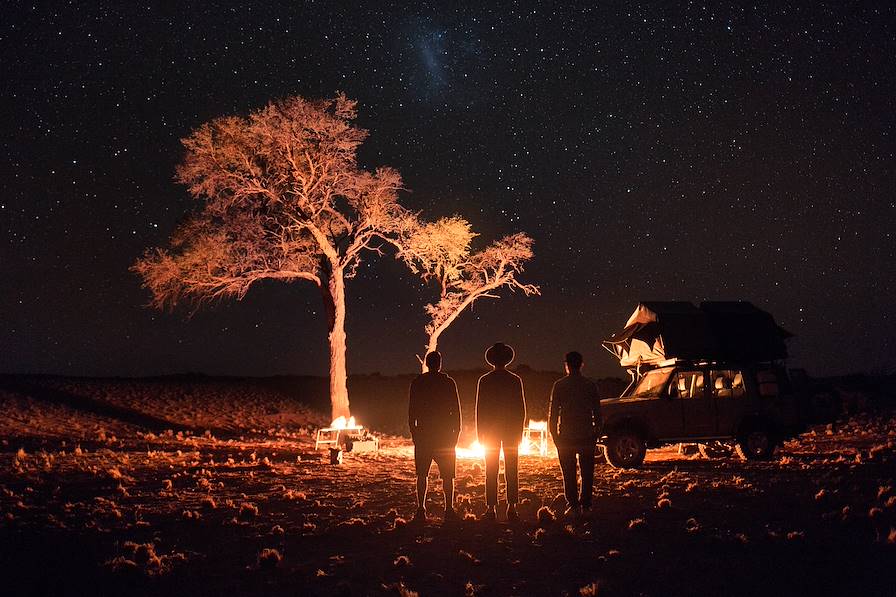
Then, head north to Otjiwarongo, halfway between the capital and Etosha National Park. An agricultural centre with 20,000 inhabitants, the city stands as a perfect ambassador for Namibia’s history and natural beauty. It is also one of the Namibian agencies most shaped by German influence. Overnight stay on the outskirts of the city, at a charming accommodation venue decorated in African style with Ovambo crafts, from the people of northern Namibia. The lapa, an outdoor restaurant set up in the savannah around a large campfire, is especially appreciated. Here, you can dine under the stars while watching animals come to drink at the waterhole.
Not to be missed - The Cheetah Conservation Fund. Founded in 1990 by researcher Laurie Market, the CCF is a research centre working to preserve and rehabilitate cheetahs. Internationally renowned, its headquarters lie about 40 km (25 miles) from Otjiwarongo. Whether injured by local farmers or captured to be kept as pets, the animals at the centre have all been taken in for their own well-being. You can observe them during the various activities that punctuate the day (feeding, safari), but it is undeniably the “cheetah run”, their morning exercise session, that offers the best glimpse of the animal’s abilities. Travelling at full speed, you’ll struggle to capture it in a photo.
Continue your itinerary north through vast Namibian ranchlands to reach Etosha National Park. The site proudly ranks among the largest wildlife reserves in the world, covering 23,000 km² (8,880 square miles). The vast salt pan of Etosha, with its low vegetation, offers a clear view of the wildlife. In the dry season, they gather around the waterholes. To maximise your chances of spotting them, head for the thirty wells scattered across the area. All around, fascinating ghost trees - remnants of a petrified forest - stand in the middle of the desert and towards Namutoni Fort.
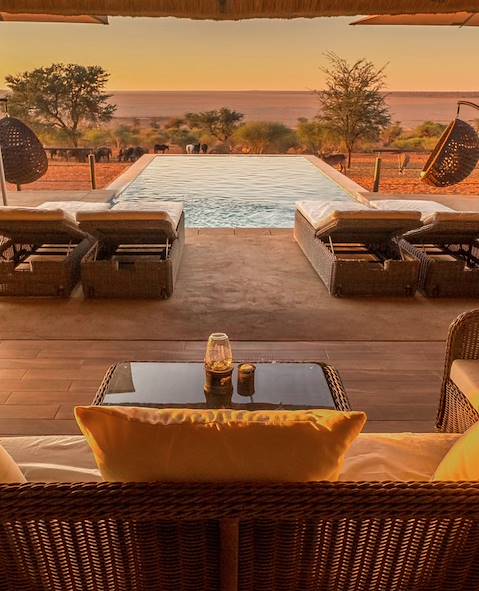
Settle in for two nights in the private Etosha Heights reserve, southwest of the park. Because it is both surrounded by nature and perched on top of a hill, the camp offers absolutely stunning views of the surrounding landscapes and their people. Built in traditional Namibian style - thatched roofs, exposed stone, wood - the bungalows offer comfort in simplicity, in keeping with local hospitality principles. Each one opens onto a terrace with a 180-degree view. In the lapa, the whole family feverishly discusses the day’s encounters - and prepares themselves for those yet to come.
On your itinerary - morning safari. Vast landscapes, rich and balanced flora and fauna: a safari in an impromptu vehicle organised by the lodge is a must. At sunrise, the animals shake off the veils of night and set out in search of a sip and a morsel. We then set off with a ranger to surprise wildlife in their natural habitat. In the soft morning hues, the encounters are truly moving. The trackers are first-rate; they know their craft. So, with a bit of luck and depending on the rhythm of nature and migration, you may spot elephant, black rhino, lion, oryx, leopard, giraffe, ostriches, kudu, springbok and even cheetah.
Also included - A sunset safari. Wildlife is most active as the light fades and the heat drops. Predators in particular make use of their keen eyesight and the cover of night to execute the necessary hunt. Like prey, we keep all our senses sharp as the sun completes its daily arc.
Road to Sesfontein, between Etosha National Park and Skeleton Coast Park, on the edge of Kunene region. Here, you can enjoy breathtaking desert landscapes inhabited by many animals adapted to the region’s arid climate: elephant, hyena, antelope of all kinds - including the iconic oryx - and, of course, black rhino, which are found here in significant numbers.
Settle in for two nights on the banks of the Hoanib River. The 14 cottages are topped with thatched roofs, in keeping with the region’s traditional style. Built on stilts facing the cliffs, they have a terrace on one side and an outdoor bathroom on the other. At the centre of the camp, the lapa serves as a communal space. This is where you’ll find the reception, the restaurant, the bar and a small souvenir shop. Overlooking the river, an observation platform lets visitors watch animals coming to drink, while a large kopje in the background.
In the heart of Damaraland, the Khowarib region stands out from the previous stop with its remarkable landscape - the panorama reveals impressive flat-topped mountains set off by wide canyons. Rock art is nobly displayed in open-air galleries. Here, you are off the beaten tourist path, on the land of the Himba people, an indigenous Bantu group who have lived for several centuries along the banks of the Kunene River. Fiercely protected, its culture reveals fascinating particularities. This is evident in the women with skin tinted red and braids coated in thick ointment, the men dressed in leather loincloths and cotton caps, not to mention the conical houses. Local guides lead curious - and well-prepared - visitors to meet them.
On your itinerary: A hike along the Hoanib riverbed. This is the royal route used by all the local wildlife. You visit with a ranger, both to immerse yourself in the landscape and to hope for a chance encounter with some local inhabitants. Elephants are easy to spot from afar. Cheetahs, however, are more elusive. As for the birds, they provide the walk’s soundtrack. On the ground, a truly remarkable flora thrives on underground streams: erioloba and albida acacias, mustard trees
Optional - In search of the desert elephants.
Departure for Cape Cross, more than 400 km (250 miles) from here. The vehicle heads south before making a 90-degree turn and finding the Atlantic, which it then follows along the coast. Heading west from the country’s oceanfront, your destination appears nestled along the Skeleton Coast. Classified as a reserve, the area is home to a large colony of fur seals.
You have an overnight stay booked on the waterfront, feet dangling in the water. To make the most of its exceptional surroundings, the hotel has large picture windows. In summer, they are open, letting the Atlantic breeze cool the interiors and the sound of the surf lull visitors to sleep. In winter, they close, bringing guests close to the view while keeping them sheltered from the cold. A fire crackles in the fireplaces of the lounge and restaurant. In every season, enjoy the place with a glass of wine in hand - the establishment offers an excellent selection. Divided between the ground floor (for direct access to the sand) and the upper floor (for the view), the 20 rooms are airy and bright, with decor well suited to the setting and focused on a maritime theme.
Journey to Swakopmund, a little further south on the Atlantic coast. Before your departure, however, take the time to visit the famous fur seal colony that has settled just five minutes from your address (unless it was the other way around). Back on the trail - for good this time. No need to turn on the GPS - just follow the coastline. Swakopmund, a small, well-preserved Belle Époque German town, is now a stylish seaside resort. Among the iconic buildings: the Lutheran church from 1911, the old barracks from 1906, and the Hohenzollernhaus, built between 1904 and 1906 in the Neo-Baroque style.
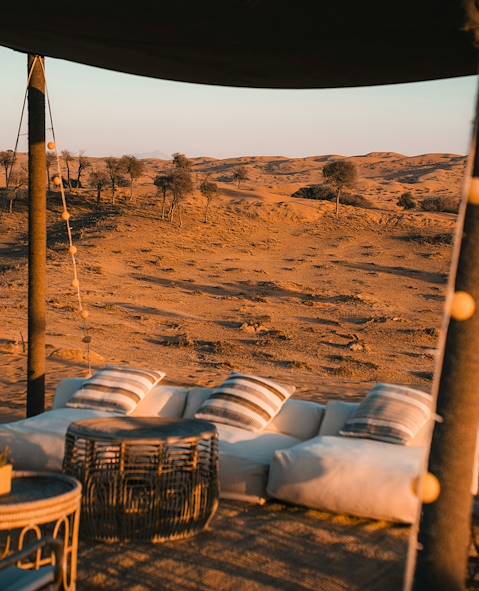
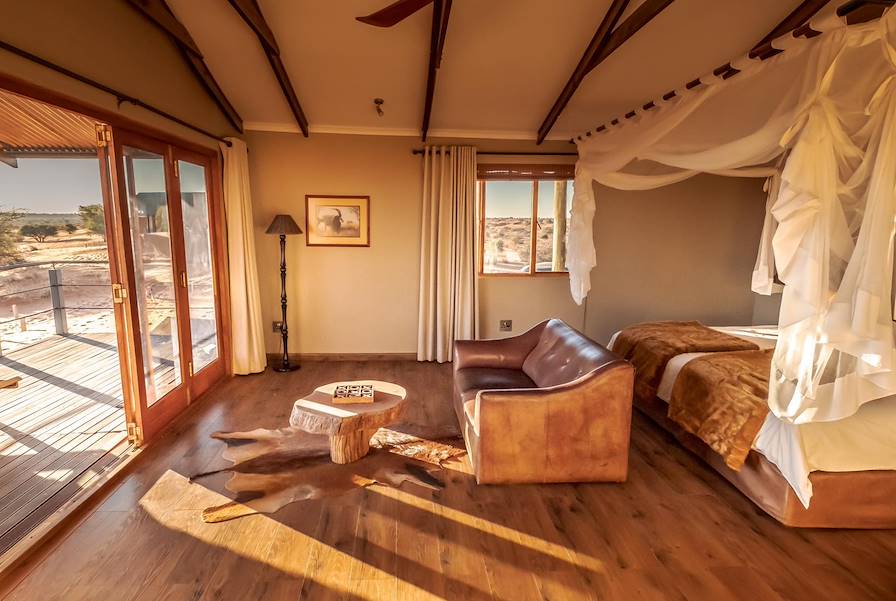
Settle in for two nights just a few minutes from the centre. The lodge boasts an exceptional setting: behind you, the city; before you, the vastness of the desert. All of the chalets have a small terrace with views over this endless sandy plain. In the morning, the bed is positioned to let you wake up to the glowing light. The rooms open onto beautiful and spacious bathrooms. The lounge area has a fireplace - and a bottle of South African wine for the parents. To top it all off, the accommodation is just a few minutes from the beach.
Optional - Surfing on the dunes.
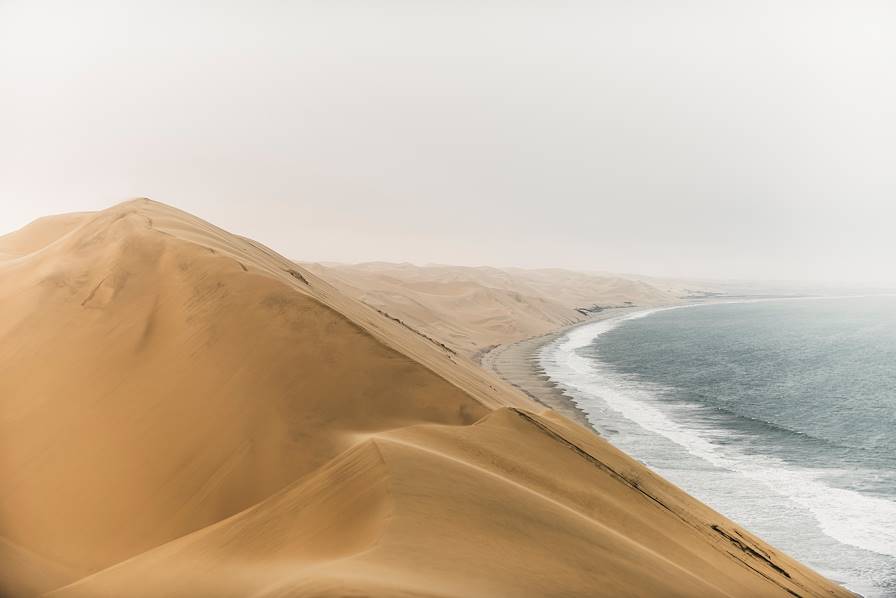
On your itinerary: mountain biking in Namib Park. Properly equipped, you set off on a ride of about 15 km (9 miles) south of Walvis, into the heart of one of Southern Africa’s last marine sanctuaries: Sandwich Harbour. This protected nature reserve promises a magical and unforgettable sight: the meeting of the giant Namib dunes and the Atlantic Ocean. A haven for flamingos and other birds, offering extraordinary viewpoints for photography enthusiasts.
Also planned - desert animals. A small, resourceful wildlife population inhabits the dune fields - more densely than one might think. The chances of seeing an oryx or even a jackal there are quite slim. On the other hand, many darkling beetles can be found here - beetles well adapted to life in the desert. Thanks to their shape and adaptive behaviour, they collect and retain just enough water to avoid dehydration from one dewfall to the next. The shovel-snouted lizard, with its shovel-shaped head, is a specialist in burrowing. Many tactical options are drawn on to escape the furnace. Your group will spot some with a guide.
Optional - A desert flyover.
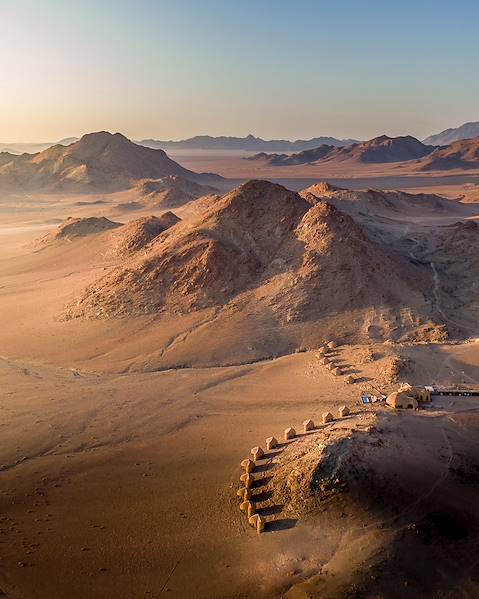
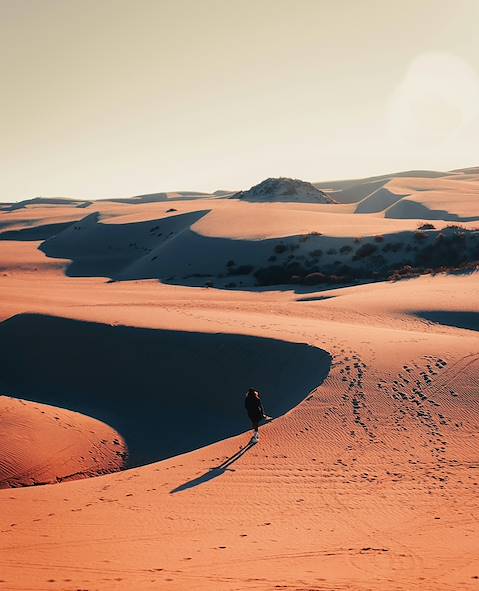
After the coast, the desert - heading south. A river in the Namib Desert, near the southern tip of the Naukluft Mountains, Sesriem is known for Sesriem Gate, the main entrance to Namib-Naukluft National Park. It provides access to the famous Sossusvlei dunes, Sesriem Canyon and Dead Vlei - a stunning white clay pan surrounded by dunes, where petrified trees stand. And it can’t wait to bring all of this before you. The journey between dunes and ocean first crosses the desert, then passes through shale landscapes. Your destination: the apricot-coloured mounds and red cliffs already appearing on the horizon.
Stay for two nights in a small village. The 20 charming cottages offer a 180-degree view over the Namib plains. Meals with African flavours are prepared on site, in a setting that follows local tradition. Simple accommodation, out in the heart of nature.
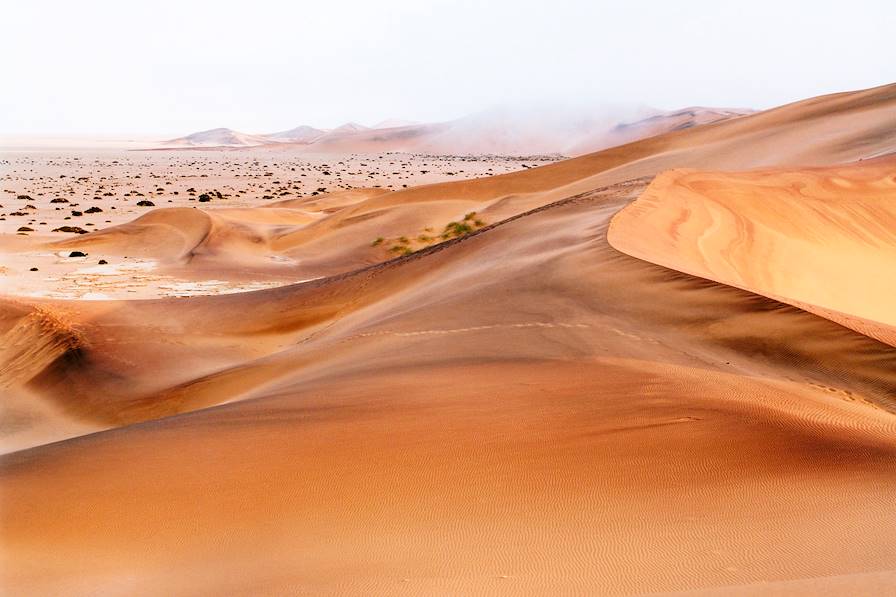
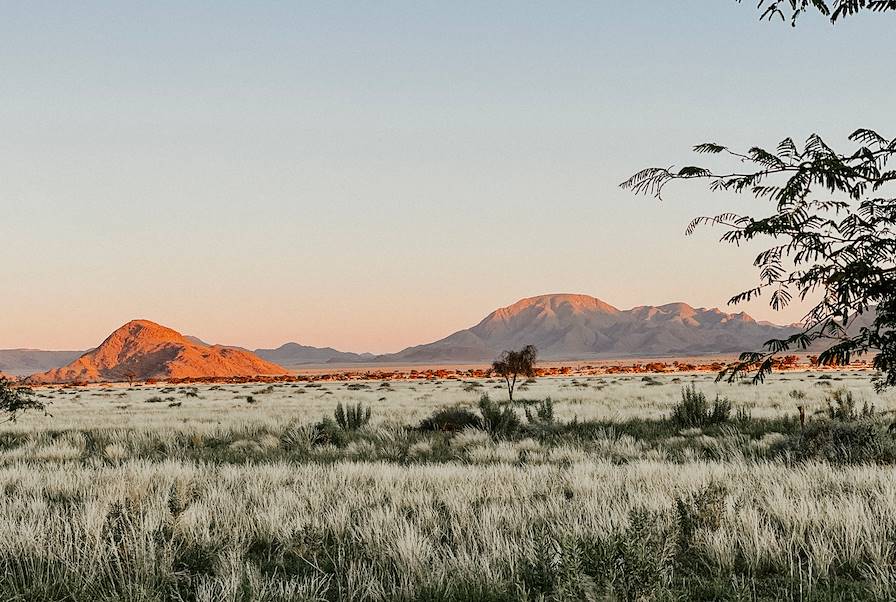
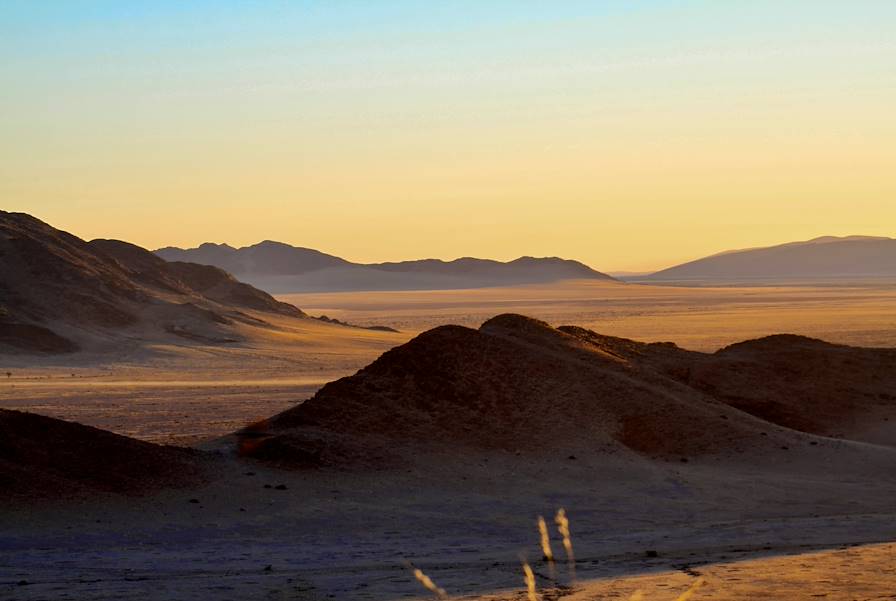
In Namib-Naukluft National Park, the whole family is greeted by a landscape that borders on perfection: pure lines, an unrivalled palette of colours - sand that shifts from orange to scarlet, and a sky that is endlessly blue. Only a few ghostly trees and occasional animals - oryx, gazelles, ostriches, jackals - break up the sea of dunes. With some dunes rising over 340 metres (1,115 feet), they are among the highest in the world and form around a former salt lake that has dried up, bordered by a few acacias whose roots reach far, very far into the ground. In the Sossusvlei area, a salt desert appears within the sand desert.
Things to see and do: Climb Dune 45, perfectly shaped; take a late afternoon walk in Sesriem Canyon, over 15 million years old; venture into the dried-out basin of Dead Vlei, wonderfully photogenic; and spot an oryx, a springbok or an ostrich.
Drive to Mariental. The Namib Desert disappears in the rearview mirror as the vehicle speeds towards the central Namibian plateau, skirting the Tsaris Mountains along the way. Enjoy a two-night stay in the heart of a valley, between two linear, parallel dunes - characteristic of the Kalahari - those immense orange walls of fine sand. On the edge of the desert, along a track, the farmhouse appears with its warm lounges opening onto the outdoors, places to cool off, loads of animals, and the vegetable garden’s bounty. No cows or rabbits in sight, rather springboks that come to lick your hands, meerkats that follow the owner everywhere, dozens of peacocks and horses. Comfortable and vibrantly colourful, the chalets have the rustic charm of authenticity. You can sleep at the very top of the dune or at its foot. At large tables, people eat, meet, and get to know all these wonderful people. The atmosphere is relaxed and friendly, with no frills.
On your itinerary - A brief encounter with the Bushmen. At dawn, your group is gently guided by the indigenous peoples of the Kalahari for an authentic and deeply enriching experience - walking alongside the Bushmen to their village. Each stop along the way opens the door to age-old knowledge. Accompanied by a guide, you gradually discover the secrets that have enabled this tribe to survive in one of the planet’s most hostile environments: collecting water in ostrich eggs, setting ingenious traps, or identifying medicinal plants with many benefits.
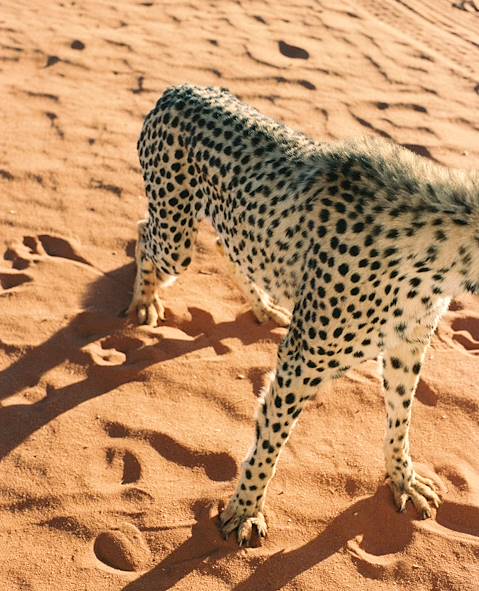
Also included - a cheetah encounter. Slender and graceful, this feline was destined to become the world’s fastest land animal. A spotted flash crossing the desert, it can reach speeds of up to 120 km (75 miles) per hour over short distances. In partnership with the Cheetah Conservation Fund (CCF), which welcomed you on arrival, your lodge is home to a few orphaned cheetahs on a vast 12-hectare (30-acre) property. Passionate guides share their history, their way of life and the efforts made to ensure their conservation.
Departure for the capital via the only Windhoek/Cape Town route - a fairly busy stretch. On the way, you will cross the Tropic of Capricorn and pass through Rehoboth, home to a unique group, the Basters, who are of mixed Afrikaner and Nama descent.
Optional en route - Visit and meet people at a Namibian farm.
On arrival in Windhoek, you will spend the night in the upmarket suburb of Klein Windhoek, 30 minutes from the international airport. The hotel sets a new benchmark for luxurious retreats in the Namibian capital. Its elegant architecture winds around a heritage building and a central courtyard. Some rooms open onto this area with a fountain, while others look out to the mountain. With only around 40 private guests, it guarantees its guests tailor-made, attentive service focused on detail - just what you need for this final night.
Return the car. Then board your return flight. Night on board, arrival the next day.
À la carte
This suggested itinerary can be customisable down to the smallest detail, including duration, stops and content. An à la carte menu of experiences is also available to create a journey that reflects who you are.
Desert elephants
If you want to be sure of seeing the legendary pachyderms that patrol the Hoanib riverbed, it's best to go on a dedicated excursion to search for them. The guide will pick you up in a 4x4 early in the morning and use their experience to spot the mammals. Attracted by the huge acacia and mopane trees that make up these oases, the elephants can travel more than 70 kilometres (43 miles) a day in search of water and food. So it's a matter of finding them.Surfing on the dunes
Whether standing or lying down, and regardless of your level, everyone can ride down the slopes of the majestic sand dunes of the Namib Desert on a sandboard. The sandboard can reach speeds of up to 70 kilometres per hour (43 miles per hour). Get your adrenaline pumping!Fly over the desert in a plane
What better place than the sky to appreciate the beauty and shades of the desert in its entirety? Board a Cessna for a two-hour flight over ochre-coloured landscapes, old diamond mines, shipwrecks and the salt pans of Walvis Bay, ending with the mesmerising sight of dunes plunging into the ocean.The Namibian farm
Agriculture is a pillar of local life. Nestled in a wild setting typical of the Namibian veld, this farm has been selected for its sustainable and environmentally friendly agricultural practises. Accompanied by a private guide, you will meet the people who work there and talk to them about the challenges they face, particularly climate change, before sharing a delicious lunch made with local produce.
Why visit Namibia with Voyageurs du monde?
Every day, our travel specialists craft bespoke experiences shaped around each traveller's profile, desires and budget. These passionate experts design experiences delivered on the ground by a local network of Concierges and trusted contacts. These fully customisable, made-to-measure trips are complemented by a wide range of high-end services (lounges, 24/7 assistance, travel booklet, app, Wi-Fi, restaurant booking, etc.)
Let us create your tripA few of the advantages of travelling with us to Namibia
- Globally unique concierge service
- CO2 absorption