100% customisable travel idea
Fez, Rabat and Marrakech Imperial Morocco by train
Morocco - Fez - Rabat - Marrakech
The Imperial Triptych
Your trip
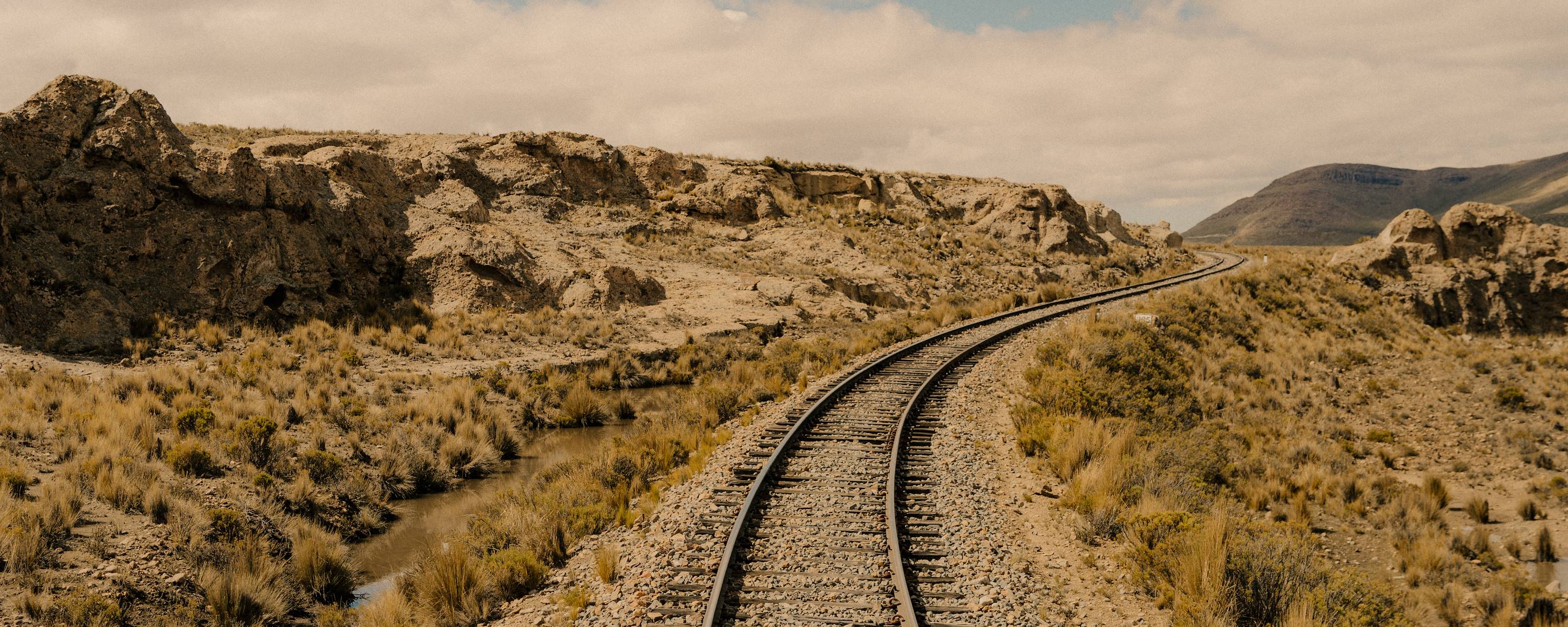
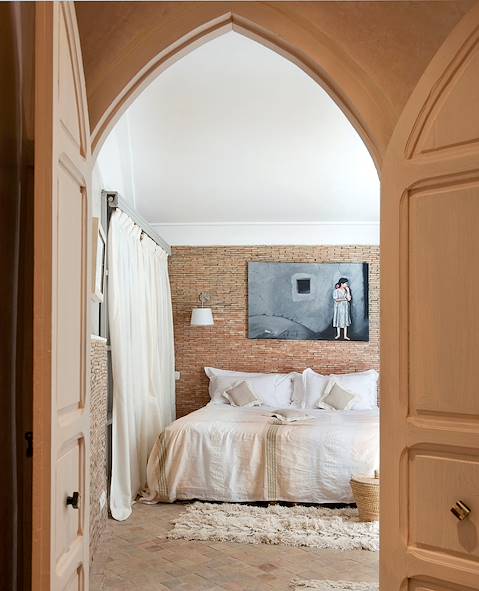
Travelling by train multiplies the advantages. You’ll be comfortably settled in: you’re travelling in first class. It moves forward steadily, even if not always at great speed. It doesn't matter, since we have all the time in the world to watch the landscape go by. Train stations are never far from city centres. And the train is recommended given the global ecological situation. In short: the trip is pleasant and eco-friendly. Cars are only be used occasionally as a supplement and will always be accompanied by drivers. Another feature, not just of comfort but of true hedonism, is the riads. Your stop-offs are vital - not only to rest and recover, but also to immerse yourself in a sophisticated way of life. These large urban houses could be compared to private mansions. They combine know-how and elegant living at a superior level and have lost none of their charm in their conversion to hotel. Well, at least not for those we have hand-picked for you. As you would expect in a country renowned for its fine gastronomy, the cuisine here is nothing short of excellent. All scheduled tours are conducted in private, so you won’t miss any of the essentials. Take a look at the itinerary: a full day in the old city of Fez; an excursion to Volubilis, Moulay Idriss and Meknes; the highlights of Rabat; in Marrakech, the Majorelle Garden, nearby museums and a behind-the-scenes tour of the medina; and a day of sharing with a local resident in the areas around Marrakech - including a cooking class, lunch and a walk through a Berber village. Finally, should an unexpected wish or a minor setback arise along the way, you have the contact details of our on-site concierge to assist you. Together with your travel specialist, they can tweak your trip even once you are on site.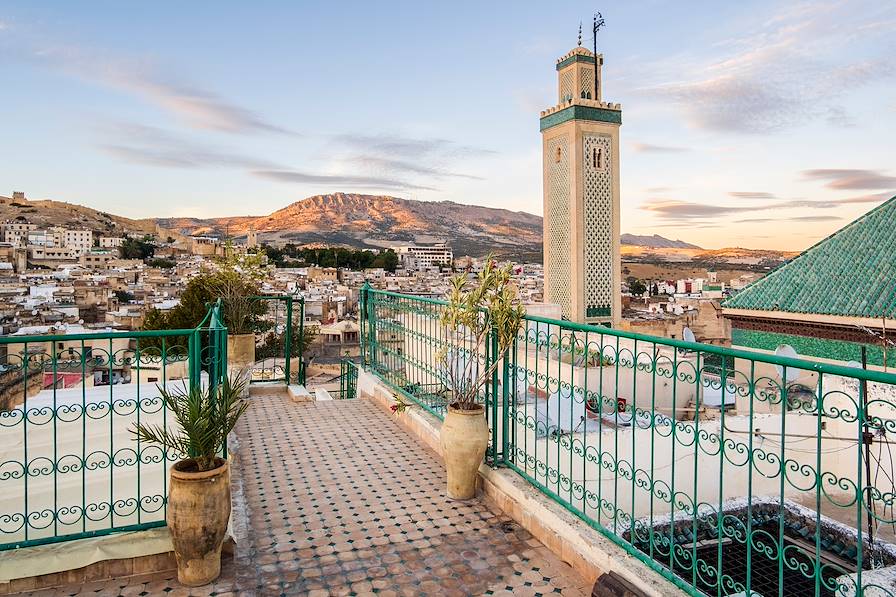
Itinerary
100% customisable for you
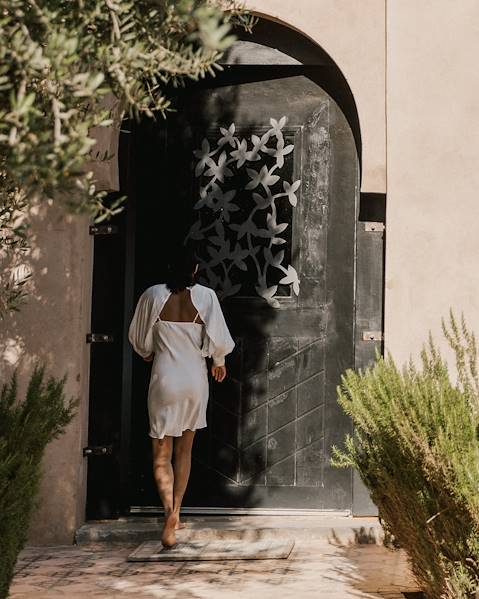
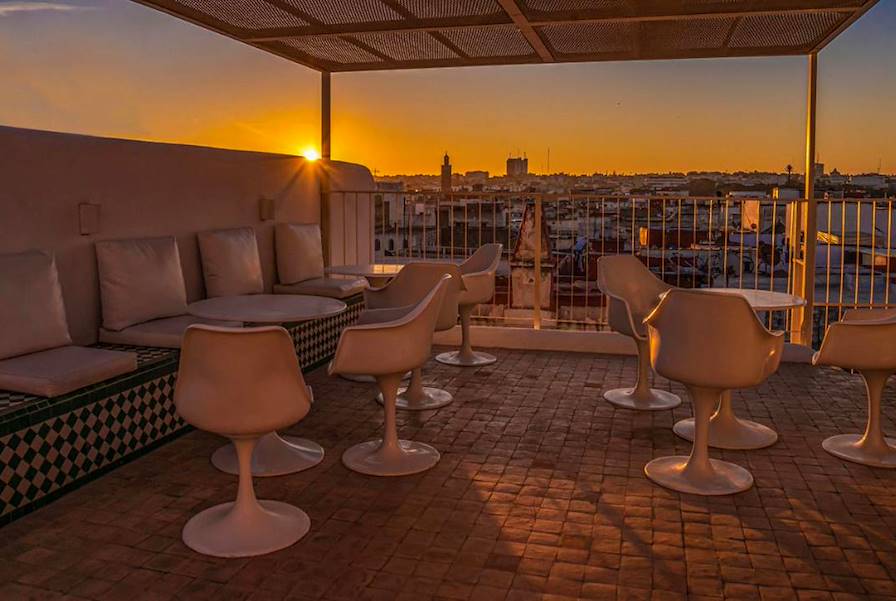
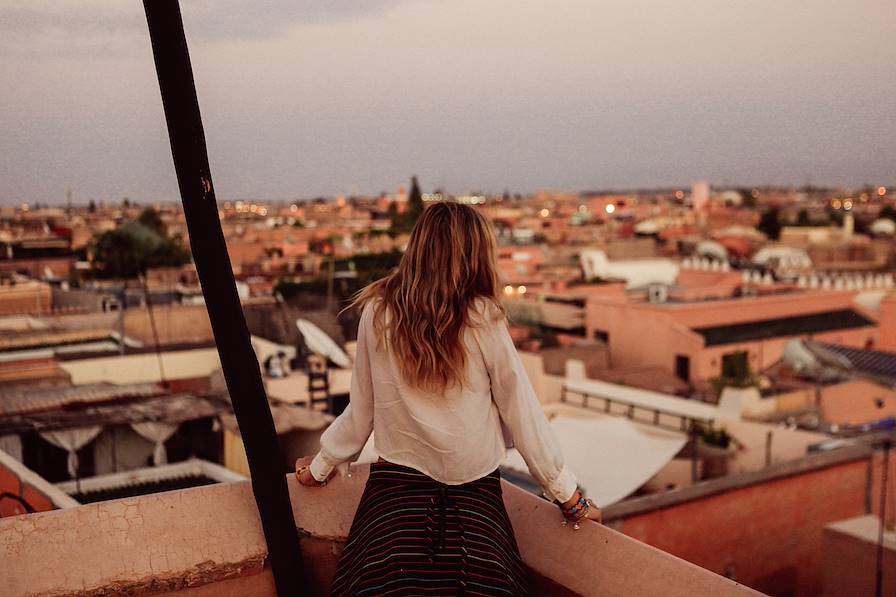
Upon arrival, you’ll have a private transfer then settle in for three nights at the entrance to the old city, in the Batha district. Behind the door, the typical light well found in Moroccan homes immediately captivates at first glance. The inspiration is Andalusian, the décor is highly photogenic and the service is joyful. Each of the five rooms in this charming riad highlights a different colour, in a bright and airy atmosphere - which is rare in the old town. In a romantic mood? Choose the red room. Unless you are eager to explore the surroundings of the riad, in which case you might choose the azure room set up on the terrace. For those who find that a simple mint tea is not quite enough to revive them after a long day spent wandering the maze of alleyways, the trendy rooftop serves fresh cocktails, beers and a selection of good local wines. In the evening, guests can sample a wide array of Moroccan dishes reimagined with refinement: salads, soups, lamb tagines, prune tagines, vegetarian couscous, grilled meats, crispy briouates, poached pears, and more.
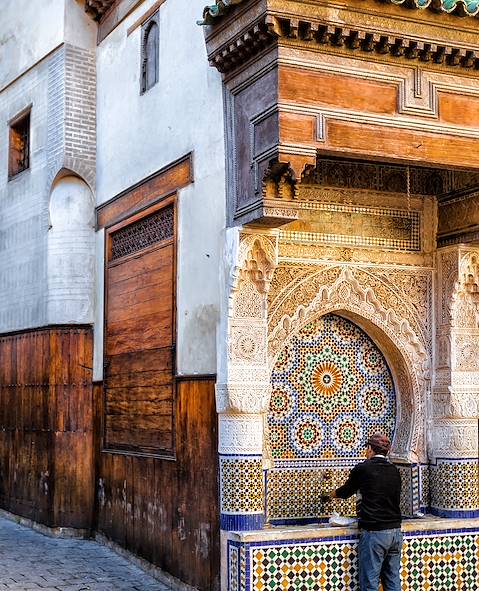
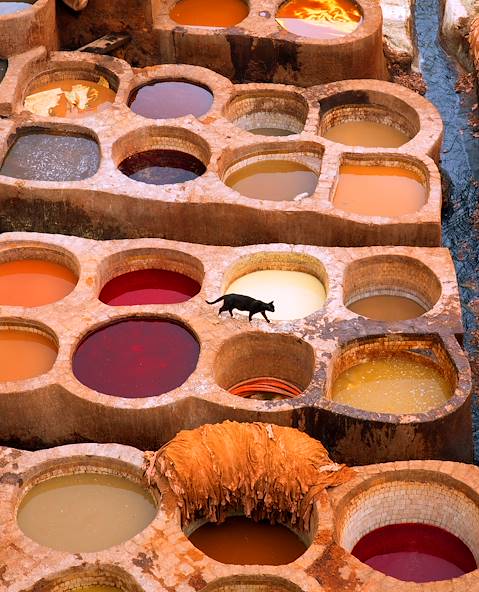
Already planned - The medina of Fez and its ramparts, in private. Fez proudly upholds its role as the artistic, intellectual and religious capital of the country. Exploring Fez means diving into the labyrinth of its narrow, winding alleys, cut through with stairways and covered passages: the colours, the sounds, the scent of tanned leather, the heady aroma of oriental perfumes, the delicate smell of grilled skewers, the sweet taste of pastries… Scheduled for today: an overview of the medina and its ramparts; the Andalusian quarter; the tanners’, dyers’ and coppersmiths’ districts, as well as Seffarine Square; Quaraouiyine University, home to the oldest mosque in Africa; the Mausoleum of Moulay Driss, founder of the city; Nejjarine Square; Rsif market; the Jewish quarter…
Optional - Fez in the footsteps of an architect; Fez told by Frédéric Calmès, an expert in traditional repertoires.
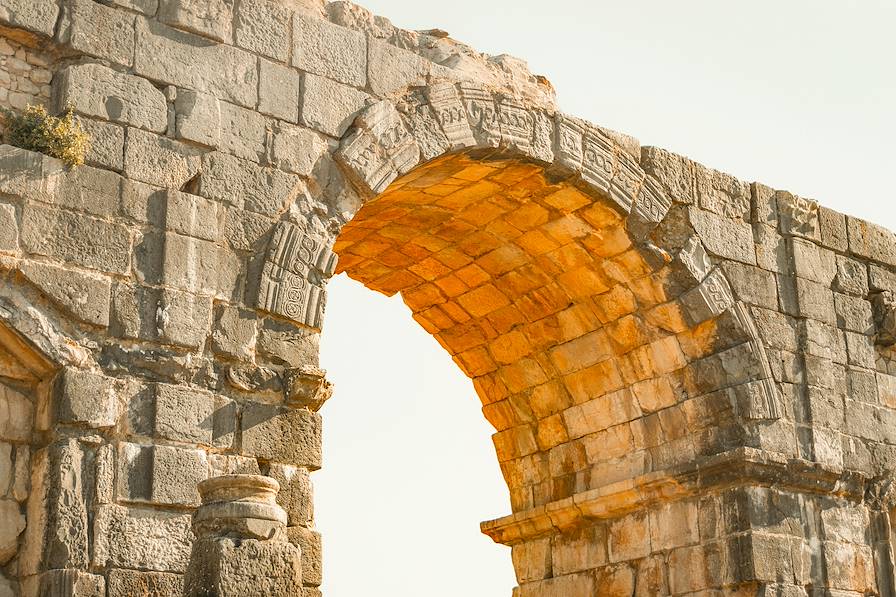
On your agenda - Volubilis, Moulay Idriss, and Meknes with a private driver and guide. Volubilis is the largest archaeological site in Morocco. Its remains are listed as a UNESCO World Heritage Site and allow us to piece together how the ancient city was organised. But above all, it’s the splendid frescoes, with their figurative scenes adorning many of the site’s buildings, that make Volubilis an unmissable stop. Protected by around 40 km (25 miles) of ramparts, Meknes, known as “the city of 100 minarets”, is one of the main stops on a tour of Morocco’s imperial cities. It has one of the country’s most popular medinas. About 20 km (12 miles) from Meknes stands a holy city, all in white: Moulay Idriss. Built in tiers on a rocky spur, it impresses. Every year at the end of August, a Muslim pilgrimage takes place here. While everyone can stroll through the alleys of the holy city and admire the tomb from outside, only Muslims are allowed to enter the mausoleum.
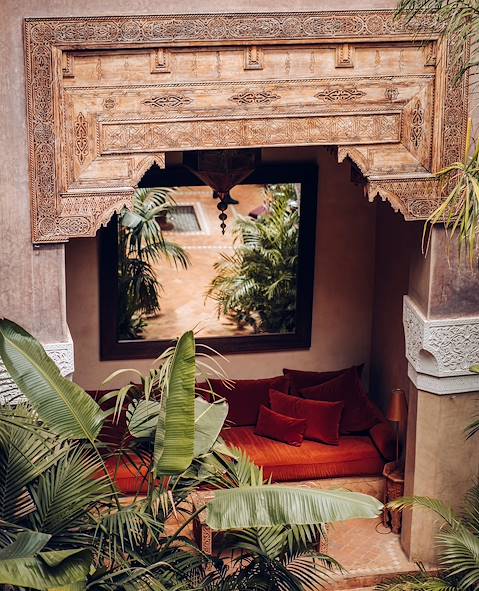
You’ll have a private transfer to the station, then take the train to Rabat. You’ll spend one night in the upper part of the medina. Your riad, with its beautiful Arab-Andalusian style, has just a handful of rooms. From the courtyard with its finely stuccoed arcades, you’ll feel a certain admiration. The room’s layout strikes a balance between respect for tradition and contemporary touches. And it works. Here, we’ll travel like 21st-century travellers. Of course, the restaurant offers its own take on Moroccan classics. It cooks up dishes with skill and flavour. The quiet hours in the shaded, flower-filled patio are delightful. The spa, hammam and pool help extend guests’ relaxation.
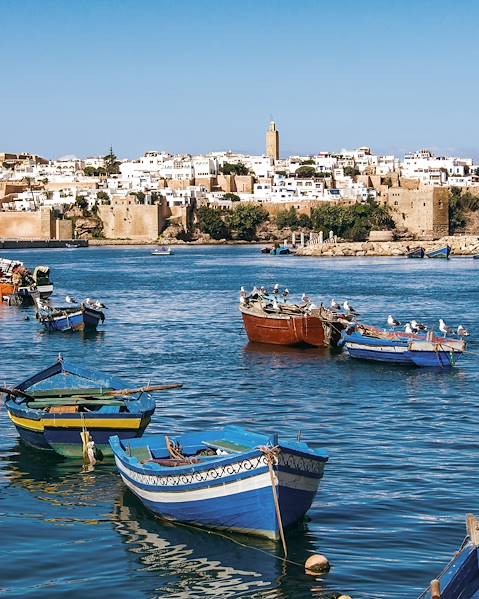
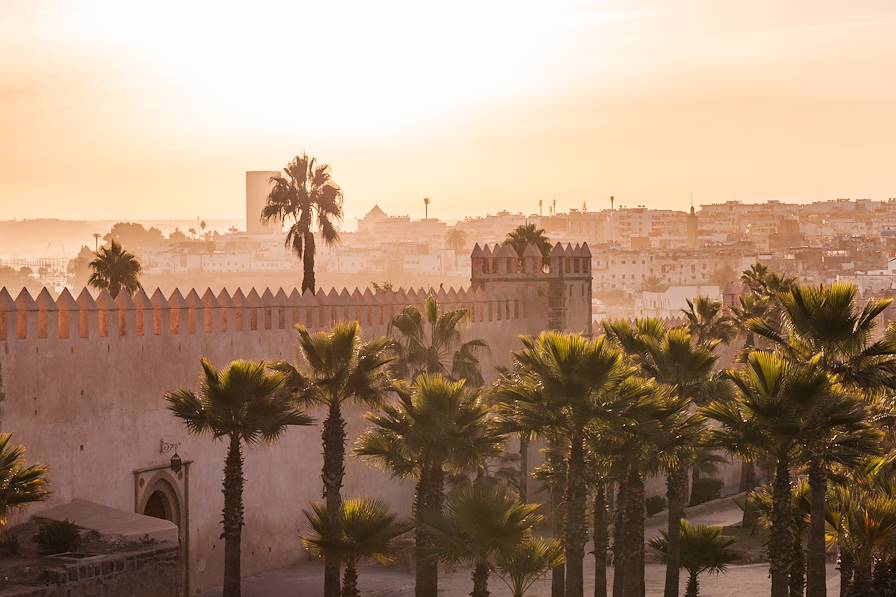
In your itinerary - Rabat, the highlights, with a private driver and guide. Today's goal: the greatest attractions of the Cherifian capital. We begin with the Kasbah of the Oudayas, an impressive fortress built by the Almohads in the 12th century. It displays military and prestigious architecture, with clean lines that create a strong impression. Another Almohad achievement, Hassan Tower is a symbol of Rabat. It is the minaret of an ambitious mosque, left permanently unfinished after the death of its patron, Yacoub el Mansour. At Chellah, you’ll find the remains of a Roman city, then traces of various occupants, until the Berber Merinids settled here and were buried. Their fortified necropolis is both peaceful and majestic: ablution room, zaouia, minaret and funerary chambers. The Dâr al Makhzen, the royal palace, is a beautiful classical-style building built in the 19th century. And the walk wouldn’t be complete without a coffee break!
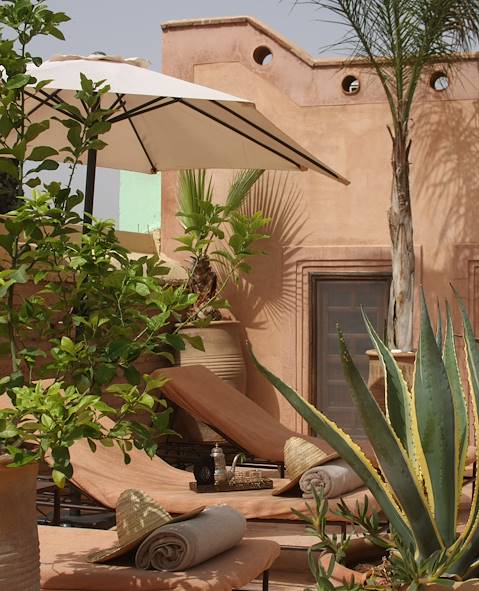
In the afternoon, take the train to Marrakech. Once you’ve arrived, you’ll settle in for three nights in the medina. A sturdy studded door shuts out the bustle of the souk. The gentle murmur of a fountain alone underscores the tranquillity. Your riad is a celebration of Moroccan art de vivre. Without fanfare, but with the delicacy of a few rose petals floating on the water of a pool. The East here is serene, balanced, understated in its splendour, and never formal. This is an Orient to live in. The rooms overlook the large tree-lined patio. The finest craftsmanship has provided them with the essentials for their furnishings and décor. It’s not just comfortable here - it feels good. The difference is key. The table is in harmony with the rest. This way, there’s no change in atmosphere. To preserve the beautiful order of things, the pool decorated with zellige tiles, the hammam and its massage table have been set up in the douiria and the guest apartment is next door.
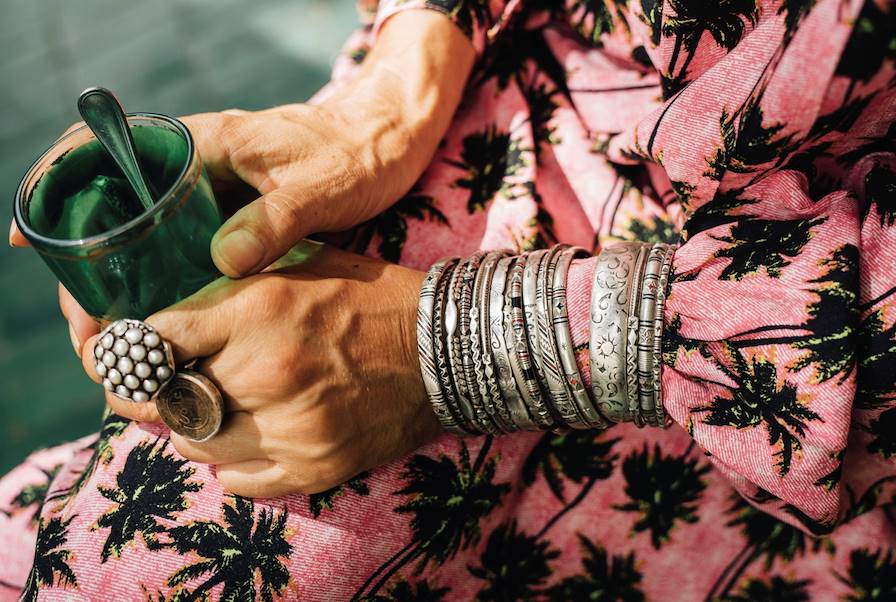
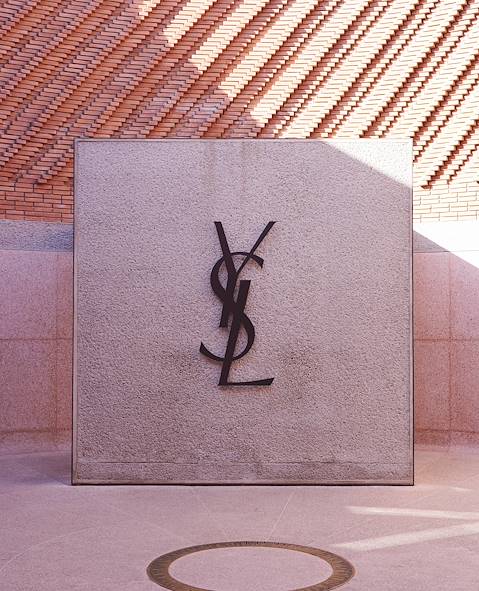
Already planned - your pass for the Majorelle Garden, the Berber Museum and the Yves Saint Laurent Museum. The garden, created in the 1930s by the Orientalist painter Jacques Majorelle (1886-1962), is sure to leave no sensitive traveller indifferent, botanist or not - this aspect of the place is, in any case, quite exceptional. It now houses a Berber museum: Six hundred pieces of art and ethnographic objects collected by Pierre Bergé are displayed on the ground floor of the famous blue villa. This collection documents a civilisation, a movement of humanity that is both ancient and contemporary. The Yves Saint Laurent Museum invites visitors to marvel at the designer’s work through clothing, accessories, photographs and sketches. It’s an aesthetic journey of the mind, a rare opportunity to experience. The building that Studio KO designed for the institution is also worth a closer look.
Optional - Meet the creators of Sidi Ghanem; The Red City after 1900.
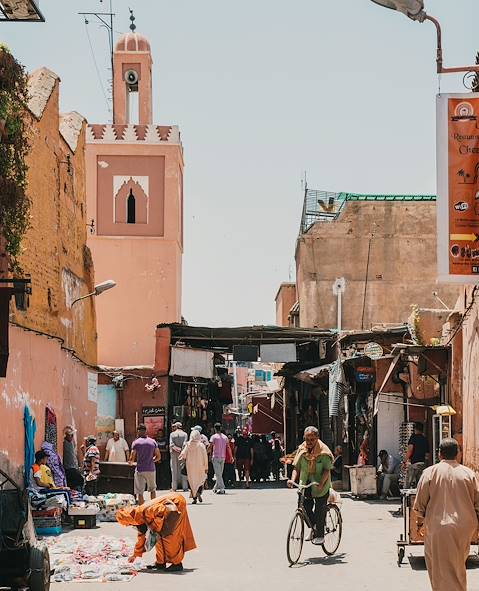
Scheduled - Meet the artisans of the medina. We’ll follow the guide for an illuminating dive into the living labyrinth of the old town. The small food markets that spring up each day along the ochre walls are known as soukas. Farmers from the nearby mountains offer everything that goes into a family lunch menu. Further along, you’ll find a modest weaving workshop where Mohamed works at his almost century-old loom. Next comes the foundouk, where artisans shape what will later shine in the beautiful shops of the tourist souk: ironwork, cabinetmaking, horn crafting. Further on, djellaba tailors and shoemakers continue age-old traditions. A true immersion in local Marrakech. This walk, filled with sharing and smiles, ends at the Women's Museum, dedicated to the leading role of Moroccan women in economic, social, political and cultural spheres.
Optional - Discover the medina off the beaten path, accompanied by a guide passionate about Arab-Berber cultures, who leads you to explore the antiques and second-hand market and introduces you to daily life in this bustling microcosm.
Mark your calendar - Berber village and countryside lunch at Saïda’s. A private driver will take you to Saïda's place. The young woman has set up a small restaurant in the family home. She’ll show you her way of cooking and invite you to take part in preparing the various dishes. This is naturally followed by lunch, where people engage in discussion about local customs. To aid digestion, explore the Berber village on foot with your host or a member of their family. A stop gives you the chance to meet carpet weavers who work together as an association. The journey is truly part of the experience, with a drive through Tahanout and along the old salt road on the way there, then through the Agafay desert on the return.
Back in Marrakech, you’ll have a private transfer to the airport and a direct return flight.
À la carte
This suggested itinerary can be customisable down to the smallest detail, including duration, stops and content. An à la carte menu of experiences is also available to create a journey that reflects who you are.
Fez: in the footsteps of an architect
Your guide, Meriam, is interested in the identity and cultural facets of architecture, the environment, heritage, and crafts in Morocco. Together with her brothers, she founded a small business that aims to showcase the medina of Fez in many ways, including organising walks through iconic sites and artisan workshops. Given the opulent, influential and diverse architectural heritage of Fez, it is wise to enlist the services of this architect-guide to delve into the details of what is sometimes called the “Athens of Africa”. A look back at the past, as well as at current developments and contemporary issues, and perhaps even the chance to meet artisans at work on their own current projects. A gourmet break punctuates these enjoyable strolls.Frédéric Calmès’s Fez
Researcher, storyteller, and guembri player - a Gnaoua bass - within the Sufi brotherhood Hmadcha, Frédéric Calmès offers an over-arching approach to, and understanding of, Fez. In his company, we explore the historical, anthropological, architectural, artistic and spiritual aspects of the city. We explore key sites, some of which are usually inaccessible; we meet musicians, Sufis and artisans who have agreed to share their stories, their talents and their expertise. Gardens, zawiyas (Sufi houses), mosques, Quranic schools, riads, caravanserais, souks, tanneries, workshops, mausoleums, university - these significant spaces and buildings are explored with a common thread: the resource to which Fez owes everything, from its founding to its prosperity - water.Shopping trip in Sidi Ghanem
A true native of Marrakech, Hanane spent about ten years travelling the world before returning home to launch her own decor brand. Today, she is your guide through a maze of workshops, boutiques, showrooms and galleries in a neighbourhood little known to tourists. Her expert knowledge is based on regular engagement with both traditional artisans and contemporary creators. In her presence, Marrakech reveals itself as stylish and in the know. Very inventive. Since nothing is planned in advance, a discussion of perspectives, wishes and expectations allows the experience to be tailored to meet your idea of a dream trip. And to let the city offer its answers.The Red City after 1900
Jérémy, a photography collector and street art connoisseur, invites you to experience Marrakech from a new angle. By his side, you dive into the vibrant energy that has characterised the city for more than a century. Head to the new city, where legendary hotels, places of worship and art, as well as renowned architects and illustrious unknowns, stand side by side. The many different places visited are varied in their purpose (religious, logistical, tourist, cultural, administrative, etc.), the period in which they were built, and their designers. Our guide offers a wealth of explanations and revelations about them - supported by old photographs. During the walk, you’ll also uncover some hidden gems of the local street art.Final curtain in Tangier
As an alternative to Marrakech, this triptych can end in Tangier, just 1 hour and 30 minutes by high-speed train from Rabat. Buzzing with cultures and at the crossroads of two seas, Tangier is an extension of Europe with Saharan echoes. It is a combination of Mediterranean and Atlantic. From Cape Spartel, the northernmost tip of Africa, Spain is only 12 km (7 miles) away. You immediately fall under the city’s spell, just as many artists did in the past, including Ernest Hemingway, Truman Capote and Jack Kerouac. In the kasbah, up on the hill, children play, and women wash clothes at the fountain. Perched on a terrace, you take in the sweeping view: the medina stretches all the way to the sea.
Why visit Morocco with Voyageurs du monde?
Every day, our travel specialists craft bespoke experiences shaped around each traveller's profile, desires and budget. These passionate experts design experiences delivered on the ground by a local network of Concierges and trusted contacts. These fully customisable, made-to-measure trips are complemented by a wide range of high-end services (lounges, 24/7 assistance, travel booklet, app, Wi-Fi, restaurant booking, etc.)
Let us create your tripA few of the advantages of travelling with us to Morocco
- Globally unique concierge service
- Wi-Fi: 1 GB/day included
- Gourmet Voyageurs
- Adjust your trip while travelling
- 24-hour assistance
- CO2 absorption