100% customisable travel idea
The great Uzbek journey By train, along the Silk Road
Uzbekistan - Fergana - Tashkent - Samarkand - Bukhara - Khiva
Orchards and art treasures
Your itinerary
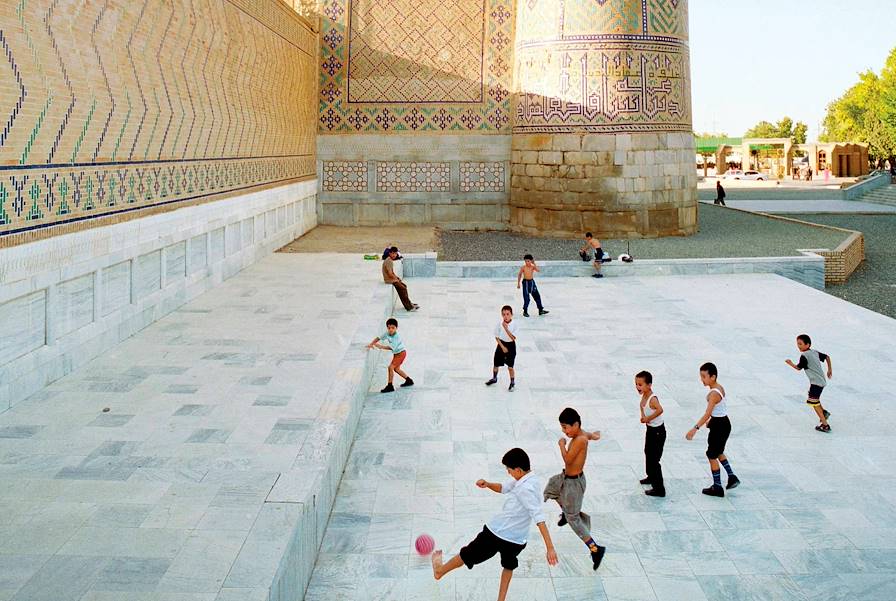
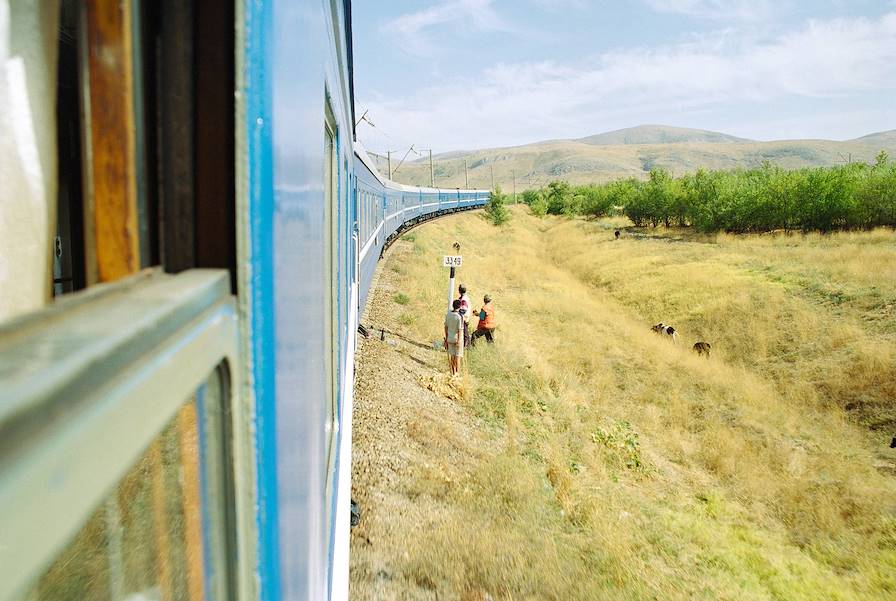
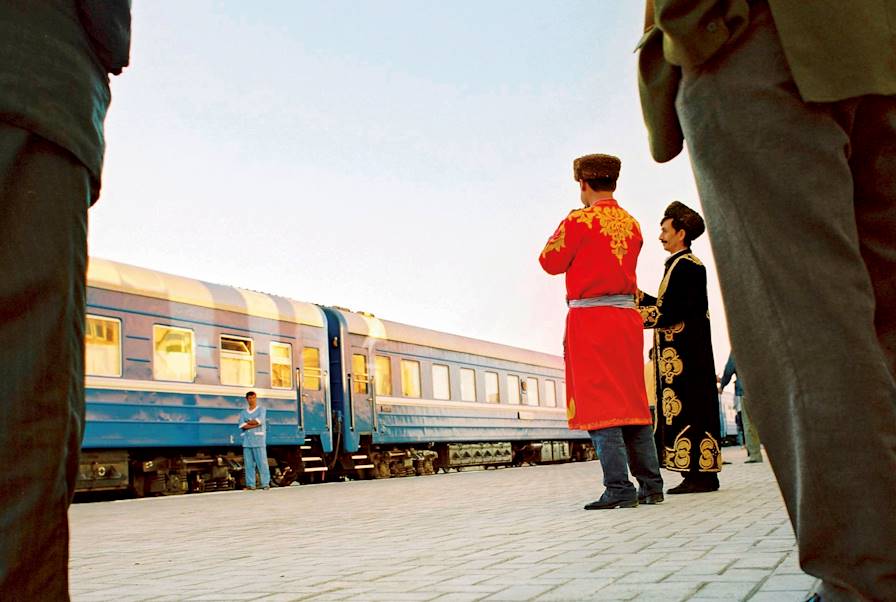
Once in Uzbekistan, you travel by train. Whenever possible, this will be on the Afrosiyob, the Uzbek high-speed train. This means excellent comfort and short travel times given the distances travelled. It’s certainly the best option. Once you reach the stop, you travel by car with a private driver. In this way, the logistics perfectly meet the needs of the journey. Your hotels vary according to the stop-off - madrasa, old townhouse or modern building - but are always close to points of interest and well equipped. That way, you’re up and running every day. We have included a whole series of visits in your itinerary. Uzbek heritage is so rich that you need to organise your visit, or you’ll risk feeling disoriented and missing out. In any case, you’ll save valuable time. Private guides are available to accompany you everywhere. This means you can make the most of your time. That being said, the pace of the trip is brisk, but perfectly manageable. It also lets you slow down, whether because the scenery is especially beautiful or simply because you want to take a moment to do nothing and just enjoy life. In short, this is a journey, not a race. And if an off-the-cuff wish or a minor setback arises along the way, you have the contact details for our on-site Concierge who will assist you.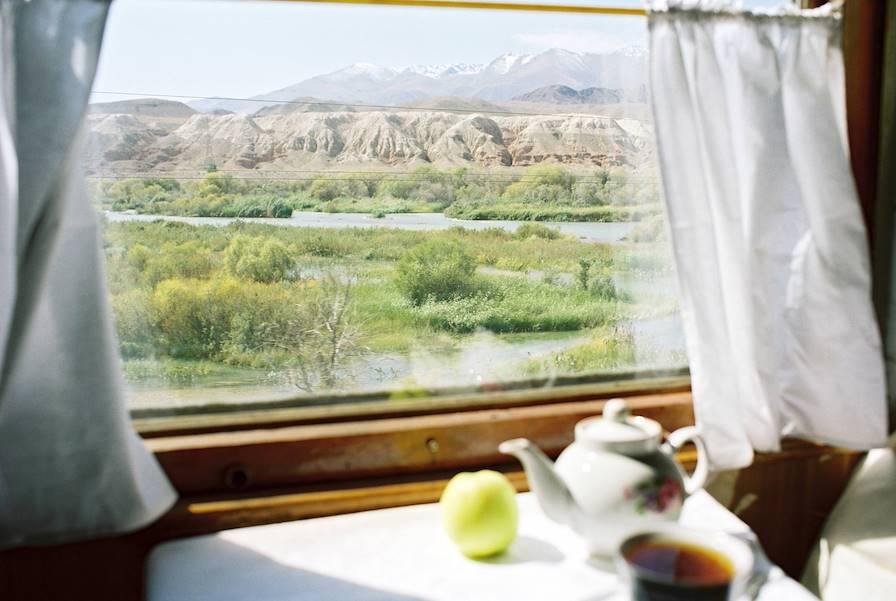
Itinerary
100% customisable for you
Private transfer and stay for three nights in the centre of Fergana. The apricot colour of the walls makes the hotel easy to identify. Inside, the décor is very much Central Asian. It's a bit like the opposite of minimalism, but the slightly showy aspects of the décor are held in check. In any case, it's very comfortable. And you are welcomed with attentive service. The rooms are well equipped, and have a cosy, plush and well-appointed feel. The restaurant's pan-Asian cuisine is prepared with real expertise. There are outdoor and indoor pools for to you unwind. Massages, a sauna and a gym are all available to keep you fit and healthy.
In your itinerary - Kokand. 56 miles (90 km) northwest of Fergana, Kokand was a pawn in the Great Game between the British and Russian Empires for control of Central Asia in the 19th century. Today, you can admire the Khudayar Khan Palace. Partially destroyed by the Soviets, its splendid decorations eloquently reflect the skill of the craftsmen of the 19th century. The nearly one hundred carved wooden columns of the Friday Mosque are an architectural feat that looks a bit like a forest. The same wooden columns can be found in the Amin Beg Madrassah, with its ornamental facade of coloured tiles. Nodira, a famous Uzbek poet and national heroine is buried in the cemetery of the Narbutabey Madrasah,. Tour with a private guide.
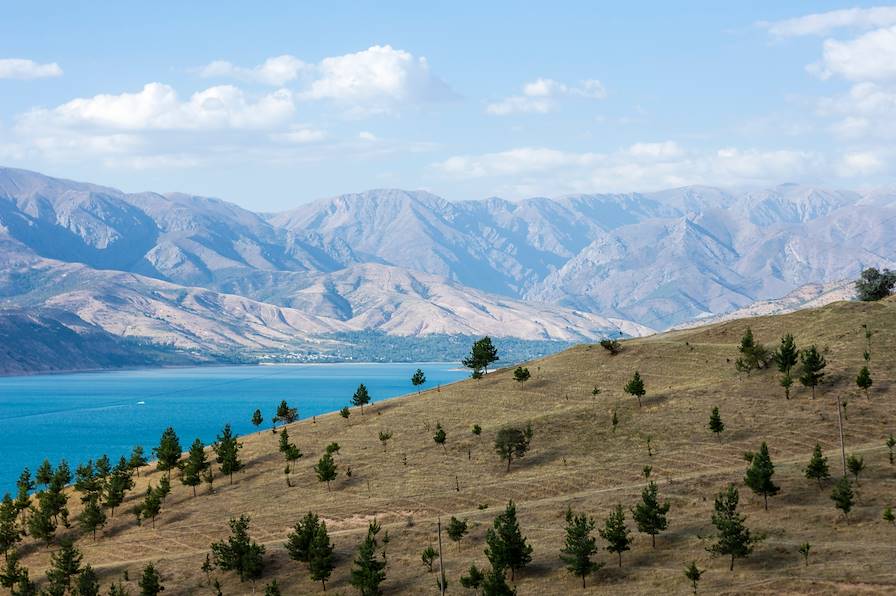
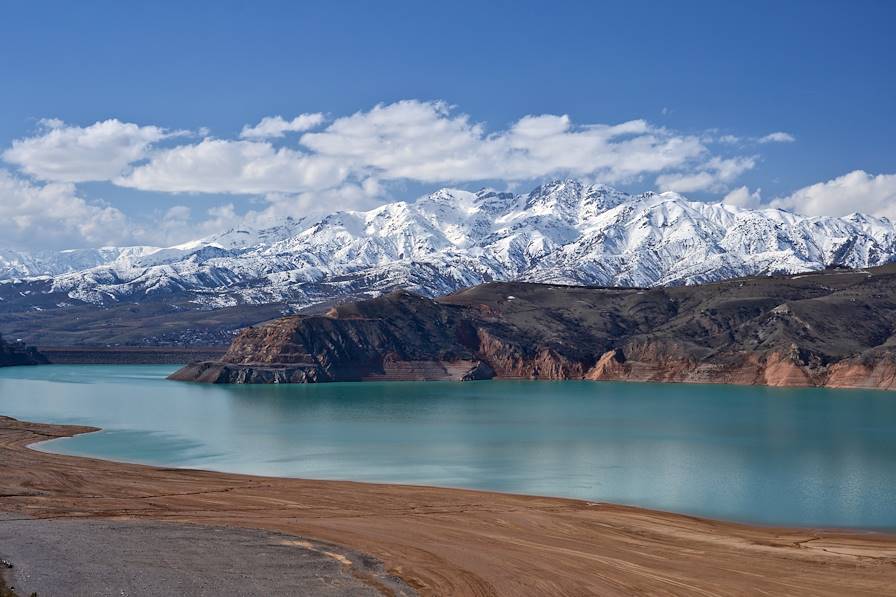
In your itinerary - Andijan and Khiva. Today, you head east, towards the border with Kyrgyzstan and the foothills of the Tian Shan Mountains, covered with walnut and conifer forests. Andijan, an old trading hub on the Silk Road, was the birthplace in 1483 of Zhahir ud-Din Muhammad, better known as Babur, the famous founder of the Mughal Empire. A complex figure - a humanist with a sword - he is still revered in the city. Andijan is now an important industrial city, producing a wide range of manufactured goods, from ploughs to wheelchairs. The Jami Mosque Complex dates from the 19th century. It consists of a mosque, a minaret and a madrasah. The next stop is in Khouva to see the Buddhist ruins. Along with goods, different religious beliefs were transported along the Silk Road. A private guide will be with you for the whole day.
In your itinerary - Rishtan and Margilan. The first of these two towns is famous for its pottery workshops. The Rishtan style is ornate and skilfully decorated, mainly in shades of blue. You'll be sorely tempted to buy something, even though the journey has only just begun. Another iconic Uzbek product is silk. And silk is what Margilan is famous for. At the Yodgorlik workshop, the silk is still made in the traditional way, with a keen eye and quick hands. The fabrics are of exceptional quality and showcase the fine craftsmanship of the artisans. Tour with a private guide.
Private transfer to Margilan station and train to Tashkent. Another private transfer and stay for two nights in a lovely brick building. Inside, an elegant international style prevails, with a few lavish touches such as marble. The rooms are spotless, well equipped and comfortable. The colour palette is a perfectly respectable combination of grey, tobacco, beige, blue. In the restaurant, European cuisine is prepared with great skill. Continental breakfast or English breakfast is served in the morning. The British theme also extends to the bar, both in its décor and its selection of spirits. In the courtyard garden, there is a swimming pool with a hot tub. There is a spa for guests with a full range of treatments such as massages, an indoor pool, a sauna and a gym. There's plenty to choose from in terms of wellness.
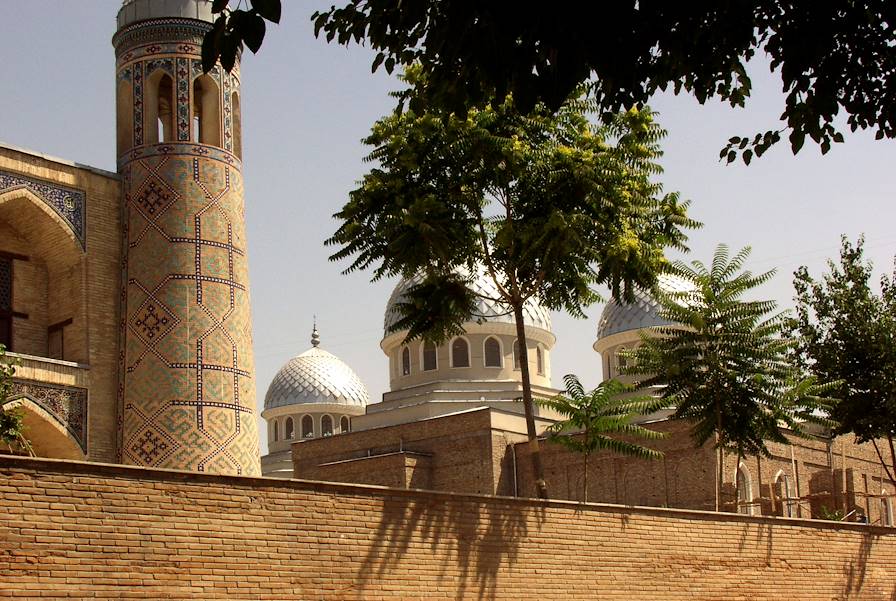
In your itinerary - Tashkent, capital of modern Uzbekistan. Earthquakes destroyed much of the city, but some impressive attractions have been preserved. The Muyi Muborak Madrasah houses the Uthman Quran, the oldest existing manuscript from the 9th century. Kukeldash Madrasah (16th century), the Palace of Prince Romanov and the Holy Assumption Cathedral (both 19th century), are also on the tour. Chorsu Bazaar is well worth a visit. Under a vast blue dome it gathers together all the country's produce in one place. The building dates from the 1980s, but the area was home to a market long before that. Stalls overflow with fruit and vegetables, meat, dairy, spices, baked goods and sweets. The abundance, variety, vibrant colours and bantering vendors is a sight to behold. Stroll through the parks and gardens that are Tashkent's green lungs and a vital part of the local way of life. Buildings built after independence are easily spotted with their blend of local motifs and an international style.
Optional extras - The Uzbekistan Art Museum; Tashkent by night.
Private transfer to the station and train to Samarkand. Another private transfer and stay three nights in old Samarkand. The hotel is bursting with character. Small details are carefully considered. The inner courtyard is splendid. The carved woodwork, on both the walls and the ceilings gives the place a harmonious feel. Bricks are used to good effect too. The overall effect is understated and elegant. The same applies to the rooms. Your room is well equipped and comfortable. The tones used throughout are walnut stain, tobacco and chocolate. In the open air restaurant hearty breakfasts are served. On the rooftop terrace, there are hot tubs with uninterrupted views over the city's rooftops and the Bibi Khanym Mosque.
In your itinerary - Samarkand with a local. This is the perfect introduction to the city. Because you decide what to do with your guide. Nothing is planned in advance, you just share your wish list and the guide brings their inside knowledge. And then they take you to the parts of Samarkand they know you will love. And it's all in English, naturally.
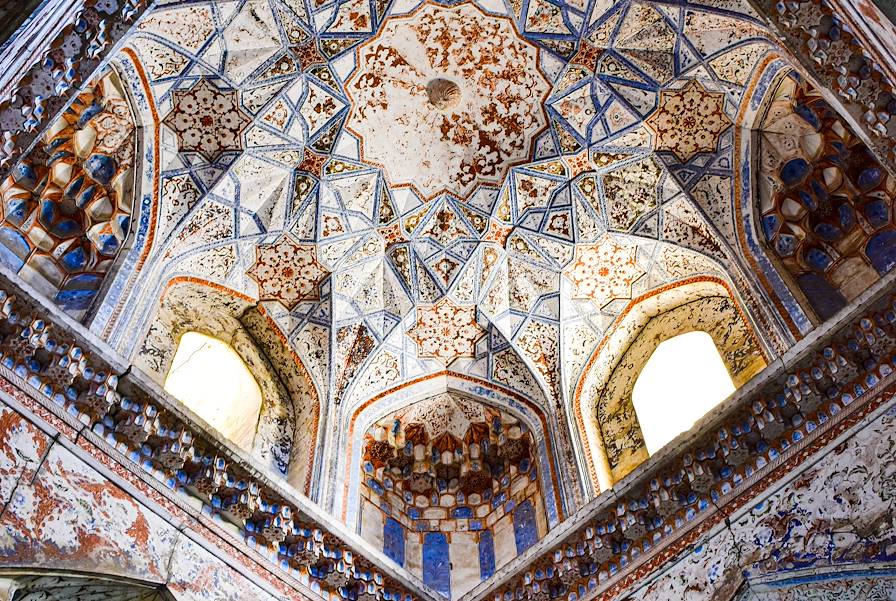
In your itinerary - Tamerlane treasures tour. Your day begins at the Afrasiyab Museum, which documents the origins of the city. The earliest known chess pieces were found here, along with highly valuable murals known as the Paintings of the Ambassadors. They are thought to depict the four principal civilisations in Central Asia in the 7th century: Chinese, Indian, Iranian and Turkish. At Shah-e Zindeh, a series of mausoleums for the Timurid aristocracy (Tamerlane's successors) were built near the tomb of a cousin of the Prophet Muhammad. The ornamental pishtaks, domes and mosaics of glazed bricks come together to form a breathtaking masterpiece. As for the Ulugh Beg Observatory (built by the grandson of Amir Timur), it was the crowning achievement of 15th century astronomy! It was also seen as an attempt to govern by means of knowledge rather than the scimitar.
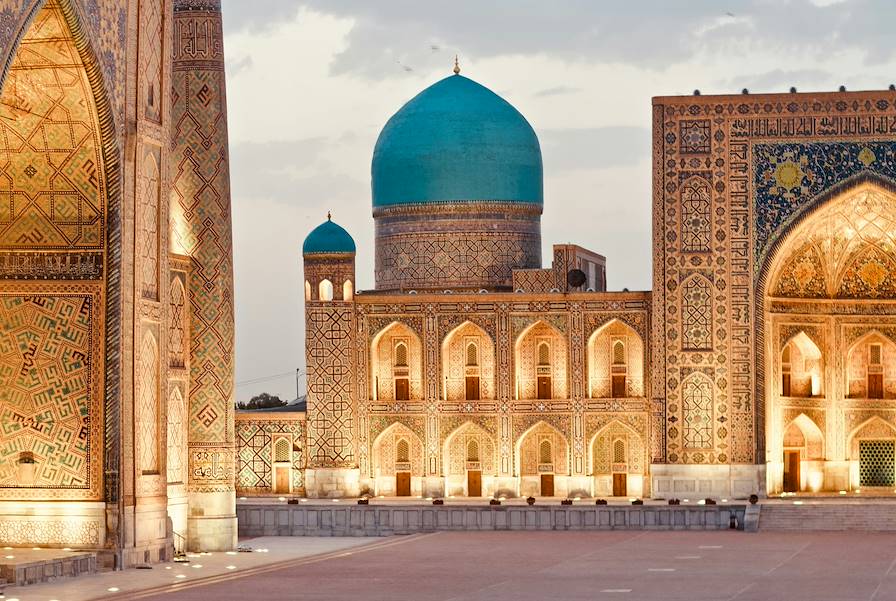
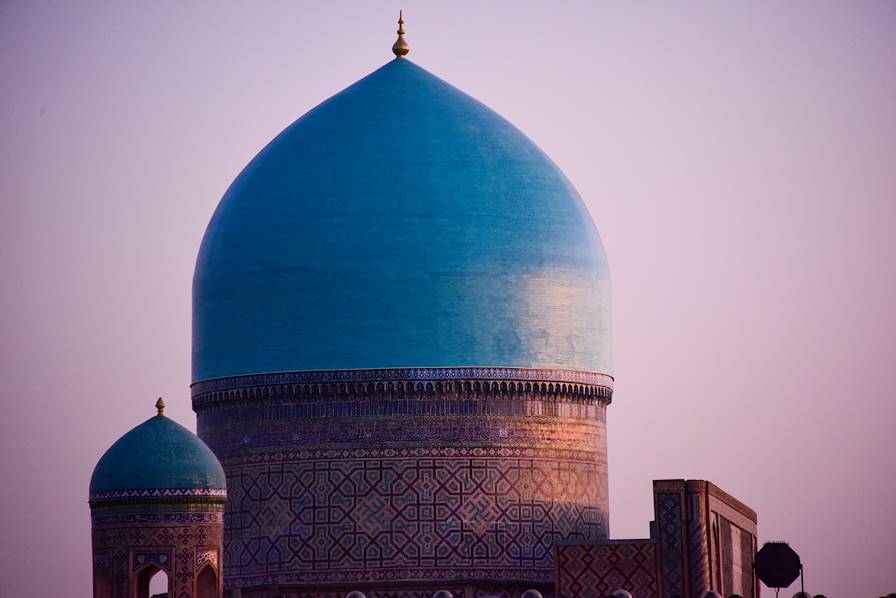
In your itinerary - Tour of Samarkand, the Blue City. The tour starts at the Registan, the square where people gathered to hear royal proclamations. The square is surrounded by three impressive madrasahs. Ulugh Beg is from the 17th century, and Sher-Dor and Tilla-Kari are from the 18th century. Next is the Gur-e-Amir, the mausoleum of Tamerlane, which was originally intended for one of his grandsons. It's quite moving to hear the prayer for the dead being chanted over his green jade tombstone. This majestic building inspired later Mughal funerary architecture. It was undoubtedly a precursor to the Taj Mahal. It was also Tamerlane who commissioned the Bibi Khanym Mosque (15th century), an innovative building with marble features. Legend has it that women in Samarkand wear the veil because the building's architect is said to have stolen a kiss from the patron's first wife. Next to the mosque is the Siab Bazaar, with its stalls selling a wide variety of breads, dried fruit, vegetables, spices, cheeses and more.
Private transfer to the station and train to Bukhara. Another private transfer and stay for three nights in a traditional style house, with a courtyard and a rooftop terrace. The décor makes discerning use of traditional motifs such as wooden or plaster ceilings, stained glass windows, and handcrafted furniture. Everything is in keeping with the building. The rooms are simple and clean and they have a fridge (as is common throughout Uzbekistan). The breakfast buffet is a great way to start the day on the right footing. A massage service is available for guests. Bicycles are also available to rent on site, so you can go for a ride around the neighbourhood.
In your itinerary - Tour of the old town of Bukhara. This tour takes you to some of the most beautiful attractions. The Ark Citadel is one of them. Built in the 16th century by the Uzbek Shaybanids, its curved walls contain a mosque, an audience chamber, barracks and a treasury - it's like a town within a town. Nearby is the Bolo Haouz Mosque with its forest of slender wooden columns and richly decorated features reflected in the peaceful pool. The Samanid Mausoleum, dating from the 9th and 10th centuries was excavated in 1934, and has been meticulously restored. The Po-i-Kalyan religious complex is home to the Mir-i Arab Madrasah, built in the 16th century by the Sufi sheikh Abdullah Yamani. It was the only Bukharan Muslim school that continued teaching during the Soviet period. Opposite are the splendid mosque (16th century) and the Kalon minaret. The minaret dates from the 12th century, and served as both a place of execution and a landmark for caravans. In the Taki, the trading domes still covering three intersections, business has thrived since the 16th century. You might even want to do some shopping there. And be sure to try some green tea in a choyxona.
In your itinerary - Gijduvon ceramics and the Vobkent minaret. About 50 km (31 miles) north of Bukhara lies Gijduvon, renowned for its ceramics. At the workshop and museum, where Abdullo Narzullaev and his family work, you can follow the entire traditional process from wheel throwing, to decorating with ground colours and firing the pottery. It's a truly illuminating tour. The reputation of the Gijduvon School has spread throughout Central Asia. Gijduvon pieces are generally lighter and more delicate and blurred than Rishtan ceramics. On the way back, stop in Vobkent to admire the minaret that dates from the 12th century and the Qarakhanid dynasty. It is one of the finest examples of Central Asian minaret design. And of course UNESCO was quick to add it to the World Heritage List.
Optional extra - Visit to the hammam; plov cookery class.
Private transfer to Khiva. Stay for two nights in the outer city, not far from the eastern wall. Your accommodation is a madrasah built in the early 20th century. If you look closely you can spot elements of modern design. The hotel conversion has preserved the original structure of the building. You stay in the former student rooms, which are simple and comfortable. They are decorated with the ikat patterns of Uzbek fabrics. The courtyard garden is very pleasant at cooler times of day. In the restaurant traditional Khiva cuisine is served. You can have your meals in the dining room or outside on the tapchan, the large platform bed where rugs, cushions and a low table are set up.
Already booked - Reservation at Terrassa Cafe & Restaurant, which serves beautifully prepared regional cuisine with stunning 360° view over the old town.
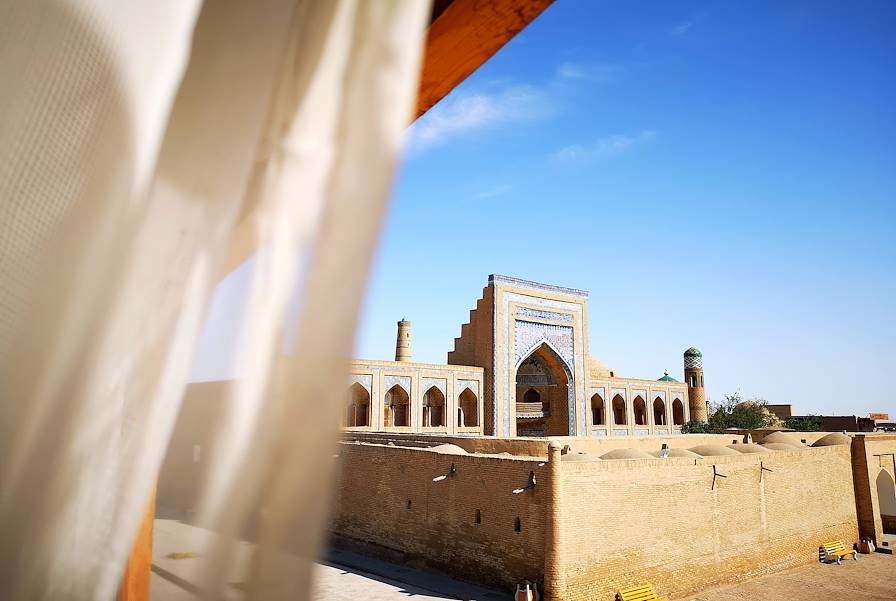
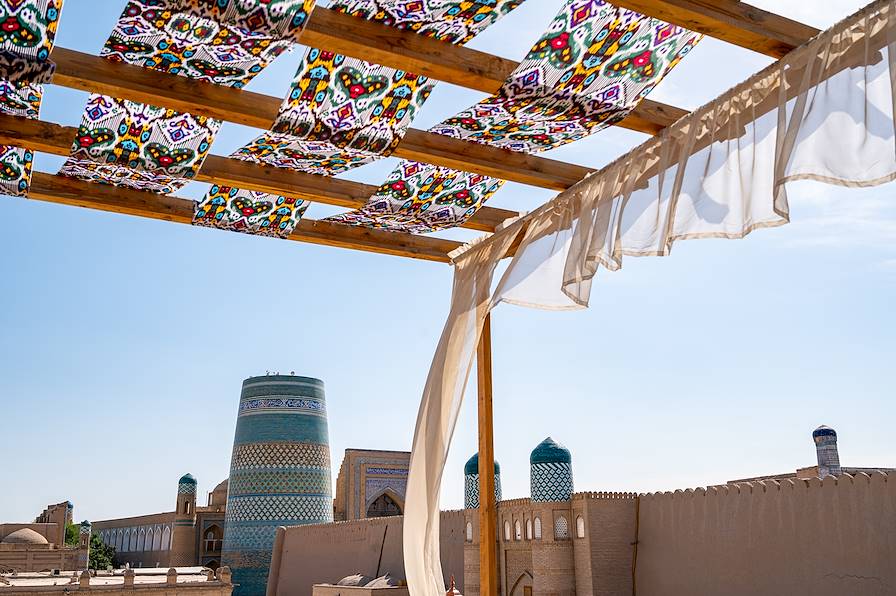
In your itinerary - Tour of Itchan Kala. Travellers have long been impressed by the formidable walled inner city of Khiva, with its four gates and walls reaching 33 feet (10 metres) high. Inside the walls, the narrow streets, squares and historical sites are an open air museum like no other. One of the highlights is the old fortress, Kunya Ark, residence of the Khans of Khiva from the 17th to the 19th centuries. Djouma Mosque features carved columns, which are even older than the mosque itself, which dates from the 18th century. The Pakhlavan Mahmoud Mausoleum is the poignant resting place of Pakhlavan Mahmoud (1247-1325). He was a furrier, a wrestler and a poet, and a prominent figure in Khiva. The building, built between the 14th and 20th centuries, is adorned with beautifully decorated blue glazed tiles. You might be lucky and hear prayers being sung inside the complex.
Transfer to Urgench Airport and flight home.
À la carte
This suggested itinerary can be customisable down to the smallest detail, including duration, stops and content. An à la carte menu of experiences is also available to create a journey that reflects who you are.
Tashkent - The Art Gallery of Uzbekistan
In this museum, established after independence at the initiative of Islam Karimov, you will, on one hand, find the art collection assembled by the National Bank for Foreign Economic Activity of Uzbekistan and, on the other, temporary exhibitions. The permanent collection includes paintings from the 19th and 20th centuries. There is also a numismatic section, which is hardly surprising in this context. So, you visit one of the capital’s youngest museums, and one whose museography is among the most up to date. With a private guide.Tashkent by night
At night, you generally feel - usually with good reason - that you are going behind the scenes, that you are in tune with what is essential. Tashkent is no exception: at dusk, it opens up and people connect more freely. That's why it's both wise and fun not to go to bed too early, so you can soak up the magnetic atmosphere in the company of a private guide. The streets that come alive at night are bustling, and people are keen to put on a slightly extravagant display of their success or talents. The Uzbek version of this universal passion is well worth an evening.Bukhara - At the hammam
A tradition likely inherited from the Romans, the bath massage has its own Uzbek version. The brick building dates from the 16th century. You enter a hot room first. At the top of the dome, an opening lets the light in. Once you are thoroughly rinsed, you lie down on a stone table and the masseur gets to work on your body. There’s a gentle or a tough version. The vigorous technique works deeply on the body, leaving it completely renewed after ginger and honey are applied, followed by repeated sprinkling with water that becomes gradually cooler. Over green tea, you reclaim a body that’s refreshed, both inside and out.Bukhara - Cooking plov (or “osh” in Uzbek) with a local family
It’s the national dish - pilaf rice cooked with carrots and meat. When you arrive, the ingredients are ready and the oil is heating in the large pot. Under the expert guidance of the pater familias - plov is a man’s business - you follow the required steps. While the food is cooking, you tuck into the starters, and when the rice arrives, steaming and fragrant, there is a moment of hesitation: just a little… But it is so good that you’ll help yourself several times.
Why visit Uzbekistan with Voyageurs du monde?
Every day, our travel specialists craft bespoke experiences shaped around each traveller's profile, desires and budget. These passionate experts design experiences delivered on the ground by a local network of Concierges and trusted contacts. These fully customisable, made-to-measure trips are complemented by a wide range of high-end services (lounges, 24/7 assistance, travel booklet, app, Wi-Fi, restaurant booking, etc.)
Let us create your tripA few of the advantages of travelling with us to Uzbekistan
- CO2 absorption