100% customisable travel idea
From the northern mountains to Lake Titicaca The Great Crossing of Peru
Peru - Lima - Amazonas - Titicaca - Cuzco - Machu Picchu
Peru in all its vastness
Your journey
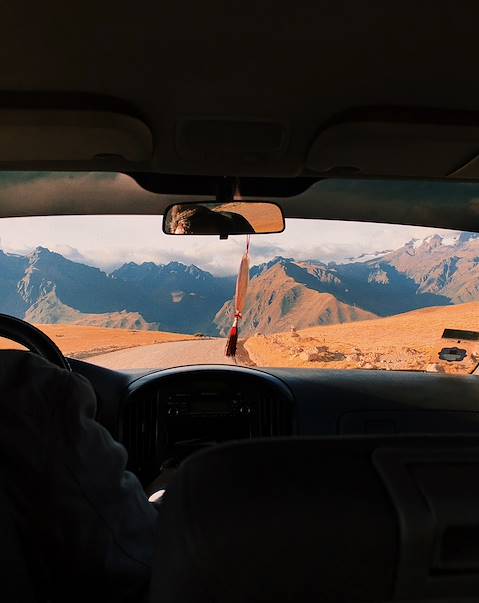
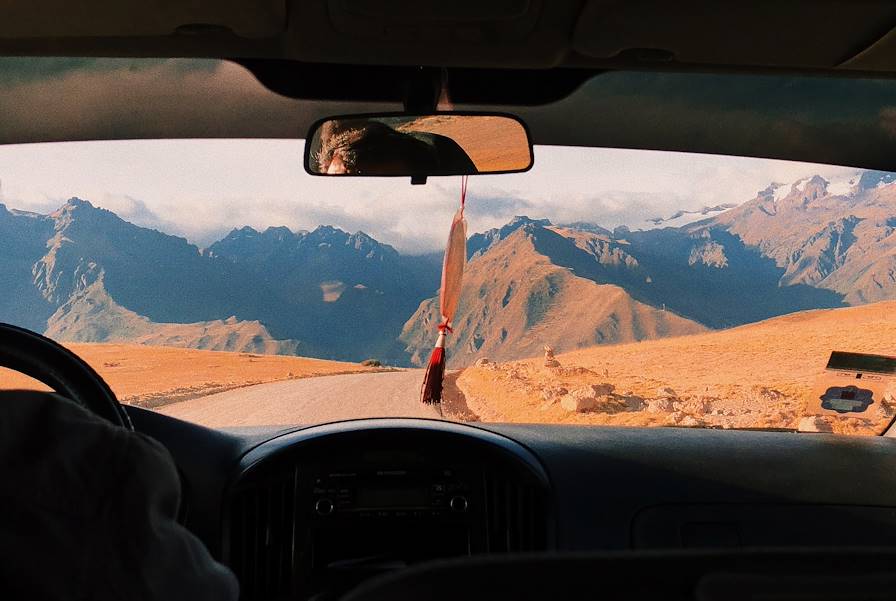
A trip of this kind, in a setting of this scale, calls for careful logistics. That’s what we have put in place. From Lima, a short flight north to Jaén, and another to the south to Arequipa. Once you’re on site in the north, travel will be by car with a driver - practical and comfortable. To the south, comfortable buses will take you to and from Lake Titicaca; then, car and train travel link the Cuzco/Sacred Valley area and Machu Picchu. Your means of transportation adapt everywhere to the needs of the terrain, with one essential goal: the right rhythm. At each stop over, the atmosphere and amenities are of a consistently high standard. The hotels selected for you reflect the spirit of each place, so your journey never loses its charm. From a Nikkei restaurant in Lima to the Maras salt flats in the Sacred Valley, your travel booklet includes essential stops, visits and activities accompanied by private guides, around which you can explore on your own. These highlights include Chachapoyas, Titicaca, Machu Picchu, Ollantaytambo etc. And more, if you wish - all you have to do is ask. And if an unexpected whim arises, or if a setback occurs? You have the contact details of our on-site Concierge service to help you respond.Heads up!
This journey will take you to uncommon altitudes. So stay brave! But take it one step at a time. Your itinerary has been designed for a gradual adaptation; in any case, take time to catch your breath, don’t push the pace, and drink water regularly.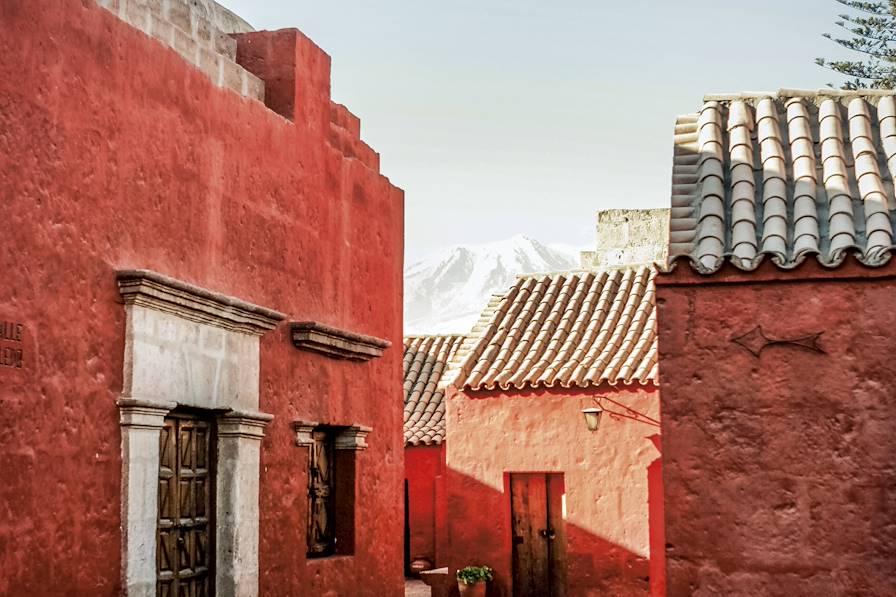
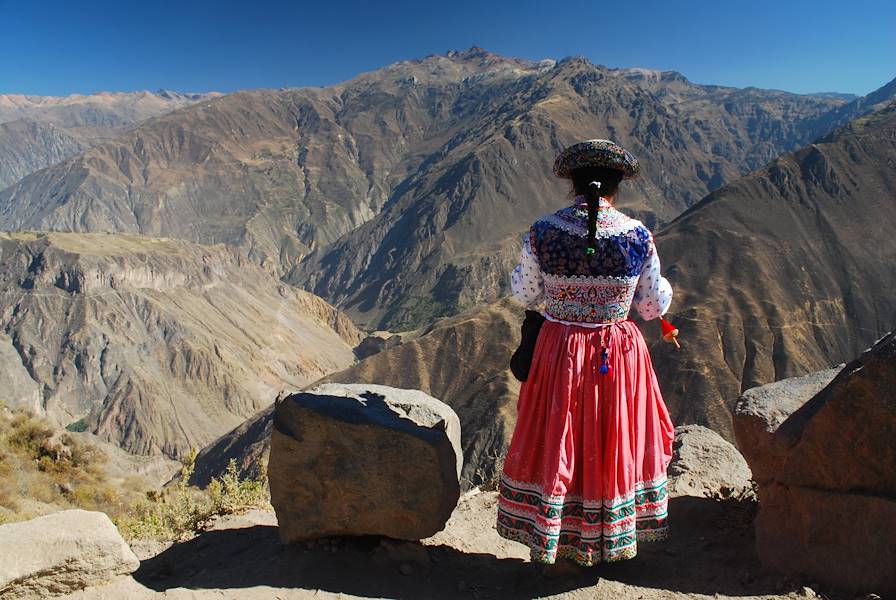
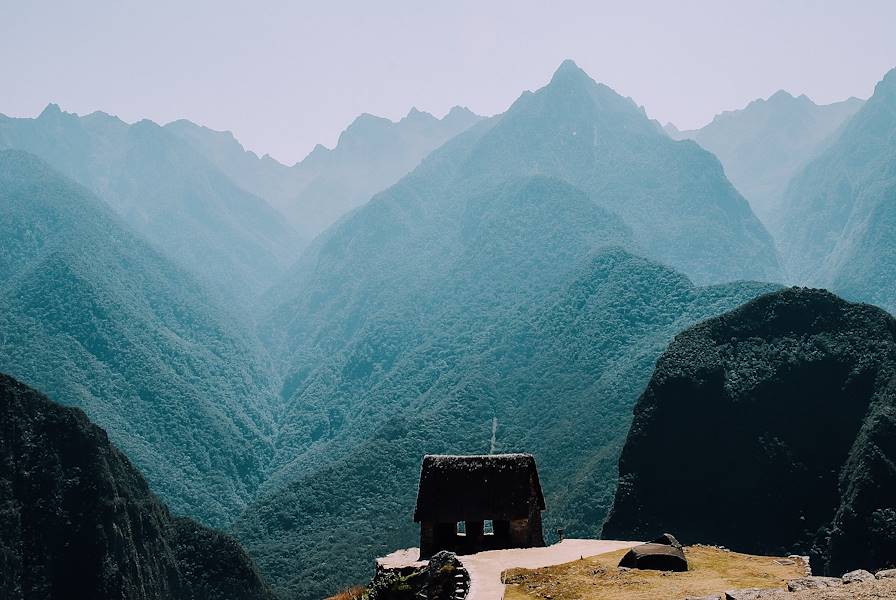
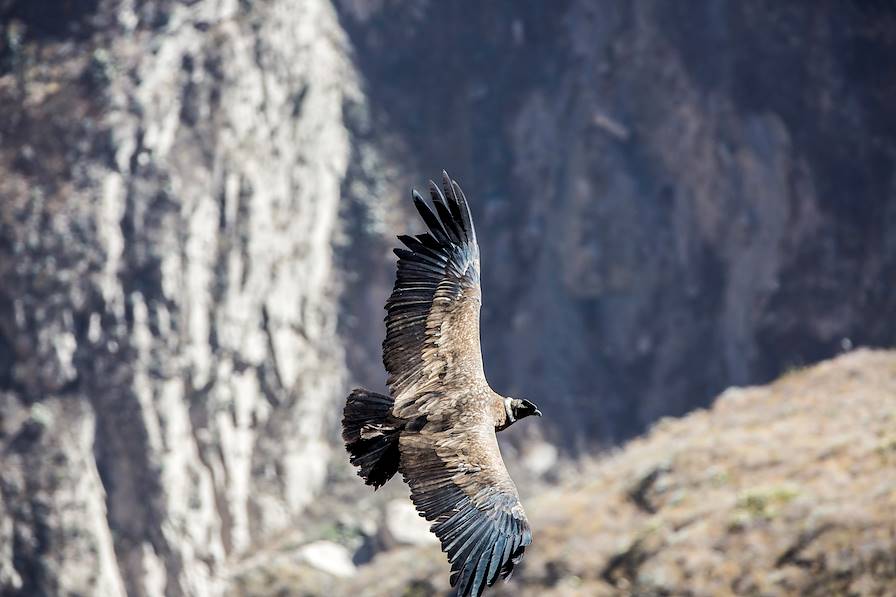
Itinerary
100% customisable for you
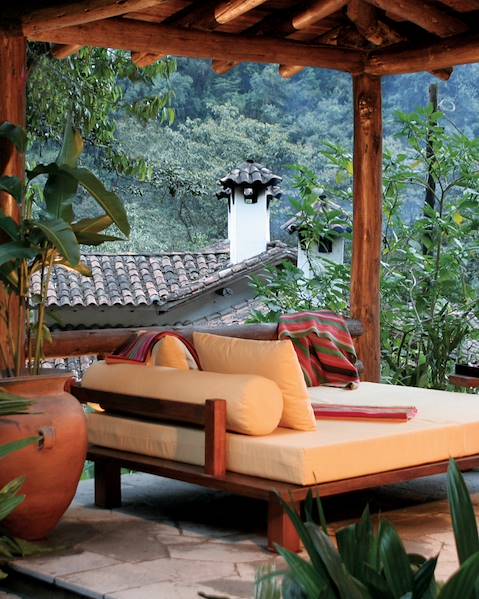
Upon arrival, private transfer and stay for two nights in the Miraflores district. The hotel offers extra tranquillity with its green patio and touches of colour. You’ll love the slightly pop and bohemian freshness of its décor, its unapologetic references to the art world, its beautiful library with its eclectic selection, and the tranquillity that reigns there. The rooms are comfortable and bright.
The ocean is not far away, nor is the seafront of Barranco, Lima's arts district.
Listed as a UNESCO World Heritage Site, Cercado, which is the old part of Lima, offers splendid examples of Spanish colonial architecture, such as the Torre-Tagle Palace (18th century) and San Juan Cathedral (17th century), which houses the tomb of Francisco Pizarro. The Barranco district, meanwhile, has long been renowned. In the 19th century, the Lima aristocracy visited these beaches. Today, creatives from all backgrounds have taken over buildings and casonas. Gallery owners, restaurateurs and café owners have followed up. Visitors to the Museum of Contemporary Art enjoy both the museum and the flower-filled gardens. Perhaps you would like to visit another museum? The Museo Larco, for example, whose collections cover several millennia of Peruvian history up to the colonial period, showcasing all the ancient cultures. Or the Museo Pedro de Osma, which is housed in a small 19th-century palace and displays an exceptional collection of religious art from the viceroyalty period.
Already on your itinerary - A table at the Maido restaurant. Nikkei cuisine was developed by the Japanese in Peru and has established itself as a style in its own right that is acclaimed around the world. And Maido, which is run by chef Mitsuharu Tsumura, is a benchmark in this field. So, we will reserve a table for you there, with a taxi to and from the restaurant.
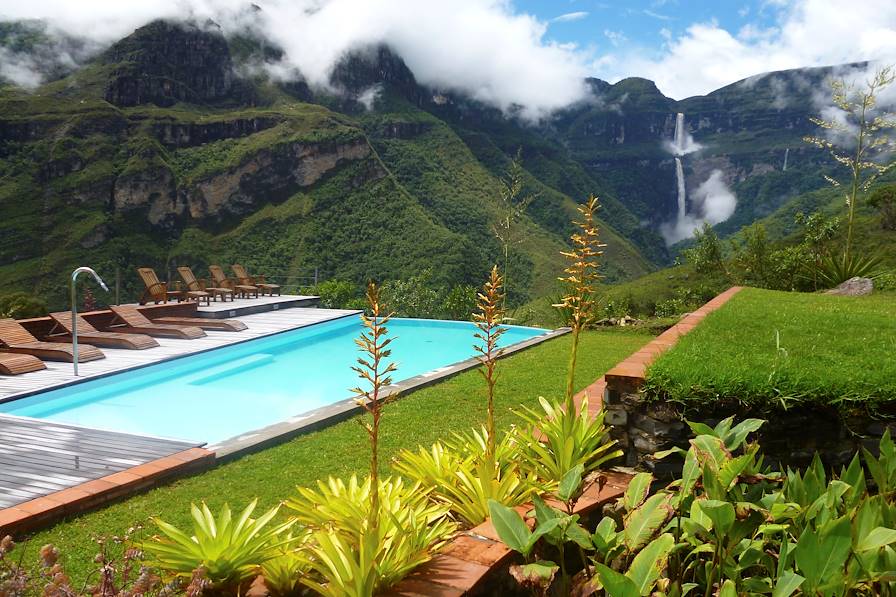
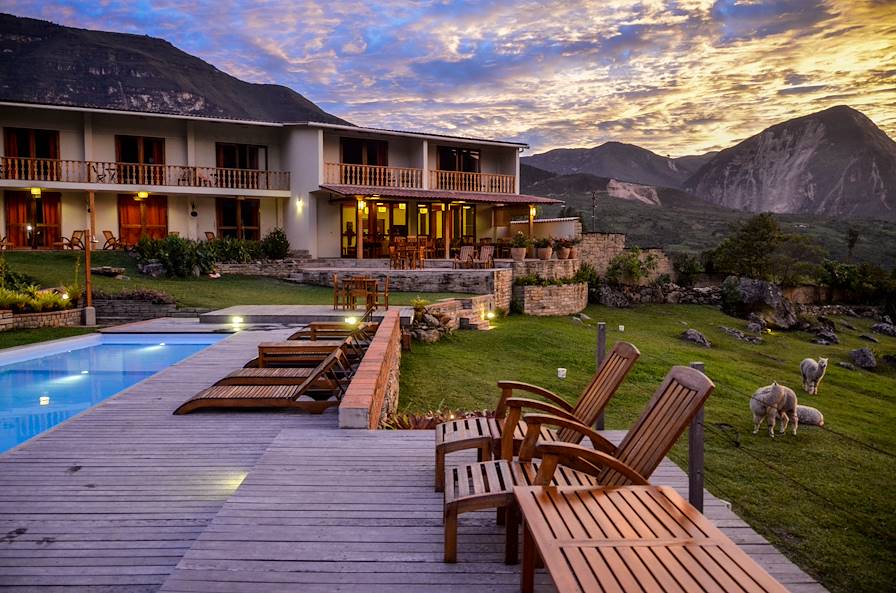
Transfer to the airport, then flight to Jaén. Another transfer and stay for two nights just north of Cocachimba. Your hotel is all about location, with balconies, terraces, a swimming pool, and views of the slender Gocta waterfall in its mountain setting. The interior design is practical. The rooms are clean and well-equipped while spacious and decorated with traditional embroidered fabrics. The restaurant offers home-style cooking, combining influences from the Andes and the Amazon. Weather permitting, the staff set the tables outside. Even more than the lounge, the swimming pool is a hub for relaxation and socialising.
On your itinerary - As if there were only one, the locals call the Gocta waterfall “La Chorrera”, meaning “The Waterfall”. A single drop sends water cascading down more than 500 metres (1,640 feet)! This ranks it among the highest and most spectacular in the world. The balanced, powerful, green encirclement of the valley and cirque in which it springs forth helps to intensify the effect it produces. The phenomenon is just a few miles from the hotel, and you can hear it as you approach it. The surrounding forest provides botanical enthusiasts with many reasons to admire it. Birds also enjoy it, with the beautiful Peruvian cock-of-the-rock particularly striking. To the south-west of Cocachimba are the sarcophagi of the Chachapoyas de Carajia burial site, which cling to the cliffs and make the mountain an empyrean.
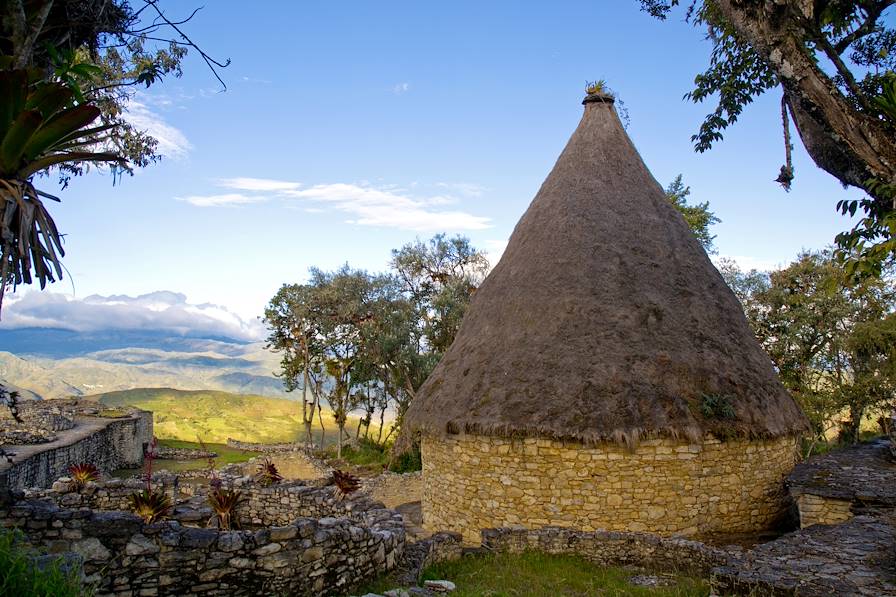
On your itinerary - Transfer to Leymebamba, at the source of the Utcubamba River. On the way, visit Chachapoyas. The town has preserved many buildings from the viceroyalty period and an exemplary Plaza de Armas, which is a square with low houses and the two towers of St. John the Baptist Cathedral. Further south, the 10th-century fortress of Kuélap gives a good idea of the military engineering skills of the Chachapoyas, known as the warriors of the clouds.
Overnight stay on the western edge of Leymebamba. The white colonial-style house has traditional carved wooden balconies on the street side and a gallery of the same material on the small courtyard garden. Tiled roofs cover the entire building. You’ll feel completely at one with the atmosphere of the area here. Your room has everything you need for a peaceful and restful night's sleep. The level of amenities is adequate. There is unpretentious local cuisine served in a charming dining room.
On your itinerary - The Leymebamba Museum displays quipus, which are Inca accounting records in the form of knotted strings, as well as the 219 Chachapoyas mummies discovered in 1997 at the nearby Laguna de los Condores.
Transfer to Cajamarca. Stay for two nights at Los Baños del Inca. The red and white hotel is set in a lush green garden with two thermal springs that feed large swimming pools and private pools in the rooms. The spa uses this water for its treatments, along with mud, essential oils and cocoa. The hammocks invite you to relax and unwind. Whether in the private or communal areas, the décor is charmingly rustic. A restaurant and cafeteria cater to guests' appetites, with a little more refinement here and a little less there. Guests are sure to have a hearty appetite after a horse riding excursion.
On your itinerary - In Cajamarca, you’ll come across a symbolic building still stands (thanks to careful maintenance): the Ransom Room. As the last Inca was held there, the room is said to have been used to weigh the gold and silver paid for his freedom. It was all in vain though, as the Spanish executed Atahualpa on the spot on 29 August 1533. That was the end of the Inca Empire. In the old town, the architectural complex of Belén consists of a church with a magnificent 17th-century façade, a men's hospital and a women's hospital, both of which remained in operation until the 1940s. The sculptors' work on the façade of St. Catherine's Cathedral has made it one of the finest examples of Andean Baroque architecture, despite its unfinished elevation.
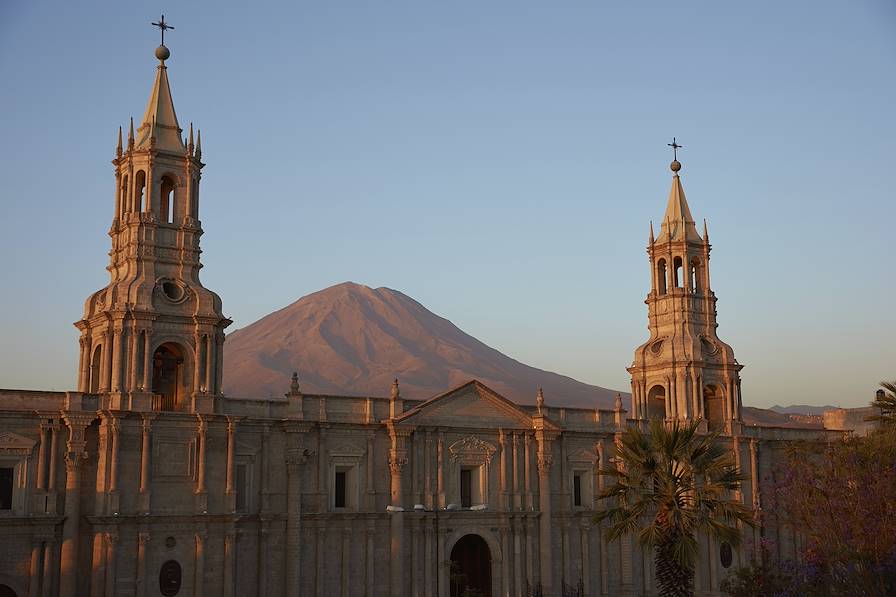
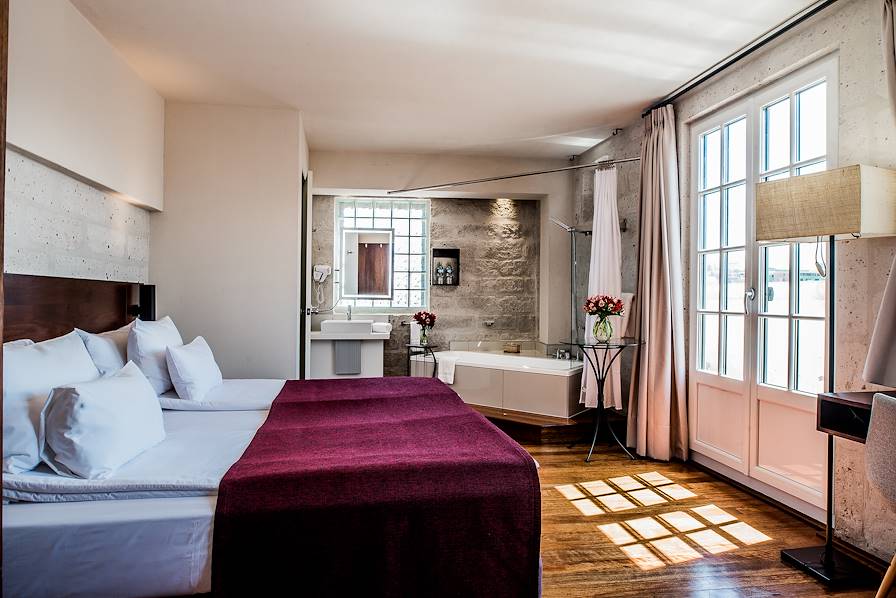
Transfer to the airport and flight to Arequipa via Lima. Transfer and stay for two nights a short distance from the Plaza de Armas. Extended historic building: in the rooms arranged around a covered courtyard with galleries, the white volcanic stone blocks create a warm minimalism. The facilities are good and you’ll see pleasant urban touches, such as a freestanding bathtub in the bathroom. The rooftop restaurant, which doubles as a beautiful lounge terrace, serves generous, unpretentious cuisine. Wines from the continent take pride of place in the tasting room.
A pure blue sky, crossed only by a dreamy cloud. The city is dominated by the regular cone of the Misti volcano, which lets out wisps of smoke at its summit of 5,800 metres. The marvel of Arequipa. This means you are just a stone's throw from the Plaza de Armas and the famous Santa Catalina convent, which was built in the 16th century in the Hispano-Moorish style. This astonishing religious compound once housed up to 450 people (a third of whom were Dominican nuns from the country's most prominent families). The 20 or so nuns still present today occupy only a small part of the site, which is now open to visitors. You can also see the 17th-century Jesuit church and the half-Baroque, half-modern district of Yanahuara.
Optional - Arequipa and the Santa Catalina convent, with a private guide.
Bus to Puno. Two-night stay in a hotel in the city centre. It is simple, well-maintained and with pretty Indian touches, including walls decorated with pieces of aguayo, the traditional wool fabric of the Altiplano, statuettes and watercolours. The rooms are immaculate and comfortable; the bathrooms are up to standard. In the dining room, you can enjoy simple Peruvian cuisine, complemented by a few international dishes.
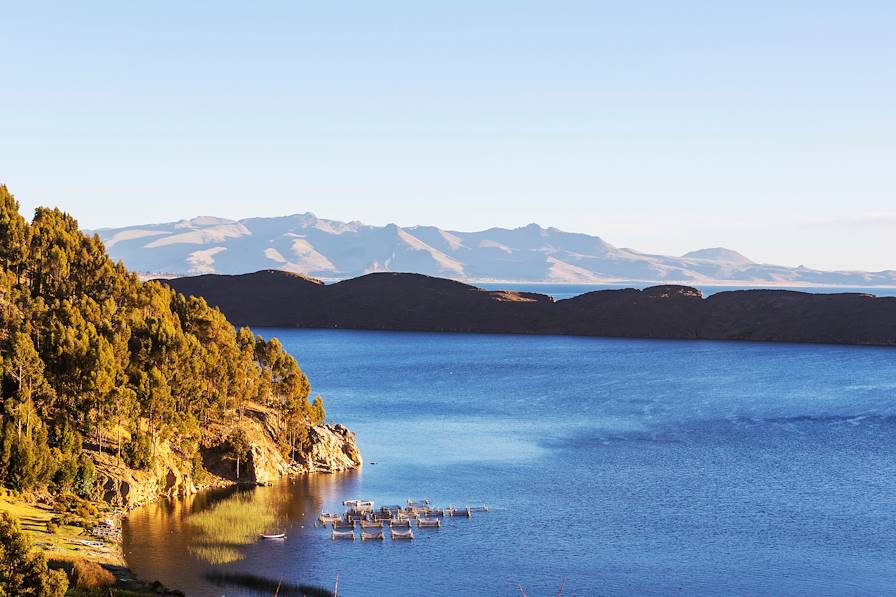
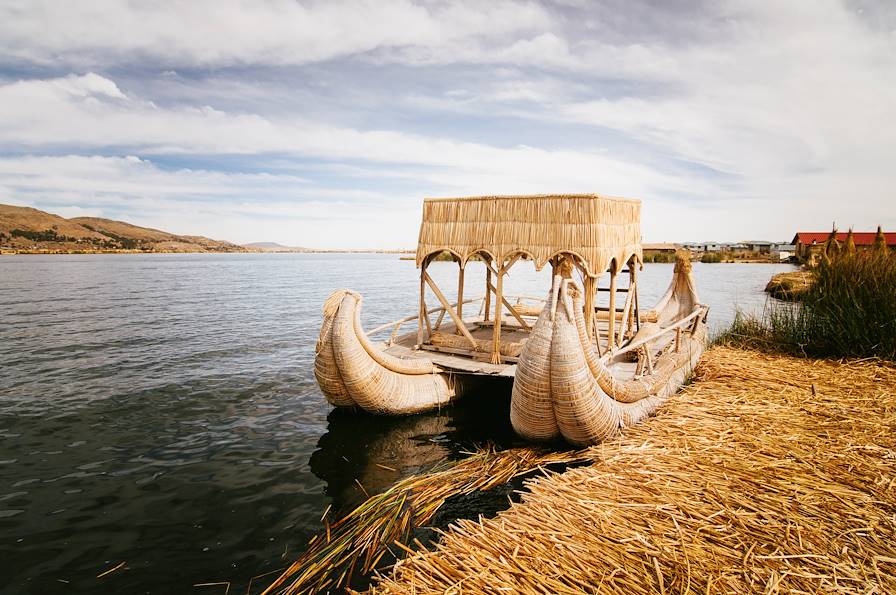
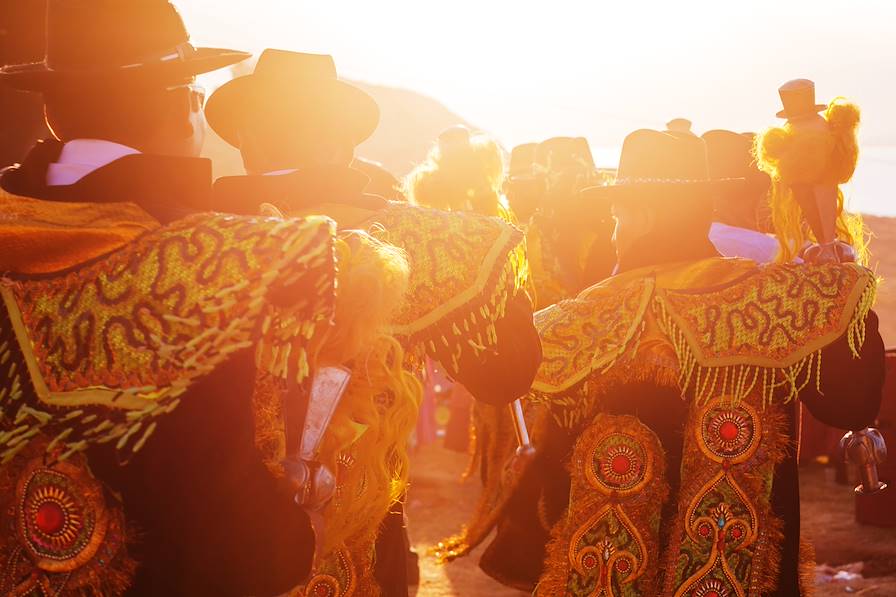
Already on your itinerary - Uros Titinos, Lake Titicaca cultures, then Llachón. Located more than 3,800 metres above sea level, Lake Titicaca is the highest navigable lake in the world. The artificial islands of the Titinos community are made up of fields of reeds, known as totoras, which are used to make their boats for sailing and fishing. You’ll then discover the peaceful town of Llachón, located on the Capachica peninsula on the shores of the lake, about 40 miles (70 kilometres) from the city of Puno. Enjoy the peace and quiet of nature and share a meal with the locals.
Bus to Cuzco. Upon arrival, stay for three nights in a pretty cobbled street in the centre of the Inca capital. Your hotel has preserved the charm of the original quinta. The rooms feature efficient layouts and quality bedding and surround a patio where you can relax after a day of sightseeing. The old and the new coexist everywhere with taste and restraint.
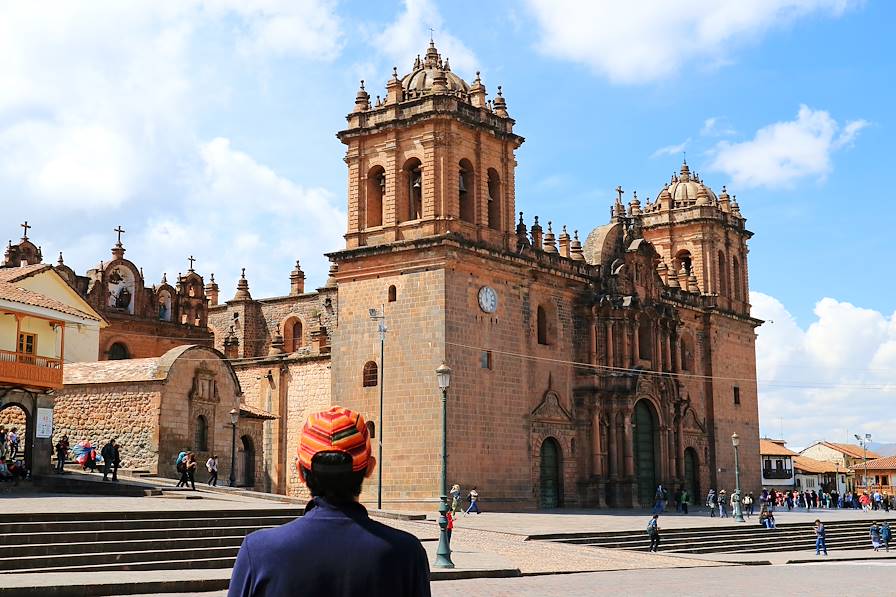
The navel of the world, the city was probably founded by the Killke a century before the arrival of the Incas. The Incas expanded it and made it the capital of their empire. The Spanish partially destroyed it, but built their own Cuzco, Ciudad Noble y Grande, on top of it. The encounter between Andean culture and Baroque exuberance has produced surprising results, which still seem to define the codes of a unique way of life. The Inca capital still literally forms the foundation of the city as walls and foundations often date back to pre-Hispanic times and can be seen in many places (especially in the old colonial district of San Blas, where your home is located). On the Plaza de Armas, the Cathedral of the Assumption of the Blessed Virgin and the Church of the Society of Jesus are both magnificent and decorated with gold and paintings from the Cuzco school, dating from the 16th and 17th centuries. Sacsayhuaman is just over one mile (two kilometres) north of Qusqu and is one of the most impressive Inca ruins. This triple zigzag wall in the shape of a puma's head is a tour de force.
Optional - The Boleto Turistico General; Cuzco by private tour; private tour of the sites of Tambomachay, Puca Pucara, Quenqo and Sacsayhuaman; ascent of the Palcoyo mountain range with private guide.
Transfer to Poroy station and train to Aguas Calientes.
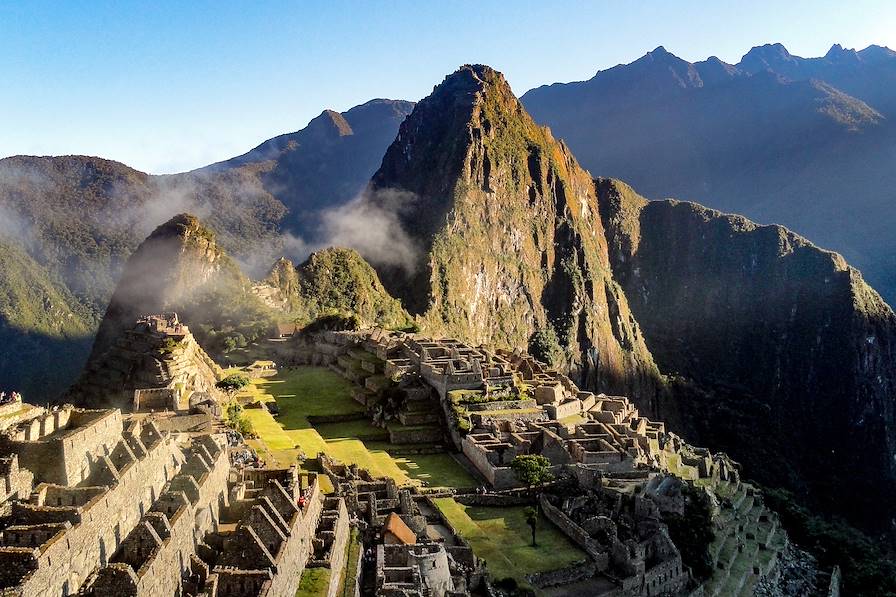
Already on your itinerary - In the shuttle bus that follows the winding road, you prepare yourselves for the shock. Because Machu Picchu, the citadel of Pachacutec, is such an astonishing feat of engineering that it leaves you speechless. The beauty of the mountains, the scale of the design, the logistics and engineering required to build it, and the vigour and ingenuity demonstrated by the Incas here are beyond comprehension. Amazement, in the strongest sense of the word! To go beyond a simple sense of wonder and gain a deeper understanding of the majesty of the site, a private guide is an excellent interpreter.
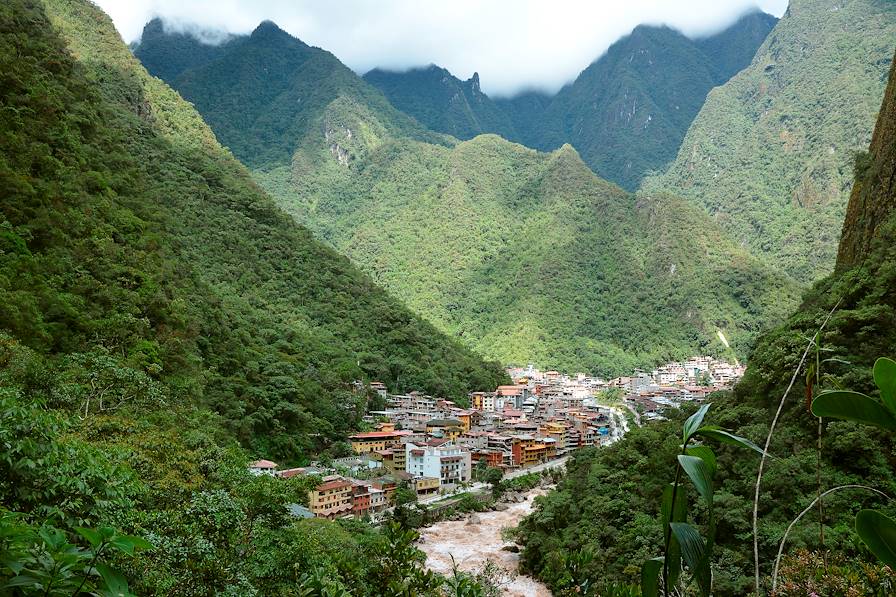
Overnight stay on the northern edge of the pueblo of Aguas Calientes. There are contemporary buildings with dry eucalyptus branches forming a recurring motif along them, much like a signature. Inside, it is black and white throughout. In the bedroom, you’ll find fresh Peruvian cotton sheets. The restaurant menu features national and international cuisine, with ingredients that are organic wherever possible. This requirement also applies to the spa's skincare products. Located on the upper floor, the spa opens onto the rainforest through large windows.
Already on your itinerary - In the morning, you’ll have another visit to the suspended city to make sure you didn't dream it the night before. And climb up to Machu Picchu Mountain - 3,082 metres. The climb is a bit tough, but the superb view makes the effort well worth it.
Transfer to the station and train to Ollantaytambo. Transfer to Urubamba, in the heart of the Sacred Valley. Stay for three nights in the north-western part of the village. The hotel's contemporary Andean architecture generously welcomes light. Inside, the furniture is made of white wood that is light and pleasant. The rooms are clean and bright, and easy to live in. You can enjoy the view of the landscape from the window. The buildings are surrounded by a garden, where it is nice to gather in the evening around the fire. An Andean-style breakfast is served from five o'clock. Early risers won't want to miss a minute! A small spa offering massages, a sauna and a hot tub provides welcome relaxation for bodies worn out by long days of sightseeing.
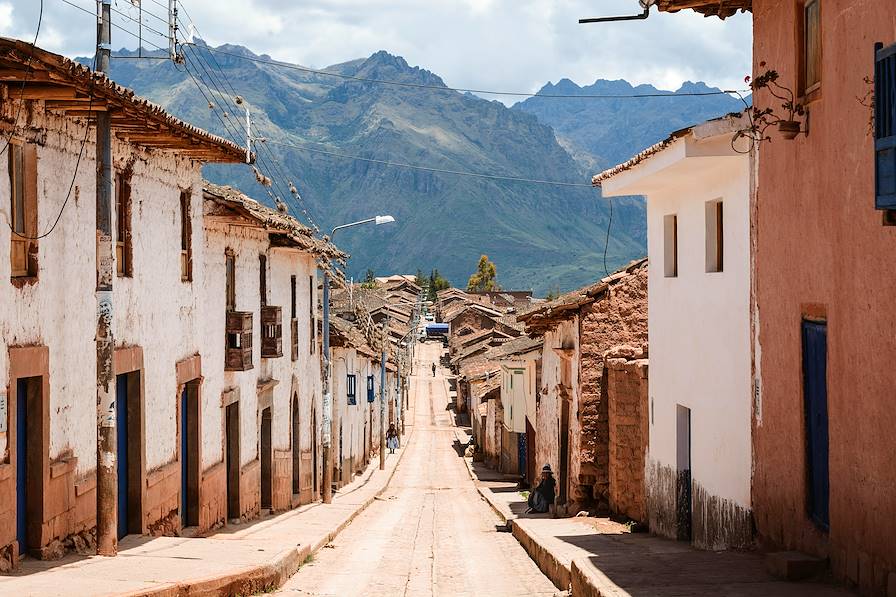
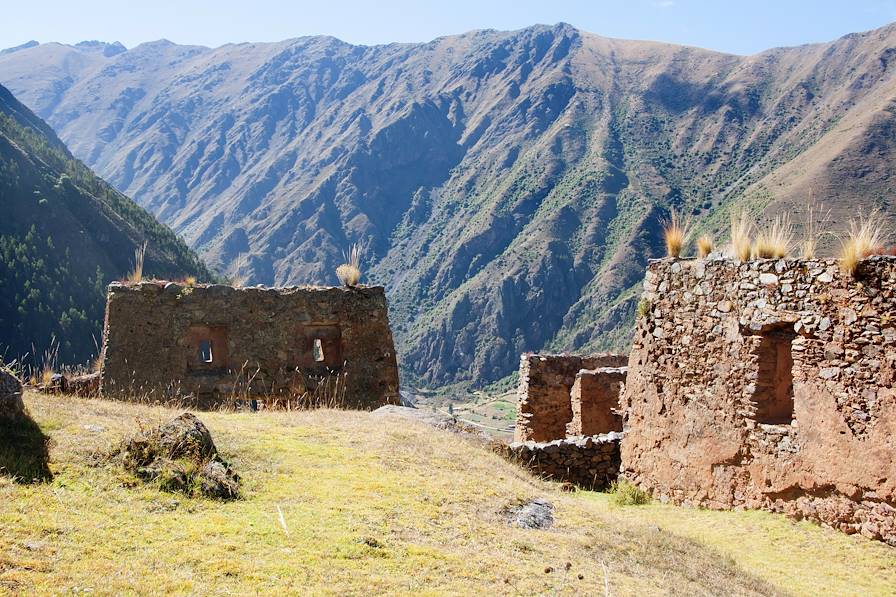
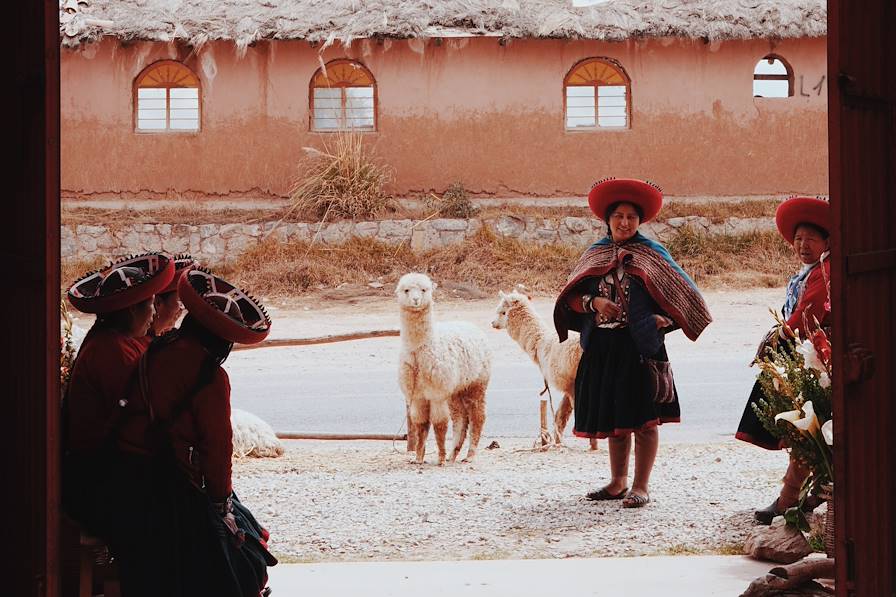
Already on your itinerary - The local markets bring everyone together in a riot of bright colours, with the highland Indians recognisable by their red ponchos. You set off on our tour by car, with a driver. Starting with Pisaq: market (fresh cheese, chicken, herbs, bread, cabbage, guinea pigs, corn and potatoes of all kinds), centuries-old agricultural terraces and Inca citadel. At the other end of the valley, the fortified site of Ollantaytambo is a magnificently preserved example of pre-Columbian urban planning.
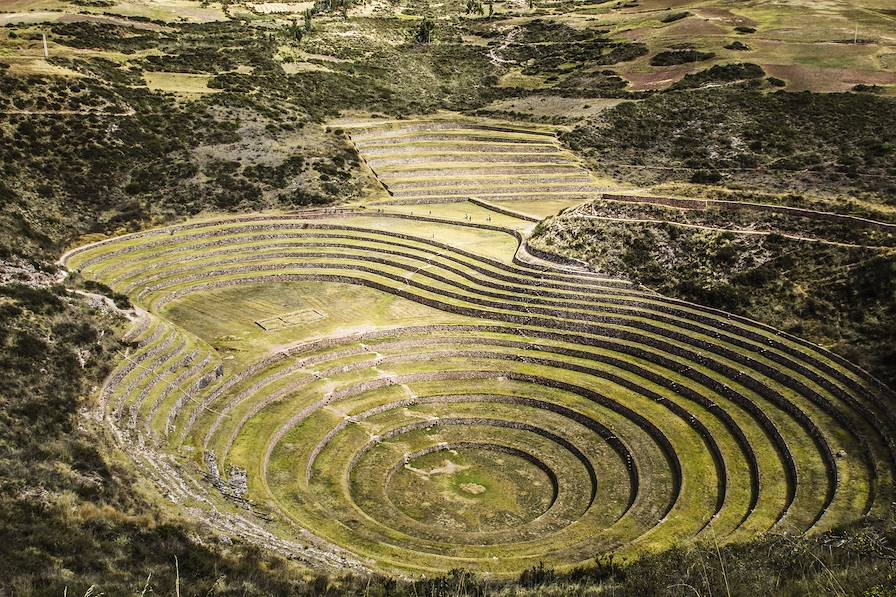
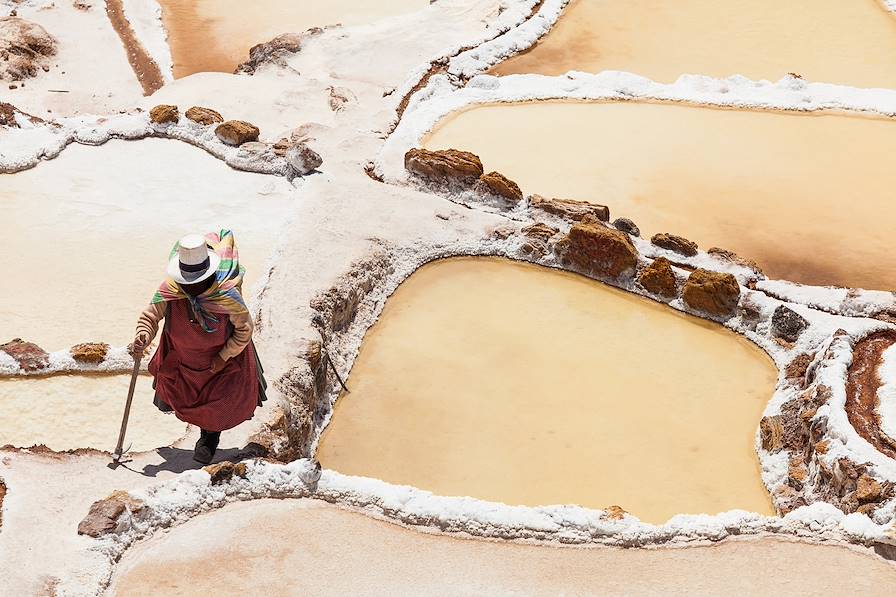
Already on your itinerary - You are taken to the area by car and then a private guide takes you exploring the concentric terraces of the Inca agricultural research centre at Moray on foot. The facility made it possible to artificially reproduce different climatic conditions and therefore develop protocols for acclimatising foreign plants. You then descend gently through a beautiful rural landscape dominated by the Vilcabamba mountain range to the salt pans of Maras, whose thousands of pools form a strange white honeycomb landscape. This day in the countryside involves about three hours of walking.
Private transfer to Cuzco airport and return flight via Lima. Night on board, arrival the next day.
À la carte
This suggested itinerary can be customisable down to the smallest detail, including duration, stops and content. An à la carte menu of experiences is also available to create a journey that reflects who you are.
Arequipa and Santa Catalina Convent
The Santa Catalina Convent in Arequipa is one of Peru’s most famous monuments. Founded in 1579 and built from white tuff (from the Chachani volcano) and pink tuff (from the Misti volcano), it gradually became a real city within the city. Its strong architectural unity has absorbed successive updates - notably Baroque - without being altered. Today, you’ll visit it in all the dimensions of its design - spiritual and practical, noble and ancillary. This will allow you to step into the lives not only of the nuns but also of the country itself in a very tangible and meaningful way. Visit to Santa Catalina and the major buildings of Arequipa accompanied by a private guide.The General Tourist Ticket - Cuzco and Sacred Valley
You can’t miss it! This ticket is valid for ten days and gives access to a range of museums and sites in Cusco and the Sacred Valley. Scheduled: the Sacsayhuaman fortress, the Qenko sanctuary, the Puca Pucara fort, the sacred site of Tambomachay, the Inca agricultural terraces of Tipon, the village of Chinchero, the regional history museum, the contemporary art museum, etc.Cuzco, capital of Tahuantinsuyu, the Incan empire
Accompanied by a private guide, visit the Cathedral of the Assumption of the Most Holy Virgin, dating from the 16th and 17th centuries, and the Temple of the Sun - the Qoricancha, on whose foundations the Santo Domingo convent has stood since the 16th century. You can also visit the sacred site of Qenko, located 6 km (4 miles) northeast of Cuzco, and Puca Pucara, the Red Fortress, a military structure that was part of the capital’s defence system. In the distance, the snow-capped peaks of Ausangate gleam in the clear air. Next, to complete the tour, visit Tambomachay, the Incan bath - its purpose remains uncertain, but it features sophisticated hydraulic systems - and Sacsayhuaman, whose triple wall, shaped like a puma’s head, is a remarkable feat of engineering.Tour of the Cuzco area
Your driver will take you a few kilometres from the Incan capital to visit Tambomachay, the “Inca’s Bath”, a water sanctuary that reveals the full mastery of Incan hydraulic engineering. Next, we’ll head to the site of Puca Pucara, then to Qenko, a place of worship dedicated to Pachamama. The half-day tour ends at Sacsayhuaman, a monumental fortress with a superb panoramic view over Cuzco.Ascent of the Palcoyo Cordillera
Perched at 5,000 metres above sea level, the small Palcoyo mountain range is strikingly similar to the famous Rainbow Mountain, about 20 km (12 miles) away. Like the latter, it owes its distinctive colours to layers of different minerals. However, it is much more accessible and far less crowded. We’ll set off at dawn to reach the district of Combapata, at an altitude of 3,500 metres (11,500 feet), three hours from Cuzco, the departure point of the hike. You’ll then reach the lookout point after a 45-minute walk. A unique spectacle will unfold before you, allowing you to admire the Vilcanota mountain range, the Red Valley and the majestic Nevado Ausangate. You’ll return via the same path. The landscape remains unchanged. We’ll make the most of it one last time before heading back to Cuzco.Optional - full day.
Why visit Peru with Voyageurs du monde?
Every day, our travel specialists craft bespoke experiences shaped around each traveller's profile, desires and budget. These passionate experts design experiences delivered on the ground by a local network of Concierges and trusted contacts. These fully customisable, made-to-measure trips are complemented by a wide range of high-end services (lounges, 24/7 assistance, travel booklet, app, Wi-Fi, restaurant booking, etc.)
Let us create your tripA few of the advantages of travelling with us to Peru
- Globally unique concierge service
- Wi-Fi: 1 GB/day included
- Gourmet Voyageurs
- Adjust your trip while travelling
- 24-hour assistance
- CO2 absorption