100% customisable travel idea
Ayiti darling From Port-au-Prince to the beach
Haiti - Port-au-Prince - Cap-Haïtien - Jacmel
An island, a unique identity
YOUR TRAVEL BOOKLET
Let’s talk about the road! All your trips are taken in a vehicle with a driver, giving you the freedom to take detours and side roads. As for the visits, they are conducted with private guides, so you can fully understand the sites you explore. From the city to the hills, via the beach, from art galleries to mountain fortresses, this vibrant trip reveals the country in all its diversity. This overview begins with Port-au-Prince, the vibrant heart of Haiti and an outstanding artistic scene.A short flight takes you to Cap-Haïtien, where you can enjoy strolling through the old town with its colourful façades. After visiting the Citadelle Henri,a remarkable testament to Haiti’s independence and the end of slavery, set off on a sea adventure to Labadie and Île-à-Rat to play at being Robinson Crusoe. Then cross the country southwards to reach Jacmel, whose prosperity was built on the coffee trade. After a road trip full of stunning landscapes and a catamaran crossing, we find ourselves with our feet in the water on one of Haiti’s most beautiful beaches, the pride of Île-à-Vache. Just the right mix of relaxation and turquoise waters, before heading back to the capital for one last evening on the heights, taking in at a glance this truly unique island that you're never quite ready to leave.
Itinerary
100% customisable for you
Arrival in the late afternoon and stay for three nights at your hotel. Pétion-ville is in the hills above Port-au-Prince and is a haven of tranquillity in the city with eight suites, a swimming pool in the heart of the garden, orange trees, giant bougainvilleas and avocado trees heavy with fruit. A warm welcome, a beautiful sunny table, lemon and chilli chicken, pezé bananas and mirliton - everything is homemade. Yoga classes are held on the terrace at sunset.
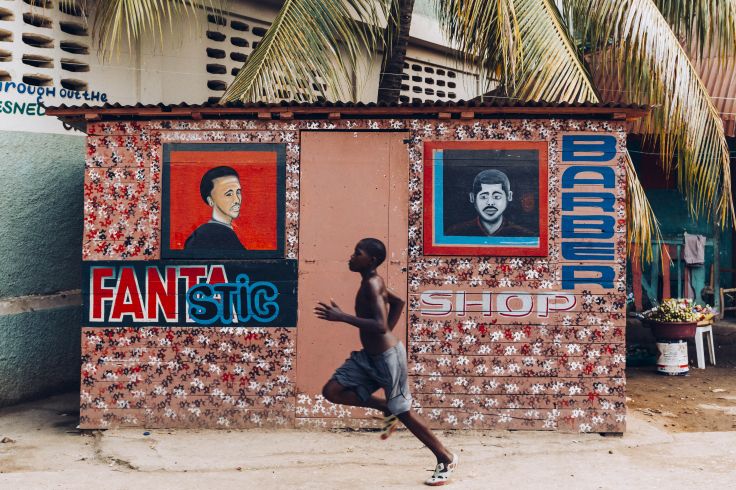
Lively crowds, couples embracing, splashes of colour from painted signs, the intertwining rhythms of car horns and radios, bursts of laughter and church songs, Port-au-Prince is overflowing with joyful chaos and the tropical exuberance of vegetation.
Already on your itinerary - A day visiting the city with a private guide. Grand-rue is an otherworldly place that is the haunt of the sculptors of the Atis Rezistans collective, who have turned recycling into a major art form. Piles of tyres, wood and sheet metal form an impenetrable forest of Creole imagination. At Céleur Jean Hérard's, you'll find yourself face to face with his three migratory birds, which were exhibited at the Grand Palais during the winter of 2015.
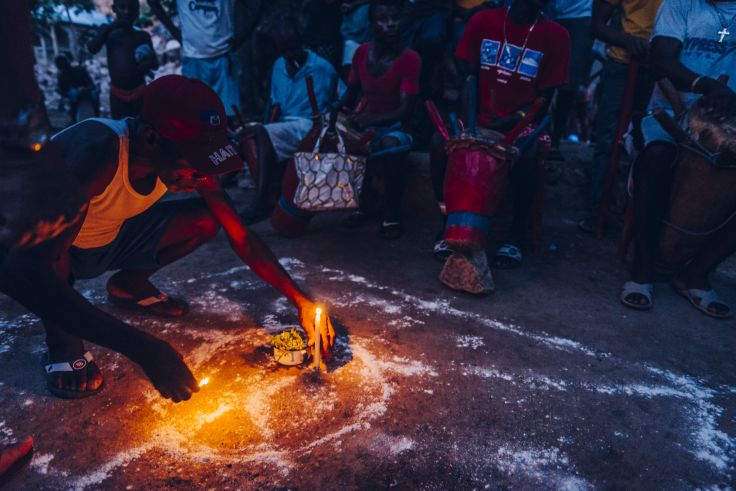
A little further on, the Marché en Fer is home to a whimsical market, which is a cross between a textile market and a voodoo market. Everything a houngan needs is sold here, including turtles, pilgrim clothing, beaded bottles, black Virgins, two-headed dolls. It's a pleasure to stroll around and chat with the merchants.
Lunch at Les Jardins du Mupanah, which is located in the gardens of the Haitian National Pantheon Museum. It is a beautiful restaurant offering a contemporary interpretation of classic Haitian cuisine.
At the El Saieh Gallery, discover Haitian painting in all its abundance: jungles and bestiaries; scenes from everyday life, birthday parties, balls and cockfights; voodoo scenes; naïve painters from Cap Haïtien and peasant painters from the Saint-Soleil group discovered by Malraux.
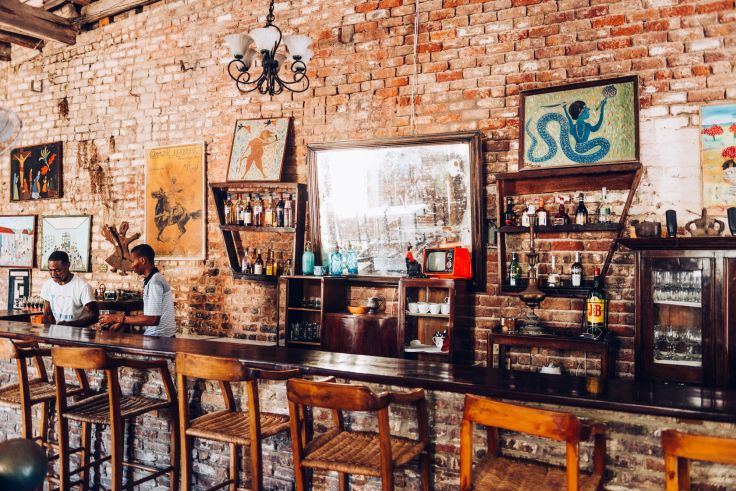
And a rum sour at the bar of the legendary Hotel Oloffson - on the walls of the beautiful gingerbread-style building, photographs of Marlon Brando on holiday in Haiti recall a not-so-distant time when the island, known as the Pearl of the Antilles, was one of the Caribbean's top tourist destinations.
Optional - Guided tour and meeting with artisans in the village of Noailles, which is on the outskirts of Port-au-Prince and is where the Bosmétal family has been collecting iron barrels and transforming them into works of art for decades.
In the vicinity of Port-au-Prince, on the hills of the Matheux range, is Fort Drouet, which was built in the aftermath of Haiti's independence, according to an order by Dessalines. Along with the Citadelle Henri, it is one of 22 fortifications designed to withstand a possible return of the French. At the Dion and Lamothe plantations, which are huge coffee-growing complexes, you’ll visit the ruins of the water reservoirs and warehouses, as well as the slave quarters, which bear witness to the prison-like conditions of the slaves who worked on the coffee plantations.
Private transfer to Port-au-Prince airport and morning flight to Cap-Haïtien (30 minutes). Stay for three nights at your hotel, which is on the seafront and run by an artist who likes to exhibit the works of Cap Haïtien painters. You’ll love the tranquillity of the patio and the sea view from the room. And to get a feel for the city, the lively boulevard is just a stone's throw away.
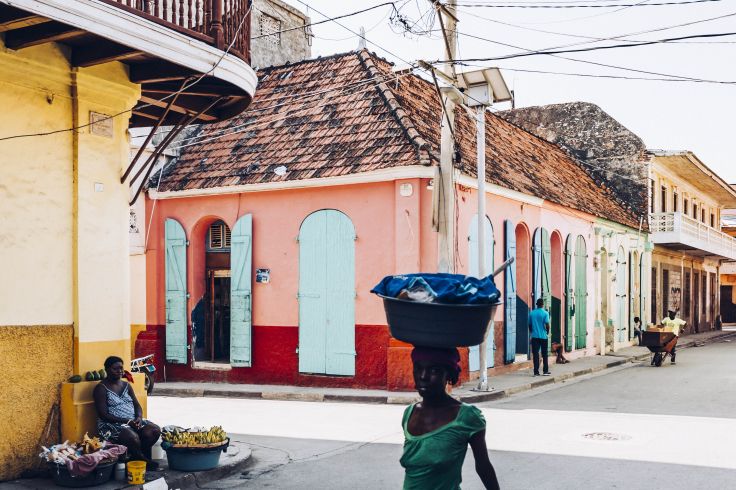
Already on your itinerary - A half-day walking tour of the city with a private guide. The provincial tranquillity of Haiti's second city is perfect for a stroll. Around Place d'Armes, colonial houses with wooden balconies are bursting with colour, with bright yellow façades and turquoise shutters. At the Marché en Fer, there is a jumble of imported goods and exotic products, corn cream, peanut oil, dried fish and live crabs, bunches of bananas, Florida rice and white chickens, limes and yams.
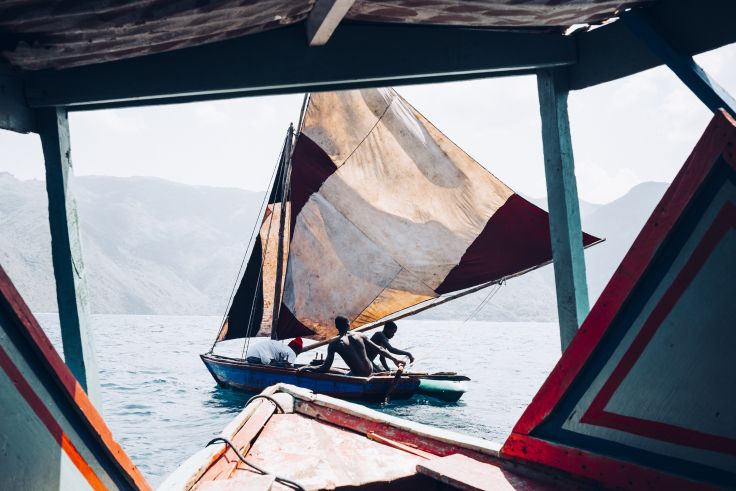
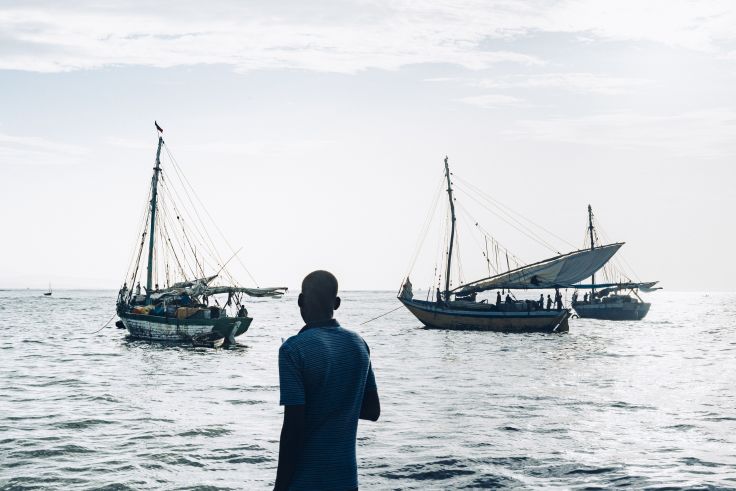
Already on your itinerary - A day in Labadie and Ile-à-Rat. The road from Cap to Labadie winds up and down through the mornes. You’ll come across villages with streets crowded with flapping chickens, yellow dogs with pointed snouts, and small restaurants selling cornmeal, vegetable stews and smoked fish. At the pier, a barge called ‘Ayiti chérie’ will be waiting for you among a multitude of colourful little boats. On the sparkling sea, boats sail with their sails unfurled, laden with lobsters and conch shells. In the fishing village of Labadie, children dive off the pontoon, while domino players sit at tables facing the sea under the large kapok trees, playing game after game. The boat trip continues to Ile-à-Rat, which is a tiny desert island with a tropical forest surrounded by white sand, where you can enjoy a Robinson Crusoe-style grilled lobster.
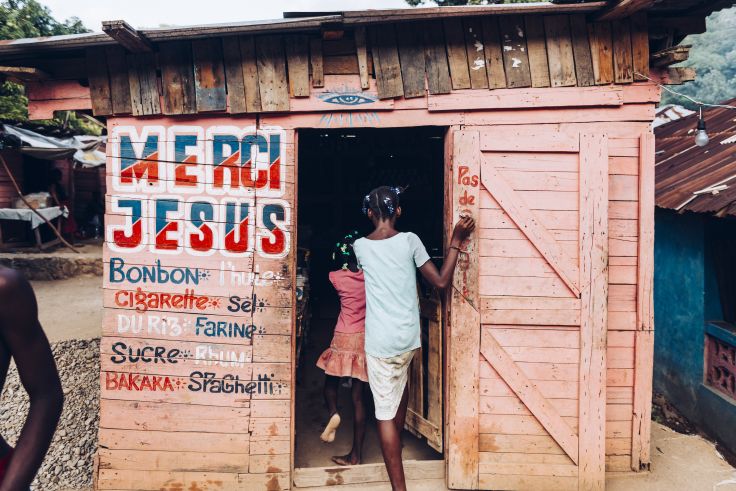
Already on your itinerary - A day trip to Citadelle Henri with a private guide. The road to Milot is lined with trees and flowers, flamboyants, breadfruit trees, orchids and amaranths. The houses have three doors and two windows, tall cacti huddled together serve as fences, and the courtyards have a few chickens and a goat.
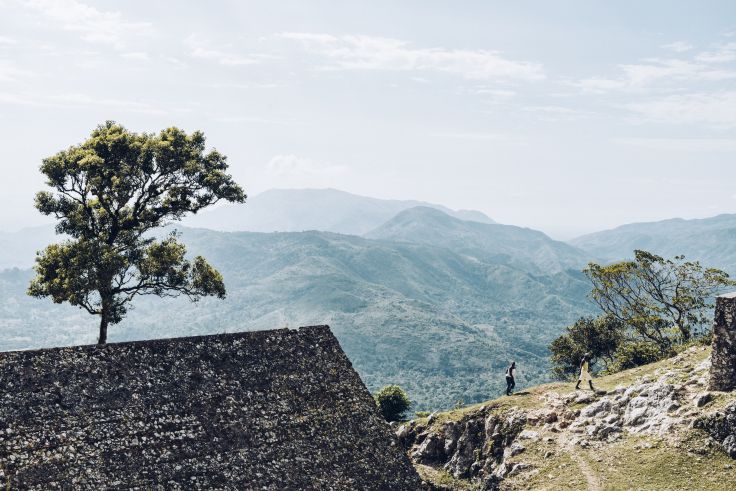
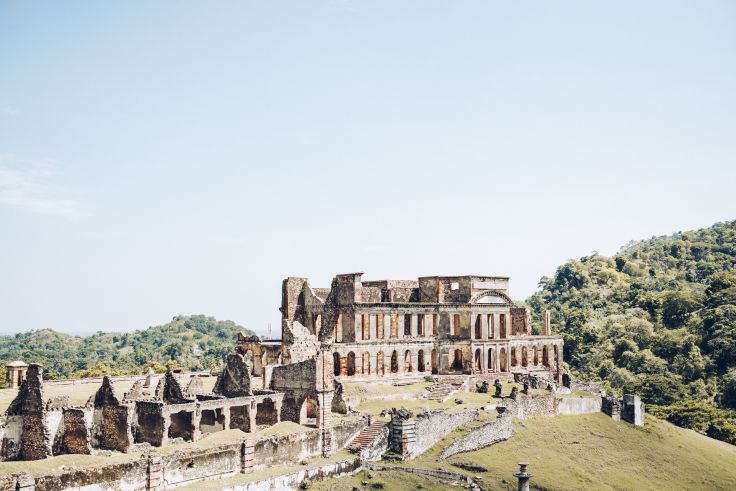
Milot is home to the grandiose ruins of the Palace of King Christophe, who liberated Haiti alongside Toussaint Louverture. These ruins have now become saturated with sunlight. He had a fortress not far from the palace that was built between the sky and the hills: “These people, whom they wanted to bring to their knees, needed a monument that would raise them up” (Aimé Césaire, The Tragedy of King Christophe). In a baroque riot of chlorophyll, a steep path leads to the solitary citadel, which is located at 1,000 metres above sea level. 20,000 men toiled for 16 years to haul blocks of stone up the steep coastline. The inviolable refuge never faced a single attack, but this fortress where a slave turned king rests pays tribute to how much the Haitian Revolution, which was an insurrection of slaves who drove Napoleon's troops out of the richest colony in the world, was the revenge of all the oppressed throughout history.
And a few steps from the Sans-Soucis Palace, far from the splendour of Christophe's court, but in the coolness of a garden shaded by bougainvillea, you can enjoy excellent home cooking, such as avocado seasoned with smoked herring, spicy pork griot, djon-djon rice cooked in water tinged with black mushrooms, and a baptiste mango, which is a peasant coffee. On the way back to Cap, you’ll stop at a guildive, which is a traditional distillery, to discover the rum distillation process - with tasting included
Private transfer to the airport and return flight to Port-au-Prince. Upon arrival, your private driver will be waiting to take you south to Marigot, via Jacmel (which you will discover the next day). Stay for two nights at a small hotel nestled in the mountains, just a few minutes from the beaches. There are a dozen colourful thatched-roof bungalows nestled on hills facing the sea, surrounded by tropical vegetation. You’ll love the warm welcome, the delicious food and the refreshing swimming pool.
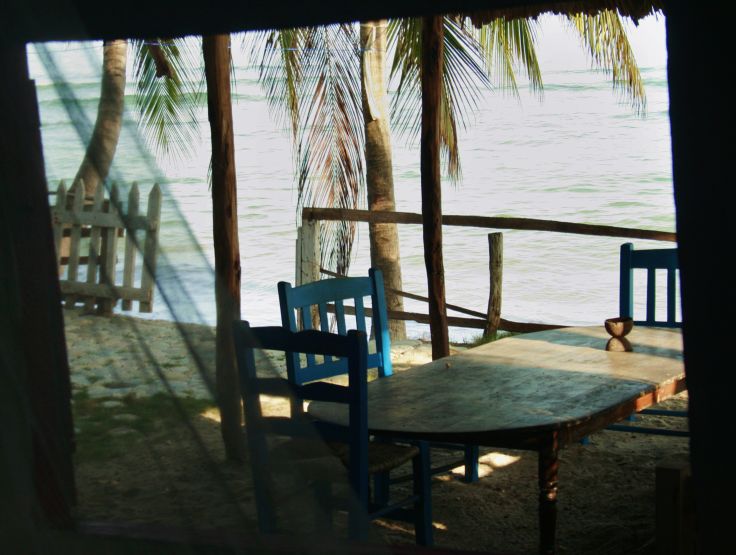
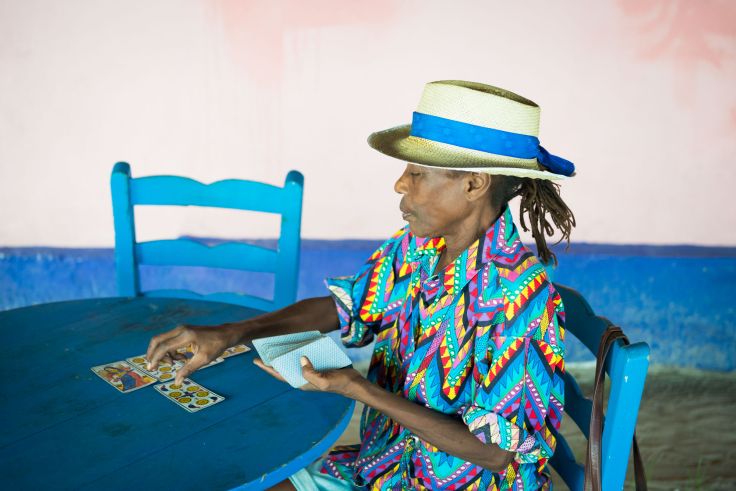
Already on your itinerary - A meeting with Berlotte, the fortune teller. Sitting at a table facing the sea, sipping a cold Prestige beer, she reads your present and your future in the tarot cards - her clairvoyance will make even the most sceptical minds doubt!
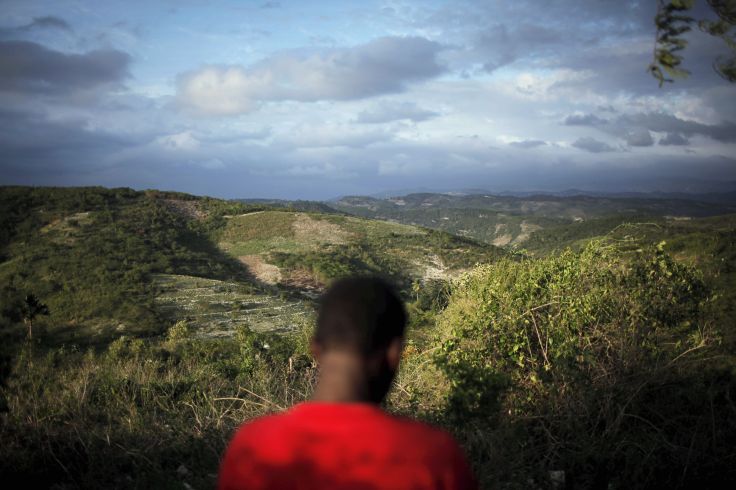
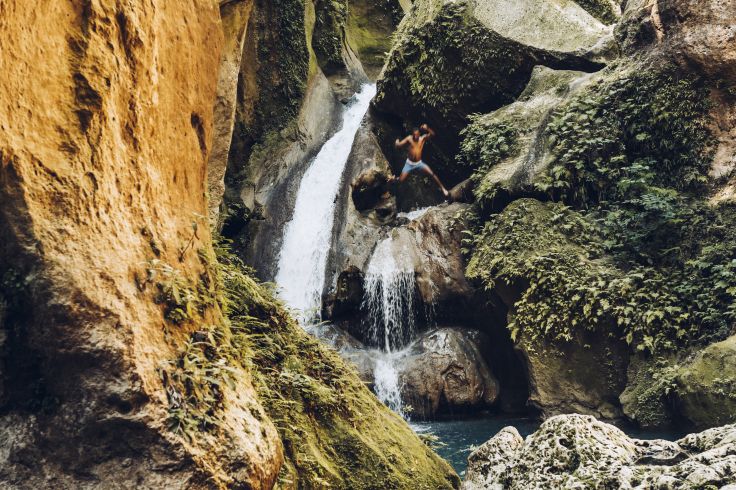
On the day's itinerary - In the morning, departure in a 4x4 with a private guide towards the mountains on the other side of Jacmel, to the breathtakingly beautiful Bassin Bleu site. The path winds through the forest, which is lined with hibiscus, bamboo groves and palm trees. Green, green, green. Along the way, Jean-Baptiste names the trees and plants: the orange tree is ‘pied zorange’, the avocado tree is ‘pied zaboca’, the longan tree is ‘bwa savonnèt’, and the yapana, whose leaves are used as a tonic, is called ‘zèb kont la-fyèv’. After the walk, you take a dip in the turquoise water under the translucent waterfall.
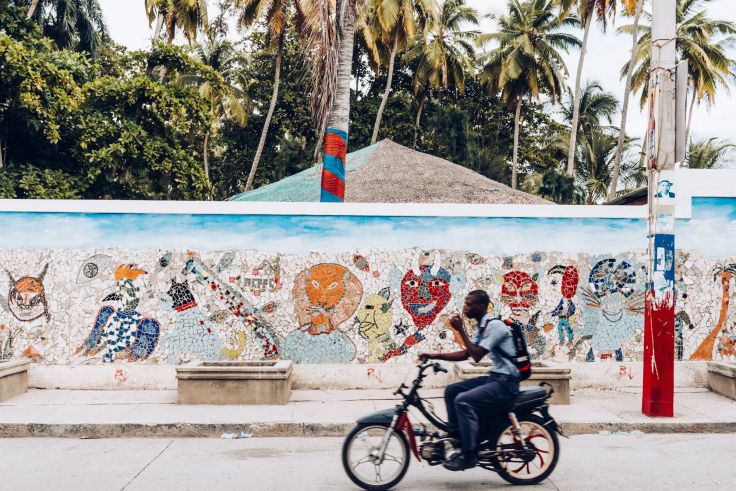
And after the swim, you head to Jacmel. The bar of the Hôtel Florita, which was a trading house founded in 1888, harks back to the days when the city was the richest in the country. Every year, 125,000 bags of coffee left the port bound for Europe. The neighbourhood is home to coffee, cotton and orange peel exporters, and the architecture of the old warehouses is reminiscent of the French Quarter in New Orleans. Josué Jean takes you around his city: he trained in mosaic art with the American artist Laurel True, who founded a school that teaches mosaic techniques. The first staircase was decorated with mosaics in tribute to Préfète Duffaut - who is from Jacmel - and his ‘imaginary cities’. Little girls run down it, coming out of school in uniform, checked shirts, navy blue skirts, white knee-high socks, and dozens of satin bows in their hair. A little further on, a second staircase has excerpts from Hadriana in All My Dreams by René Depestre, who is also a native of the city, written on its black and white tiles. And the city is reinventing itself, colouring itself with mosaic tiles on the walls of houses, on its pavements and on the promenade facing the sea.
Departure in the morning for a long drive west to Les Cayes, the country's third largest city, through a wide variety of landscapes featuring mountains, coastline and plains.
See and do on the way - Un arrêt à A stop in Petit-Goâve to visit Lèlène, who is the queen of dous makos, which is a confection made from milk, sugar and vanilla. Then another stop in Saint-Louis-du-Sud to see the forts of Oliviers and Saint-Louis, which were French and English colonial forts. Upon arrival in Les Cayes, head to the quay and take a 30-minute catamaran ride to Île-à-Vache, where you will stay for three nights in a charming waterfront location on one of Haiti's most beautiful beaches: Anse du Four. And so begins your journey into bliss...
Île-à-Vache exudes calm. There are no roads or cars, just coconut trees, pristine beaches, turquoise water and views of the mountainous coastline in the distance. It's up to you to choose the pace of the day (or lack thereof!).
See and do - Treat yourself to a lazy break on the sand; put on your flippers, mask and go for a snorkelling trip; sip on fresh coconut juice or a cold beer.
Return to Les Cayes by catamaran, then fly to Port-au-Prince aboard a 5-seater Cessna. Finish the trip in the capital and spend the night in Pétion-ville. One last dip in the large swimming pool and a final rum on the terrace, with a full view of Port-au-Prince and its bay below.
Spend the night on board and arrive the next day.
À la carte
This suggested itinerary can be customisable down to the smallest detail, including duration, stops and content. An à la carte menu of experiences is also available to create a journey that reflects who you are.
DISCOVERING BOSMETAL IN NOAILLES
Outskirts of Port-au-Prince, Croix-des-Bouquets. In Noailles, iron has been hammered and forged since 1950, and since the meeting of Georges Liautaud with Dewitt Peters. During a celebration, the great patron of Haitian arts was captivated by the beauty of the blacksmith’s funerary crosses, inspired by the vévés - emblems of the Lwas, the voodoo spirits - usually drawn on the ground in chalk. He urged Liautaud to leave behind practical blacksmithing to devote himself to his art. Today, through generations of apprentices, the entire Noailles neighbourhood lives off bosmetal, a craft based on recycling oil drums through cutting and hammering. This guided tour through the workshops gives you the opportunity to meet the artisans and observe the entire creative process, from raw materials to the finished product, to discover everything about the most representative craft of Haiti.Optional - with a private guide
Why visit Haiti with Voyageurs du monde?
Every day, our travel specialists craft bespoke experiences shaped around each traveller's profile, desires and budget. These passionate experts design experiences delivered on the ground by a local network of Concierges and trusted contacts. These fully customisable, made-to-measure trips are complemented by a wide range of high-end services (lounges, 24/7 assistance, travel booklet, app, Wi-Fi, restaurant booking, etc.)
Let us create your tripA few of the advantages of travelling with us to Haiti
- Globally unique concierge service
- GPS
- Wi-Fi: 1 GB/day included
- Gourmet Voyageurs
- Adjust your trip while travelling
- 24-hour assistance
- Like a local
- CO2 absorption