100% customisable travel idea
Sail the Mekong River Laos Along the Water
Laos - Mekong - Luang Prabang - Champasak
The Mekong Way
Your Trip
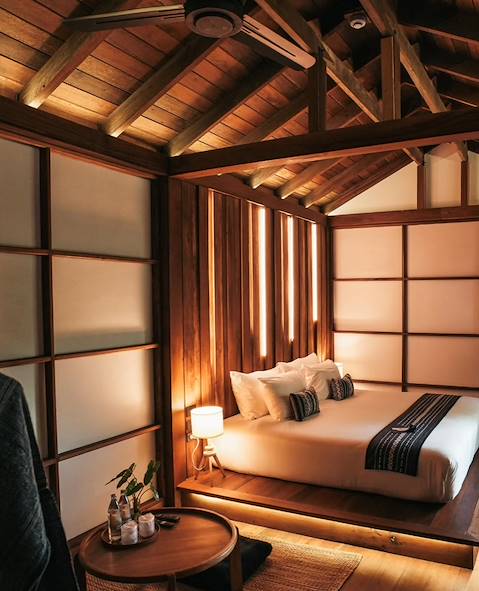
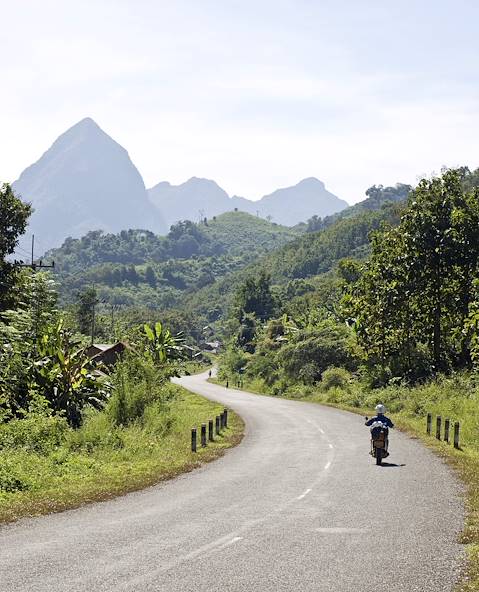
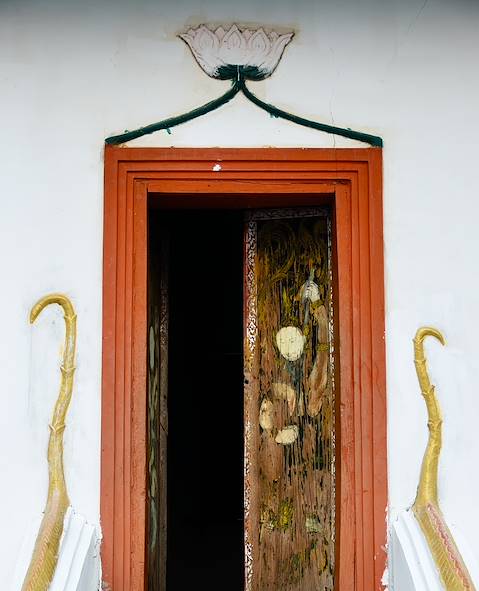
Exploring the North and the Khmer archaeological site of Wat Phu are the two focal points of this trip. Travel through magnificent landscapes, stop to visit beautiful sights, sail, hike, and indulge in the pleasures of life by the water. In between, your transfers will be in an air-conditioned car with a driver and flight connections. Your hotels are all well-maintained although sometimes simple, and offer an excellent standard of amenities. You’ll also find that little extra: the genuine kindness that typifies Southeast Asia. The aesthetic is both understated and carefully considered. And Lao cuisine will surprise you, that’s for certain. In the itinerary are the banks of the Mekong River and one of its tributaries; a hike through a tea forest: a visit to a Hmong village: swimming at the foot of waterfalls: a day of cycling on Khon Island, and even a game of petong! Private guides will be at your service. Would you like to cycle to an ethical elephant sanctuary or Wat Phu? Discover Buddhism from within or explore the Bolaven Plateau by jeep? Just let us know. And if, along the way, you have any concerns or last-minute requests, you’ll have the contact details of our on site Concierge to assist you.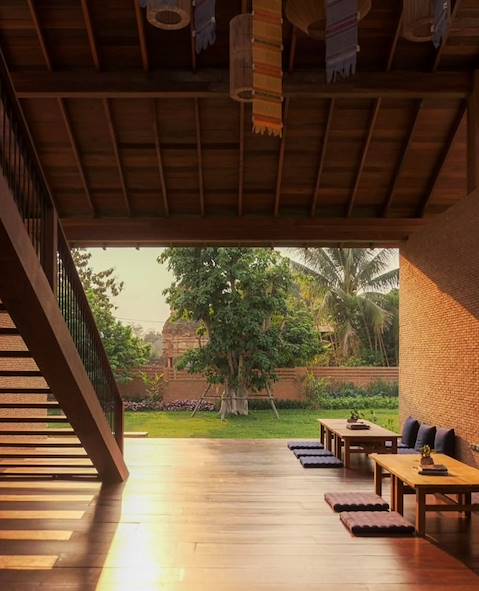
Itinerary
100% customisable for you
Night on board, arrival the next day.
Transfer. Overnight stay just south of the Kok River, not far from the Night Bazaar. Your hotel blends contemporary aesthetics with Lanna spirit - graphic black and white beautifully offset by the intense green of the garden. There’s a pleasing lightness throughout. And a sophisticated comfort. The guest rooms follow suit. The restaurant serves Thai and international cuisine, easing you gently into the culinary art of Southeast Asia. The spa helps erase the fatigue of the flight, so you enter Laos in full physical and mental form. The pool offers further relaxation.
Stroll through the city; visit Wat Phra Kaeo (temple), where in 1434 lightning revealed the famed Emerald Buddha, now housed in Bangkok; marvel at the flamboyant white architecture of Wat Rong Khun (1997-2008) around 6 miles (10 km) from Chiang Rai; and in the evening, try street food at the night market: ?som?? ??tam? (green papaya salad), ?kaeng?? ??khanun? (sour young jackfruit soup), ?pla?? ??som? (fermented fish), and more.
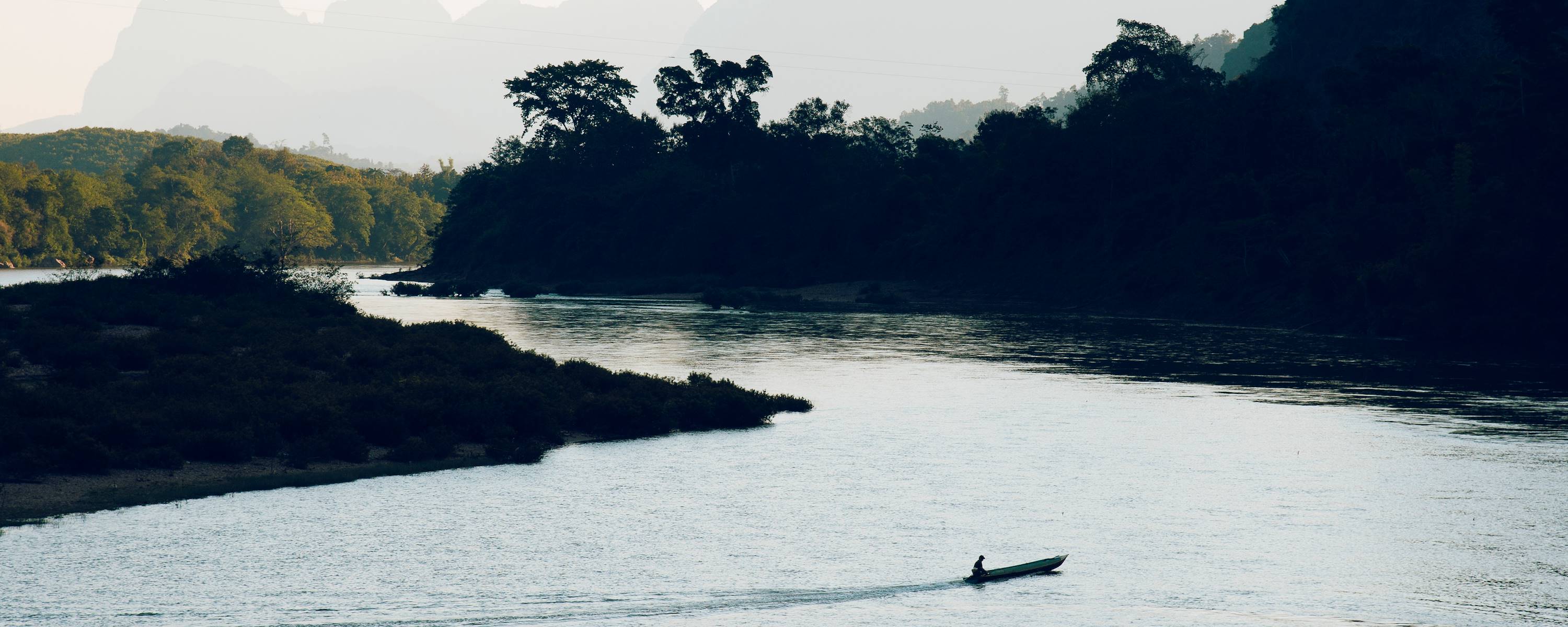
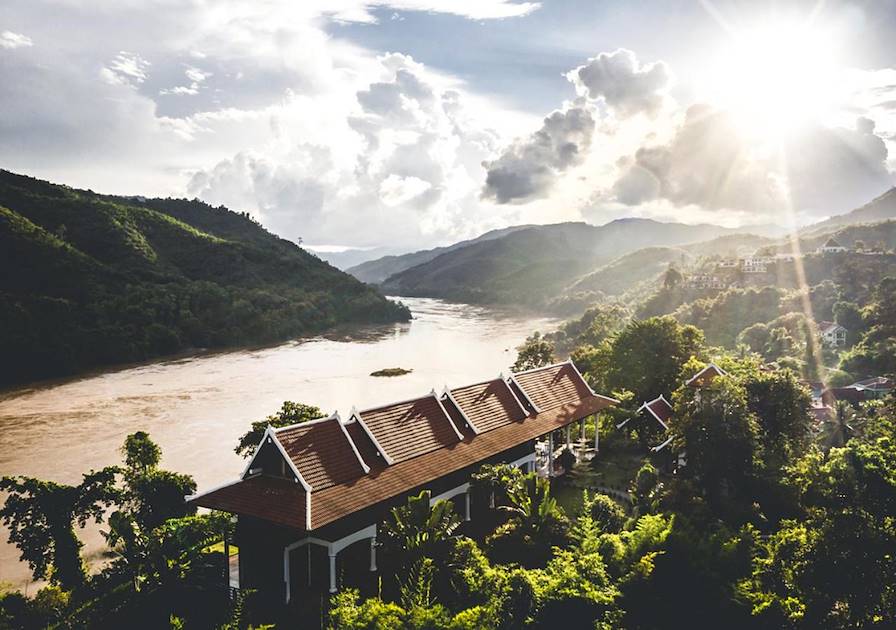
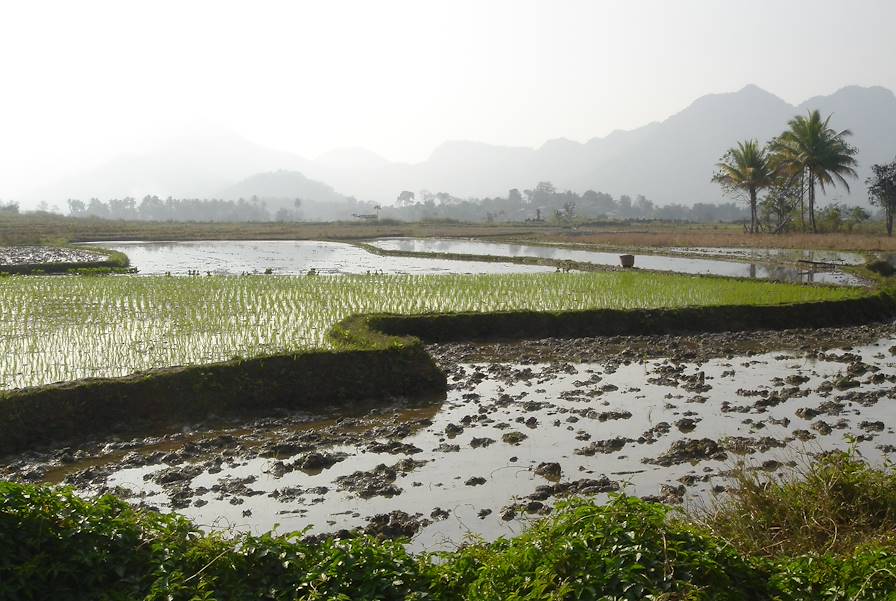
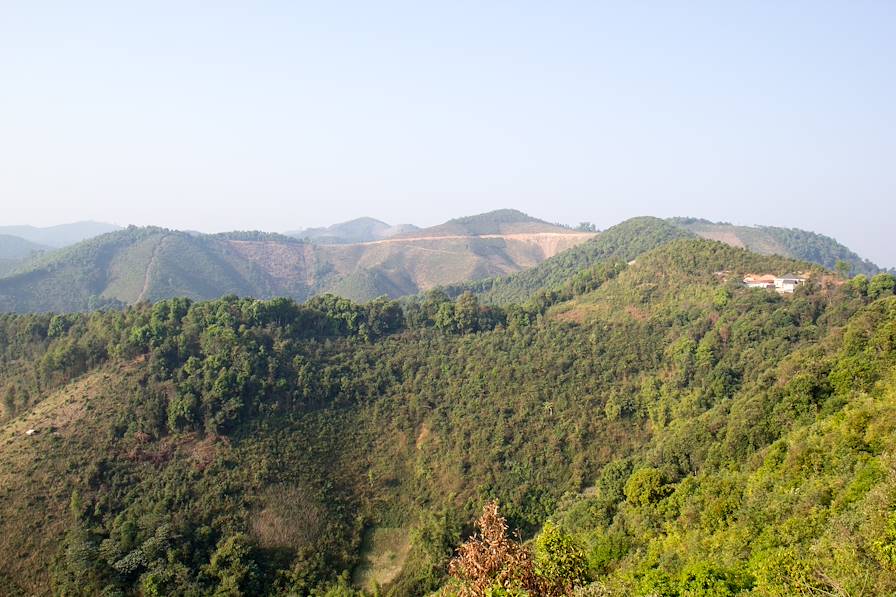
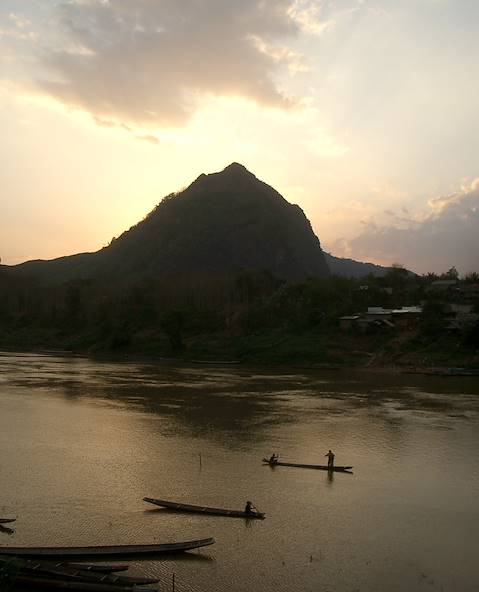
Air-conditioned transfer to Houei Sai on the Lao border. Then, head off with your dedicated guide for an exploration of the North, along the Mekong and the Nam Ou River. The great coffee-coloured ribbon of the Mekong winds through rolling terrain covered in dense vegetation. Reed beds, banana groves, sugar palms, rice fields and vegetable plots line the banks in succession - sometimes competing for space. From time to time, you'll also spot sandbanks. Stilt houses almost seem fragile amid this display of elemental forces. This is tropical Asia in all its glory. In the late afternoon, you'll stop near the village of Pakbeng. Settle in for two nights on the left bank of the Mekong in a charming Lao-style hotel. The teak and rosewood buildings combine simplicity and elegance, while the guest rooms - all wood and natural fibres - open their shutters onto the river. A massage service invites you to surrender to this art of well-being, practised in Laos at least as much as in Thailand. The restaurant serves organic pan-Asian cuisine.
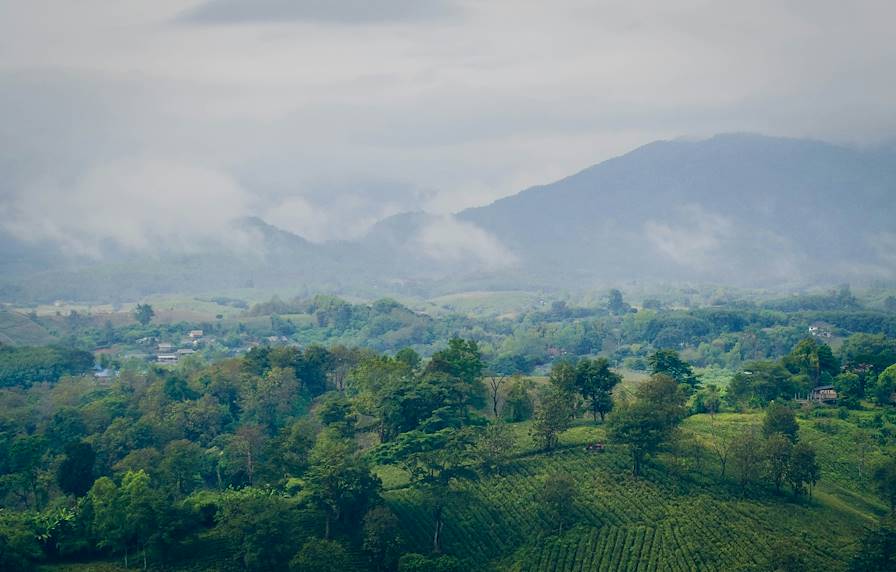
In your itinerary - In the tea forest. With your private guide, you venture into primary forest where villagers cultivate tea gardens and where old wild Camelia sinensis trees still grow - some reaching heights of nearly 50 feet (15 m). Though little known to Western enthusiasts, Lao tea has a long tradition. The Chinese, famously exacting on the subject, readily import it. The hike is an opportunity to learn about this variety of camellia tea and the local culture that has grown around it. It's also a chance to discover the remarkable diversity of plant life in the forest. Wildlife may be elusive, but it makes itself known through an extraordinary range of sounds. Here, ecological interactions remain balanced rather than destructive.
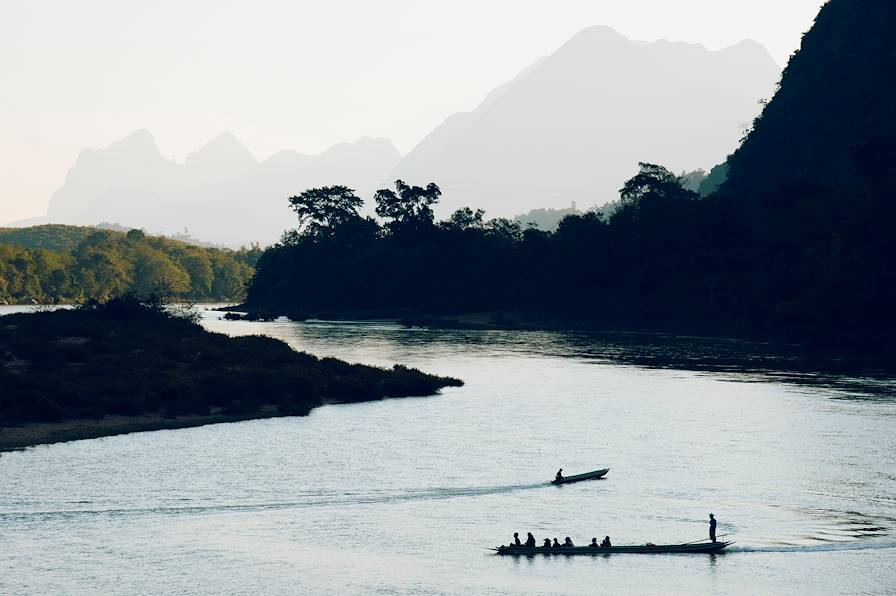
In the morning, mist often fills the valley before gradually lifting as the sun’s rays break through. It creates an enchanting atmosphere at breakfast and in the first stretch of the cruise, which continues through the mountainous province of Oudomxay. Expect to see karst formations, always supporting thick blankets of vegetation. Rice cultivation spreads wherever it can. The boat, derived from traditional vessels, glides lightly across the water. Birdlife is abundant, with grey-throated martins, great cormorants, and black-bellied terns.
Stop and check in for a two-night stay in Nong Khiaw, on the Nam Ou River. A handful of Lao-style bungalows occupy a meadow sloping down to the silty waters. The vibrant blue of the swimming pool provides an almost playful contrast to the solemn natural surroundings. Inside, you’ll find rustic elegance and surprising comfort. The table is full of colour and bold flavours, thanks in part to the surrounding eco-gardens. Trekking, mountain biking and kayaking are all available from the hotel.
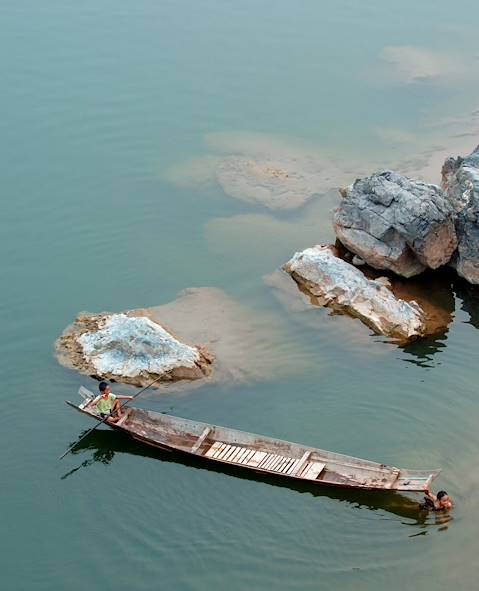
Today, you'll travel by longboat to another riverside village: Muang Ngoi. Muang Ngoi. Along the way, observe life unfolding on the riverbanks against a breathtaking mountain backdrop. At the foot of these peaks, you hike through hamlets and rice paddies - another pace, another perspective on one of the country’s most beautiful landscapes. Visit a cave. Picnic. Swim. Then return to Muang Ngoi, patient and resilient in the face of rapid contemporary change. Head back to Nong Khiaw the same way. The day leaves an impression of calm as well as grandeur. As the light fades, join locals on the bridge linking the two parts of the village to enjoy an unforgettable sunset. Afterwards, you're free to head to one of the bars in the new town, where Thai pop fills the air.
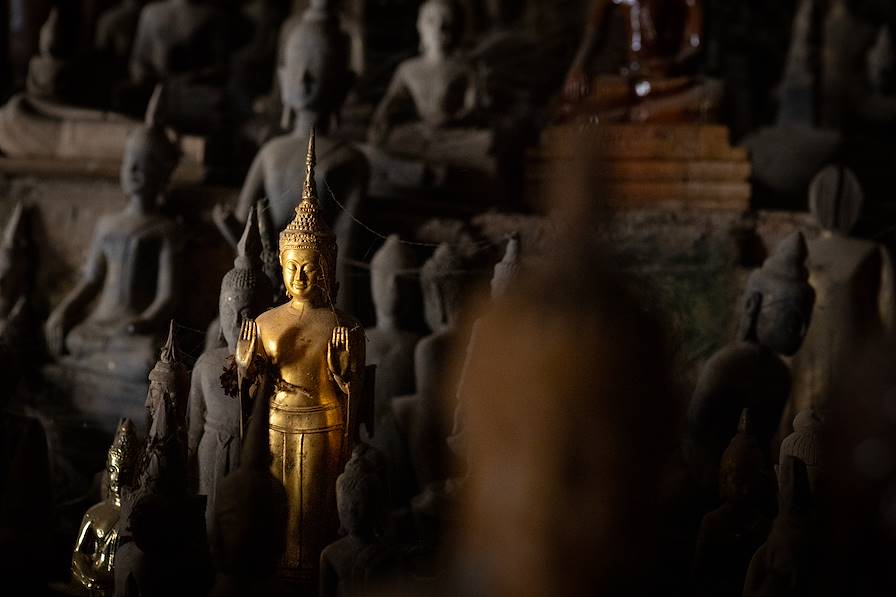
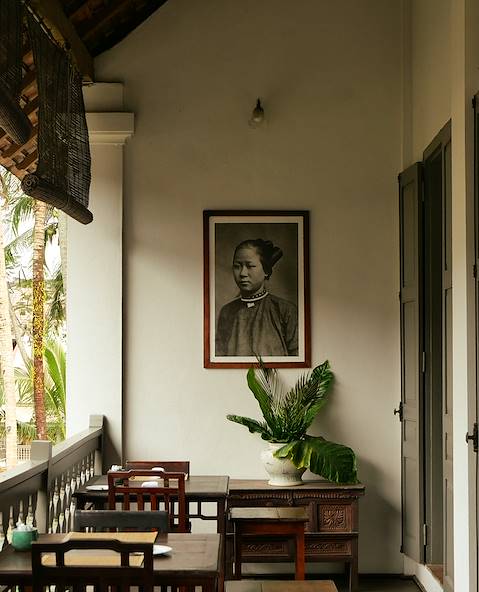
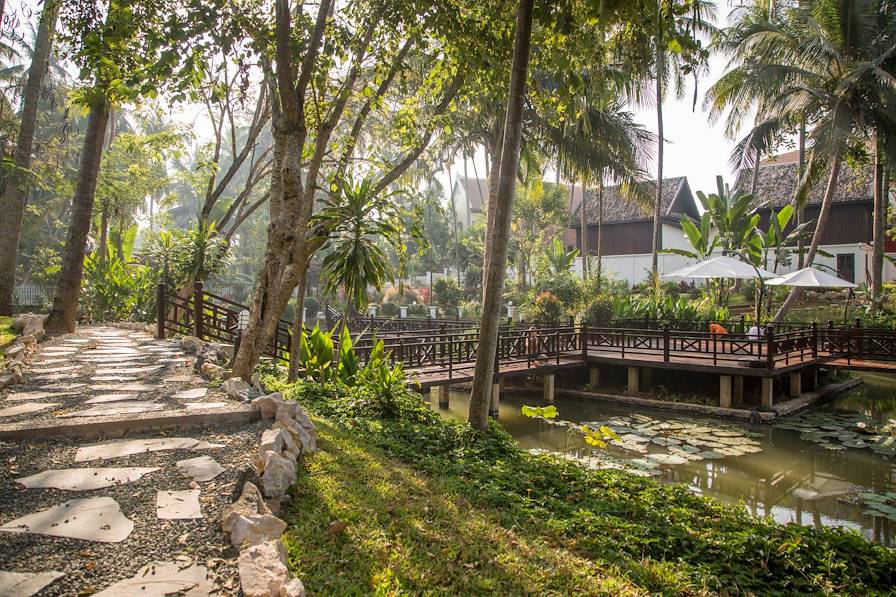
Transfer to Luang Prabang. En route, visit the Pak Ou caves, populated by hundreds of Buddha statues placed there by devotees. You travel by local boat, once again combining the pleasures of river navigation with spectacular limestone and forest landscapes. In Luang Prabang, settle in for a three-night stay in a beautiful garden filled with palms, bamboo groves, lawns, flowerbeds and wooden walkways. The Lao-modern buildings are simply yet comfortably appointed. Your room is a pleasure to return to. The restaurant overlooks a lotus pond - an ideal setting for regional cuisine, championed and showcased with skill. Conditions, in short, are excellent. Complimentary bike hire invites you to broaden your range of exploration.
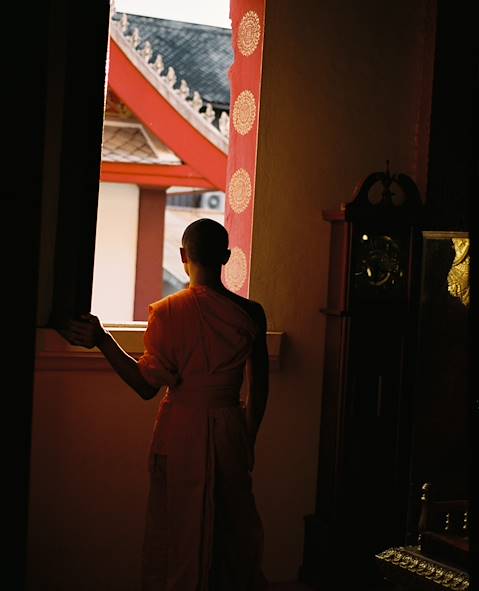
Today, you explore at your own pace. The former royal capital, once Vientiane’s rival, is quietly reconnecting with the splendour of its past. The country’s reopening to travellers and the attention of institutions such as UNESCO have provided momentum. The challenge has been to balance outside interest with domestic priorities - something that is gradually being achieved. Buildings and monuments have been restored, including those from the French Protectorate period, which the Lao have chosen to integrate into their national heritage. The overall effect is very appealing. The atmosphere shifts from street to street, yet something gentle and harmonious remains everywhere. Nothing rises high enough to diminish the mountain backdrop. It's a city on a human scale, where nature still finds its place. A deeply religious city where Buddhism and its temples set the tone. At dawn, bronze bells wake the monks, who soon set out for the tak bat, the alms-giving ritual. A new day begins.
Activity suggestions - Elephants and e-bike.
In your itinerary - Hmong village and Kuang Si Falls. With a private guide, visit the Hmong village of Ban Long. It's a wonderful and intimate insight into the still very traditional life of this important minority group. The Hmong inhabit the mountains of Laos and Vietnam, as well as southwest China (where they are grouped under the name Miao). The 20th century proved difficult for them, prompting some to settle in the United States and even in French Guiana. From Ban Long, a hike of around three hours leads to the Kuang Si waterfalls. Nestled in lush greenery where light and shadow play, several cascades tumble down; at the bottom, the water gathers in a series of natural pools where you can swim all year round. Return to Luang Prabang by road.
Optional bespoke experience - An intimate encounter with Buddhism.
Transfer to the airport and flight to Pakse. Continue by car, then boat, Khône Island, in the Si Phan Don archipelago - the “4,000 Islands” region. Along the way, admire the interweaving greens, blues and ochres of water and land. Palm trees sweep the sky, and temples rise here and there. The legendary Mekong giant catfish (Pangasianodon gigas) inhabits the Khône Falls - an Asian, vegetarian counterpart to the European wels catfish (Silurus glanis) of the Danube. Islanders live by fishing and farming, in tune with the great river and shifting skies. Once on Khône, head to the spectacular Li Phi Falls, where blue-green water foams between bronze-coloured rocks - one of Laos’s finest hydraulic spectacles.
Stay for two nights on the banks of one of the Mekong’s many channels, within sight of the old French railway bridge. The hotel provides good standards in a friendly Lao atmosphere. The restaurant overlooks the river, serving regional and Thai dishes. A pleasant swimming pool is at your disposal.
In your itinerary - A bicycle for the day. Helmet included, of course. Your bike is available at the hotel and you use it at your leisure (and your own pace). Life is easygoing on Khône - and it's easy to get around. Vegetation is generous in form and colour. The Lao people are welcoming. It's a soothing change of scene. The old railway - built to allow boats to bypass the falls and continue upstream on the Mekong - was a true feat of engineering. The station and even a locomotive can still be seen. Another legacy of the French colonial period - pétanque. To this day, Lao players enjoy a spirited game. During the friendly match at aperitif hour, you’ll need a steady hand - pétanque may be French by origin, but the locals play to win. So - will you go for the shot, or play it safe?
You may indeed choose to explore by bike - in Champassak itself, now a modest town still marked by French colonial architecture (it was once capital of the colonial Bassac province), and in the surrounding countryside. Elephants in the Xe Pian National Protected Area may also tempt you. Mekong excursions take various forms. Attempting to cast a fishing net with the locals is a chance to test your skill. And of course, there is Vat Phou, the mountain temple listed as a UNESCO World Heritage site - a major archaeological complex. That said, you may equally decide to remain “at home”, enjoying the lodge’s many comforts and, contemplating the river’s current, retracing the thread of your journey’s memories.
Not to be missed, with a private guide - The Bolavens Plateau.
Transfer to Ubon Ratchathani airport and return flight. Night on board, arrival the next day.
À la carte
This suggested itinerary can be customisable down to the smallest detail, including duration, stops and content. An à la carte menu of experiences is also available to create a journey that reflects who you are.
Luang Prabang - Elephants and eBikes
After a short transfer, you’ll approach the sanctuary by electric bike. It’s a truly stimulating and participative way to explore one of the most beautiful sections of the Nam Khan River, pedalling through pure tropical romanticism. Once you dismount, there is a brief introduction to elephants. Although large, these pachyderms remain secretive. The estate continues the tradition of the mahout, a handler who rides and looks after the elephant. It’s a very special relationship and an essential part of Laos’s cultural heritage. The bullhook is banned here, along with any violence towards animals. Instead the animals are treated patiently over time. And given special treats. For example, you’ll see them getting a bath, and experience all this up close. You will be accompanied by a private English-speaking guide.Luang Prabang - A Personal Encounter with Buddhism
Rise at dawn to witness the daily ritual of offerings made to Buddhist monks, the tak bat. Between those who give and those who receive, mutual respect runs deep. Return to your hotel for a good cup of Lao coffee (with condensed milk), before setting off on a boat trip along the Mekong to a rural temple. Meet the abbot and hear about the history of Buddhism in Laos, monastic discipline and meditation. At the scheduled time, sit down to a vegetarian lunch with the monks. In the afternoon, take a walk through paddy fields and banana plantations. Then visit the village and temples of Xieng Mene. A private guide will accompany you on the excursion.From Champasak to Wat Phu by Bike
Champasak is a quiet little place, which has now become something of a ”dormitory town” for Wat Phu. Cycle through the countryside with your private guide towards this important Khmer archaeological site, containing palaces and a Shaivite temple - one of the surrounding peaks is said to be a svayambhu-linga, a natural representation of Shiva. The complex also includes hydraulic structures dating from the 11th and 12th centuries that bear witness to political and religious dynamics that flourished fully at Angkor. The museum displays objects unearthed during archaeological digs on the site. Wat Phu is also a place of Buddhist pilgrimage. Take an electric vehicle from the temple to the nearby mountain for an elevated view of the area. Back at your hotel, you will have cycled about 15 km (9 miles).Champasak - The Bolaven Plateau
Located between 1,000 and 1,400 metres (3,300-4,600 feet) above sea level, this rugged plateau preserves stretches of primary forest and offers views of spectacular waterfalls (including Tad Gneuang). It is also a fertile plain. Here, they grow a well-known type of coffee, as well as tea, pepper, cardamom, and more. With the Ho Chi Minh Trail running along its eastern side, the Bolovens Plateau was a strategic area during the Vietnam War. During the first half of the 20th century, the long uprising of the Lao Theung from the plateau against their French coloniser gave Laos one of its heroes, Ong Kommandam. Discover more on a Willys Jeep tour with driver and guide.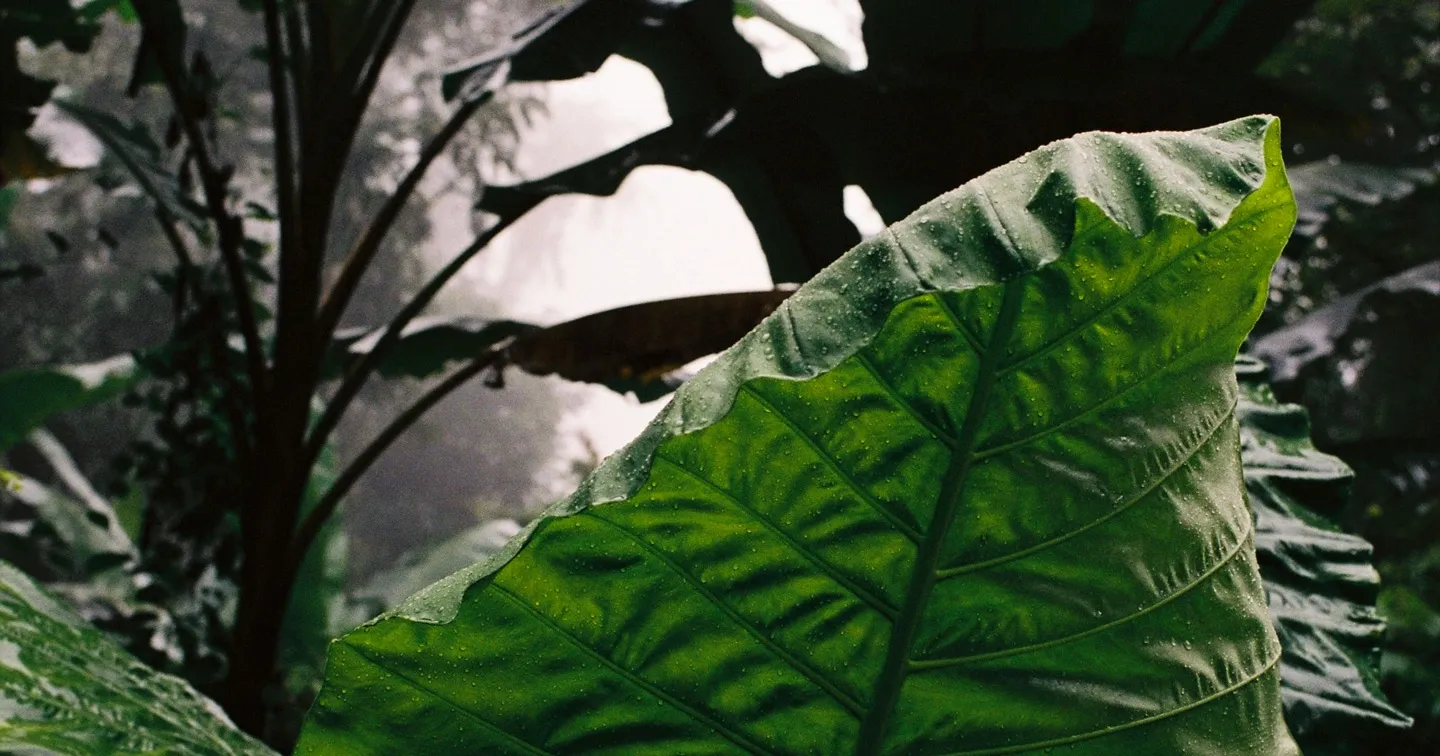
Why visit Laos with Voyageurs du monde?
Every day, our travel specialists craft bespoke experiences shaped around each traveller's profile, desires and budget. These passionate experts design experiences delivered on the ground by a local network of Concierges and trusted contacts. These fully customisable, made-to-measure trips are complemented by a wide range of high-end services (lounges, 24/7 assistance, travel booklet, app, Wi-Fi, restaurant booking, etc.)
Let us create your tripA few of the advantages of travelling with us to Laos
- Globally unique concierge service
- CO2 absorption