100% customisable travel idea
Art cities, countryside, coastline The hidden face of the Baltic States
Lithuania - Latvia - Estonia
100% customisable travel idea
Lithuania - Latvia - Estonia
100% customisable for you
Upon arrival, private transfer and a two-night stay in the centre of Vilnius. The hotel occupies an elegant 19th-century building. The interiors have a contemporary international feel. The rooms are well-equipped and comfortable, and the wooden flooring stands out. The restaurant skillfully brings Lithuanian cuisine up to date. Bikes will be rented to explore the city.
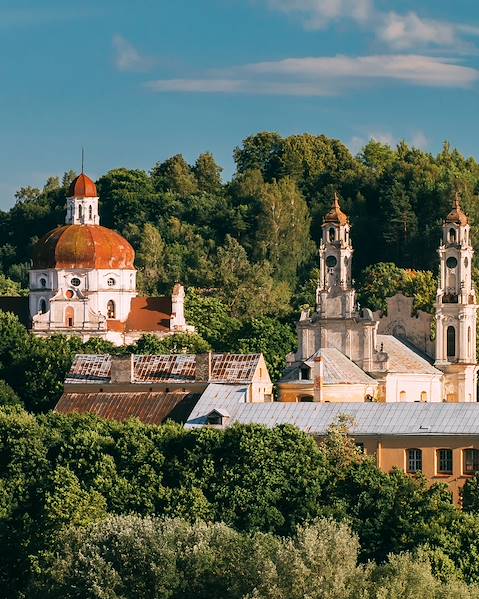
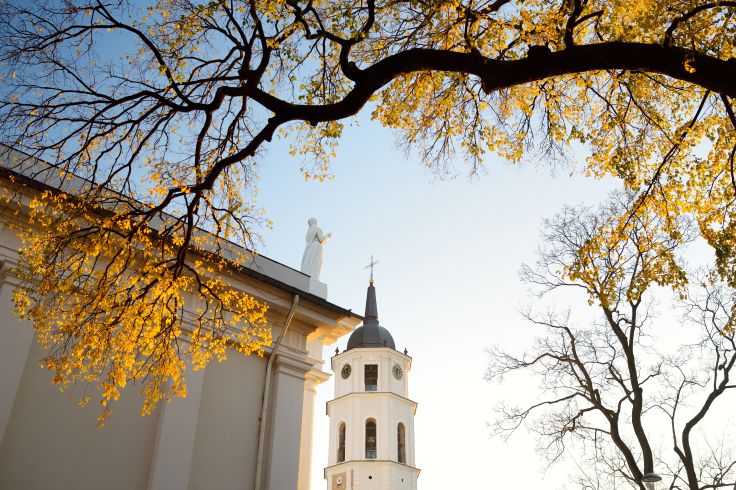
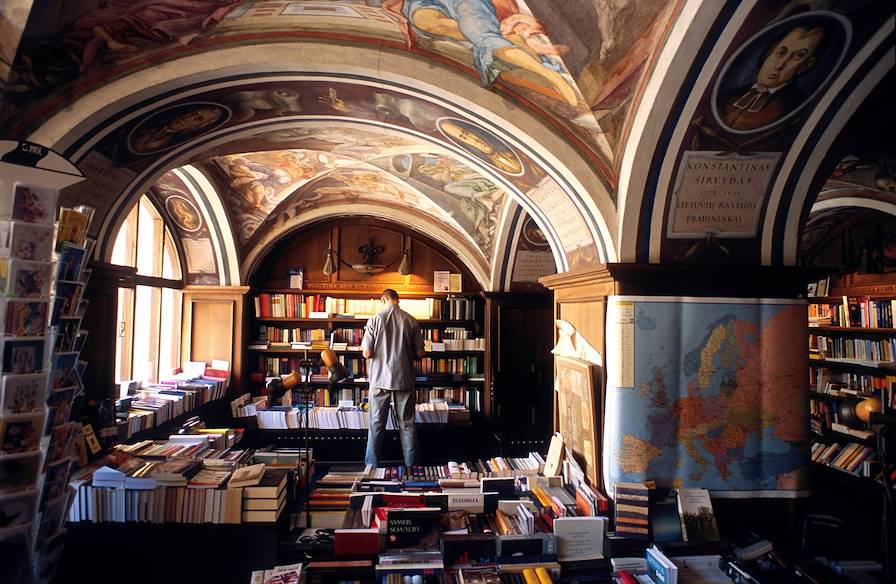
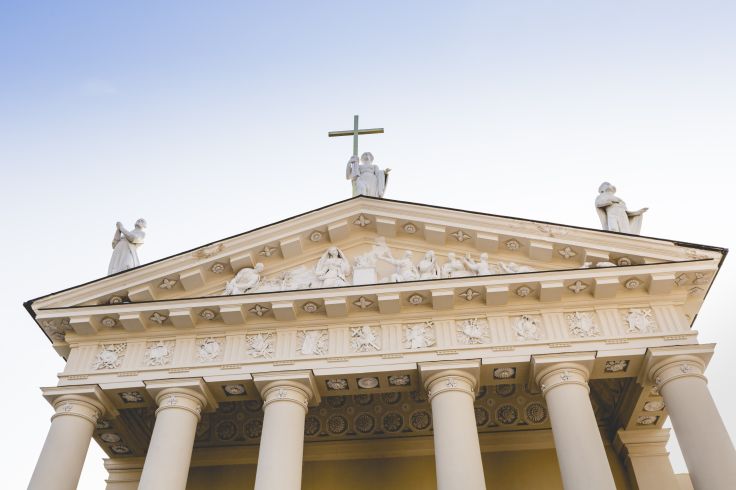
Founded at the confluence of the Vilnia and Neris rivers by Grand Duke Gediminas, Vilnius has seen every shade of history since the 14th century. It has often changed hands, and we hope it will be able to enjoy some serenity for the future. However, this turbulent history has left it with a rich heritage of art and culture. You’ll be in the perfect place to make the most of it.
Already included in your itinerary - Vilnius like a local. The now-famous heritage of Vilnius and the equally renowned impenetrability of the Baltic languages for most people more than justify, if any justification were needed, spending a few hours with a local friend. Your guide will have up-to-date knowledge of what's happening in the city, and make it a point to help you settle in quickly. Nothing is predetermined; instead, you’ll have a meeting and a discussion about expectations, desires and enthusiasms. Once you’ve shed some light on this, you’ll head out into the field, moving at the Lithuanian pace. This helps you to avoid unnecessary guesswork, gather useful information for the next day, and prevents you from feeling too out of sync at the start of the trip.
Picking up the rental car. Drive to Kaunas. About 30 km (19 miles) west of Vilnius, Trakai is a former capital of the Grand Duchy of Lithuania. Rising with its red brick walls on an island in Lake Galve, the main castle is truly impressive. Built in the 14th and 15th centuries, it has experienced the turbulent history of key fortresses, passing from one sword to another as military operations unfolded. Heavily damaged in the 17th century, it was left to decay. Restoration projects began in the last century, and a major undertaking completed in 1961 shaped what we see today - a dream of late medieval military architecture.
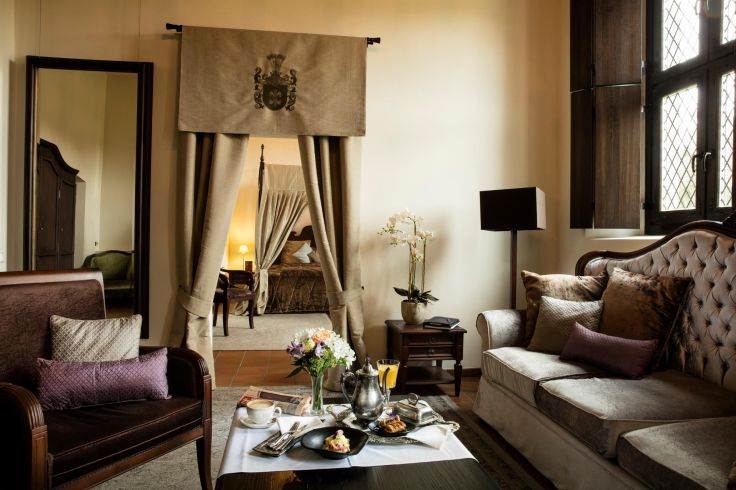
Overnight stay on the Kaunas Reservoir, in a former Camaldolese monastery. The Church of the Visitation, influenced by Borromini, is one of the finest Baroque achievements in northern Europe. The hotel accommodation design not only respected the 17th-century fundamentals but also made the most of them. Rooms and common areas - in tobacco, chocolate, and aubergine tones - have a great deal of style and comfort to match: former hermits would hardly recognise their old austerity here! However, they would surely appreciate the cuisine of chef Raimundas Dambrauskas, who adds a refined baroque touch.
Optional - Kaunas by bike.
Drive to Klaipeda. Enjoy a two-night stay in a hotel in the old town, whose pistachio-coloured façade exudes Nordic romanticism. Inside, the renovation has brought the establishment up to current standards. It’s refined, mahogany and comfortable. The bar, with its pub-like atmosphere, is a truly welcoming place where they know how to pull a pint. The restaurant stands out with its softly coloured dining room and modern terroir cuisine.
With its half-timbered houses, Memel - as the Teutonic Knights who founded Klaipeda in 1252 called it - appeals to those with a fondness for medieval charm. As you stroll around, you’ll get a sense of the wealth that Hanseatic trade brought to these parts. You can still see the long German presence in the very buildings themselves - a presence brought to an end by the Second World War.
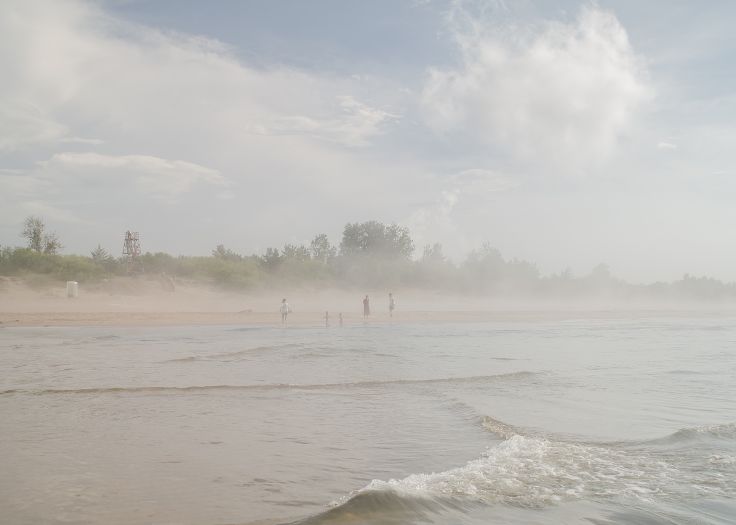
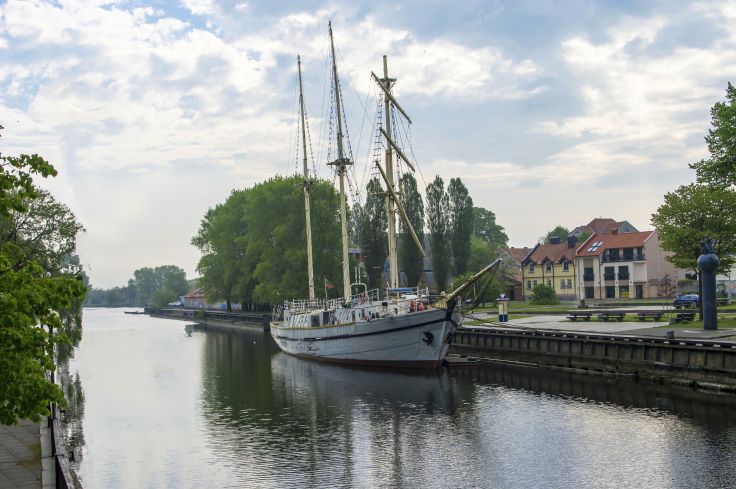
The port opens onto the Memel Strait, the divide between the mainland and the Curonian Spit - where Lithuanians take the ferry to breathe in the salty sea air, hike on the dunes and in the woods, and more. A strategic location, Klaipeda developed a strong system of fortifications from its origins up to the 19th century. You can still appreciate this today. Unless you’d rather visit the maritime museum to learn all about Baltic ecosystems!
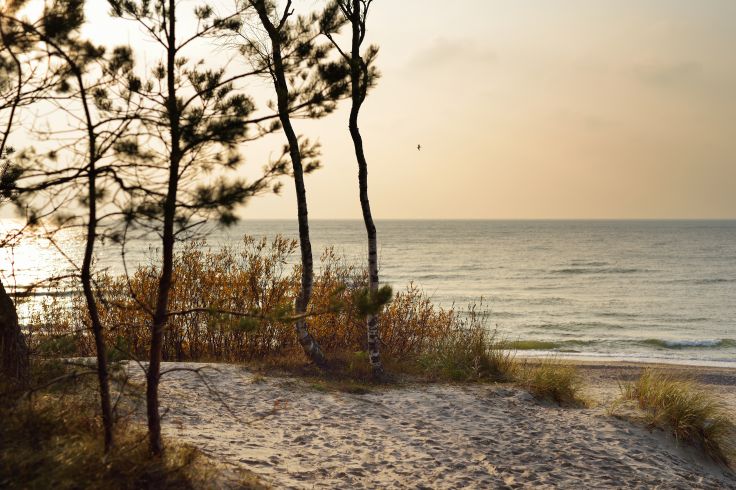
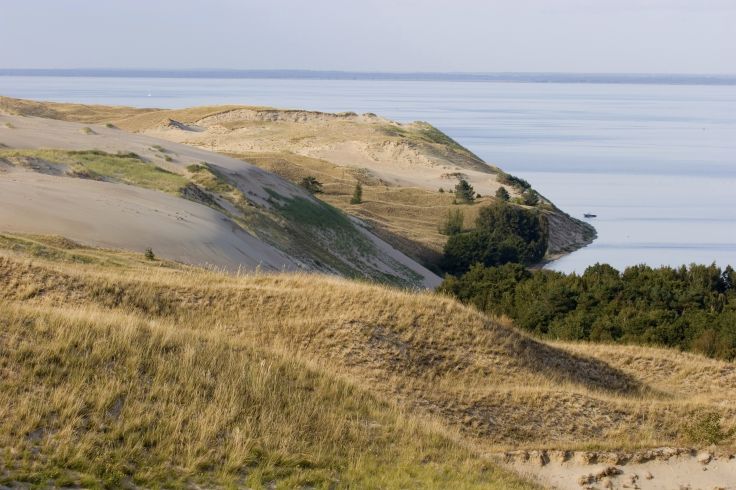
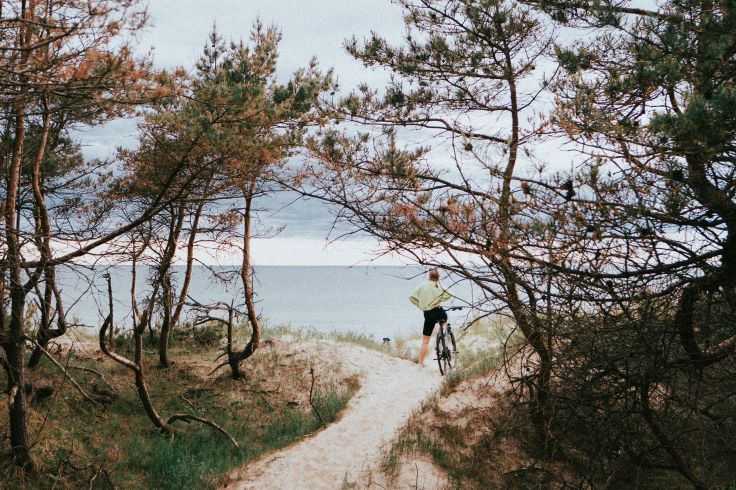
Already scheduled - cycling along the Curonian Spit. A bicycle, a helmet and a basket are waiting for you, so you can enjoy the trails of the isthmus - a sandy, dune-lined coastal strip covered with pine, birch and alder trees. A national park protects the area. While cycling, it’s not uncommon to spot deer or reindeer.
Drive to Latvia and Pavilosta, via Liepaja. You’ll spend the night 500 metres from Pavilosta Beach, in a building whose exterior wavers between lignite and anthracite. Inside, you’ll notice a distinctly contemporary simplicity, the contrast of black and white. In this private space, you can appreciate the simple and effective design. European cuisine - shaped by the sea - served at the restaurant. With its massages, essential sauna and indoor swimming pool, the spa offers travellers a very pleasant chance to relax. These facilities are complemented by a large rooftop terrace.
Optional - Liepaja in private.
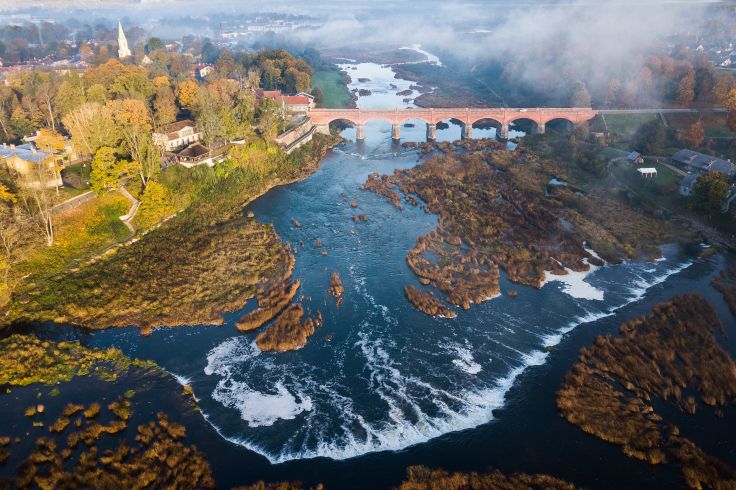
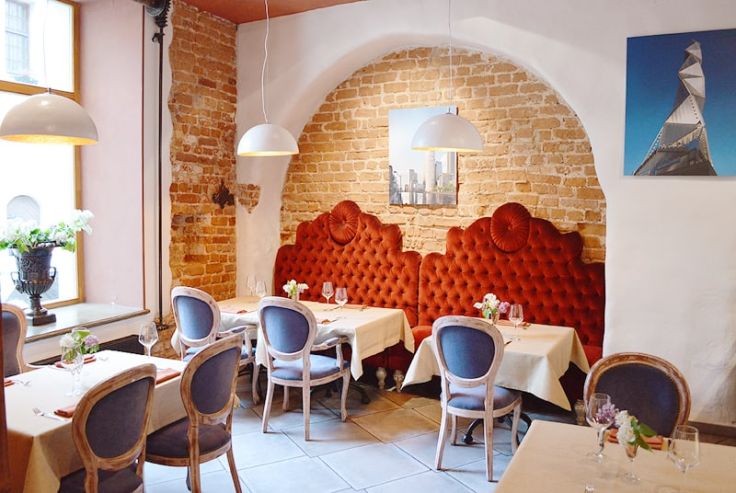
Drive to Riga. You’ll pass through Kuldiga, the former capital of Courland. It is now a centre for sustainable tourism, with a very well-preserved and picturesque old town. You’ll enjoy a three-night stay in the historic centre of Riga. The hotel’s façade date back to the 19th century. The brick walls are the common thread in the décor. They can be found uncovered on every floor - which can be reached by a beautiful wooden staircase, as well as the lift - both in the common areas and in the rooms. The rooms provide a good level of amenities and comfort, enhanced by playful glamourous touches. The restaurant offers a European menu, with the excellent quality of Latvian ingredients. The sauna is of course a must among the facilities.
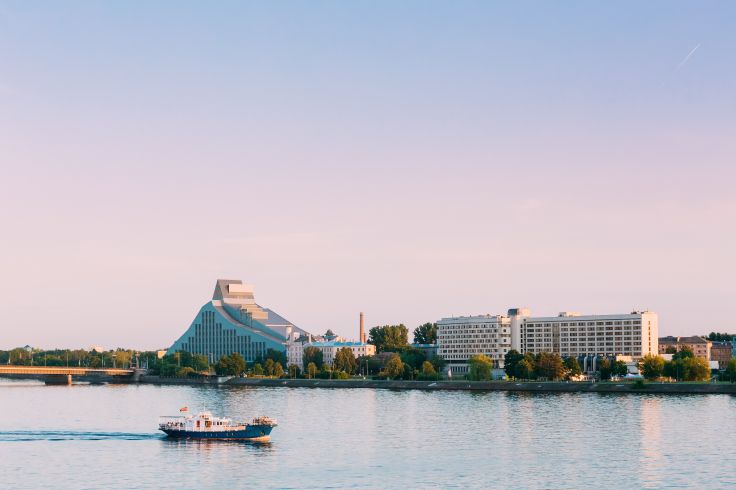
Already included in your itinerary - Riga like a local. The message is the same as in Vilnius. Here, your companion for the day is a friend. And she has all the necessary qualities: savoir-vivre; passion for the city, architecture, and the arts; a knack for finding great spots; flexibility and a practical mindset. So, it’s worth following in her footsteps. To get to the west bank of the Daugava, for example, where the new National Library - Gunnar Birkerts, 2014 - raises some eyebrows among the owners of old wooden houses, despite its claimed Latvian inspiration. Or the Rigas Centraltirgus, the central market - a cornucopia set up in former zeppelin hangars. Producers from all over Latvia offer meat pies, soups, honey, pig snouts, black bread, kvass and more here. You’ll be able to confirm that Latvians eat very well.
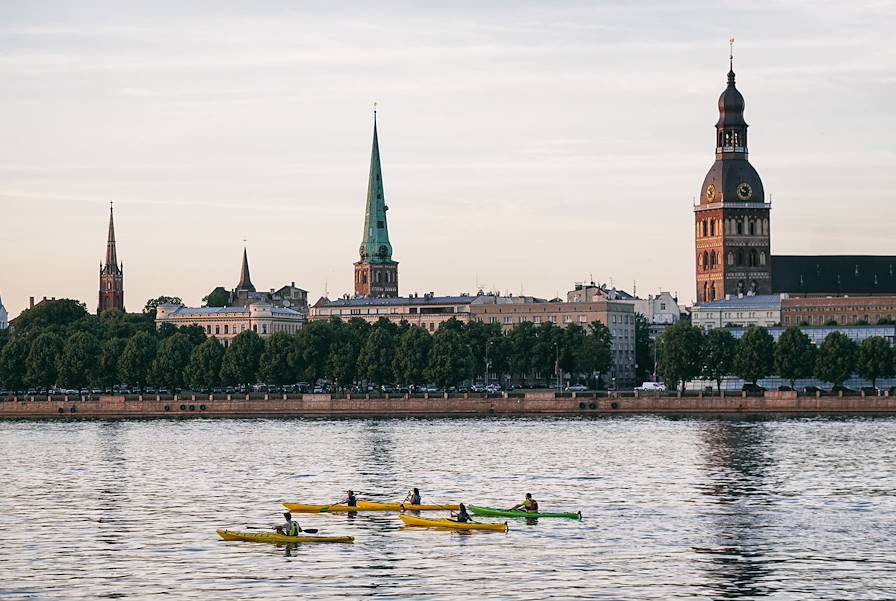
To simplify it a little, in the centre of Riga you’ll find German Gothic and Dutch Renaissance buildings, around which the tsars placed neoclassical structures, along with a few domed churches. Art Nouveau enjoyed great popularity in Latvia. The father of filmmaker Sergei Eisenstein, for example, was an architect in this style. He built along Albert, Strelniaku and Elizabetes streets. And the buildings can still be seen. Just like the Palace of Culture and Science, built between 1951 and 1958, which features national motifs within Stalinist monumentalism. Among the buildings Latvians hold in high regard are St Peter’s Lutheran Church (13th-20th centuries), the House of the Blackheads (16th-20th centuries), and the Freedom Monument by Karlis Zale (1935). Along the edges of the squares and cobbled streets, cafés, galleries and shops catch the eye of passers-by.
Optional - the seaside resort of Jurmala.
Drive to Sigulda. You’ll stay overnight in an 18th-century manor house in the middle of a large park. The building has been designed with a keen sense of design - that is, with a focus on both aesthetics and comfort. Rooms and common areas share this positive spirit. The restaurant serves refined cuisine that respects the ingredients. The spa offers treatments and massages, as well as an indoor pool, a sauna, a hammam and a jacuzzi. The size of the property and its amenities made it essential to rent bicycles to guests.
On the road to Tartu, in Estonia. Overnight stay in the old town. The hotel occupies a historic building whose origins date back to the 16th century. The rooms, with their printed fabrics and wallpaper, have a pleasant decorative décor. The common areas feature a British-inspired style with moiré fabrics and leather. The sauna is essential. As for the restaurant, it has made a name for itself beyond the municipal boundaries.
So here you are in Tartu, the intellectual city. That’s not to say it’s dull - quite the opposite! Youth and institutions, museums and research laboratories, literary taste and a green atmosphere all come together here in an exceptionally lively mix. Here, you’ll experience a cosmopolitan atmosphere that is both relaxed and dynamic, opening up new paths for the future.
Drive to the resort town of Pärnu. You’ll stay overnight in a beautiful, tree-lined neighbourhood, between the city centre and the sea. Ceramic tiles, wrought iron, flowing woodwork, bluish zinc - the restoration has returned the house to its full Art Nouveau splendour. Still in harmony with the Belle Époque, each room has its own décor. Warm, easy to live in, bright - you’ll feel at home there instantly. In the common areas, a pleasant art of living prevails. At the restaurant, the service staff knows their trade. In the kitchen, Estonian ingredients are cooked in the French style. The plates are arranged with consummate artistry and are, first and foremost, a feast for the eyes. Then, the flavours are unleashed. A tradition brought over from the Thames, afternoon tea is a widespread moment of good taste.
Drive to Vihula. Overnight stay in a small Renaissance château in Lahemaa National Park. The décor has preserved the original spirit, yet it remains a contemporary establishment. The rooms, set up in the estate’s outbuildings, have the sophisticated rustic charm you would expect in such a setting. They are also perfectly comfortable. At the restaurant, guests enjoy dishes taken from old recipe books, with ingredients from the manor’s organic farm. The green attitude is one of the house’s defining features: the eco-spa offers a hedonistic demonstration of this.
The park’s landscape is notable for its lack of relief, or very little - large rocks, or boulders, are there instead. The forest covers most of this protected peninsula. Streams, lakes, peat bogs and waterfalls keep it from becoming monotonous. Hiking is a regular activity there. While you are unlikely to encounter a wolf or a lynx, even though they are present, you can spot beavers by their constructions, wild boars by their rooting, and may observe the black stork or the osprey. Palmse Manor is full of country charm.
Drive to Tallinn. Stay for two nights in the western part of the old town. The hotel's façade, decidedly modern, is easy to spot by contrast. Inside, Nordic design and dominant greys are brightened by touches of mauve, cobalt, apple green and canary yellow. The rooms are in line, suitably equipped, comfortable and practical. On site, a restaurant serves international cuisine, often with a briny tang from the sea. A recognised pillar of the art of living in the Baltic States, the sauna naturally belongs in the home.
Optional - Noblessner district, waterfront and brewery.
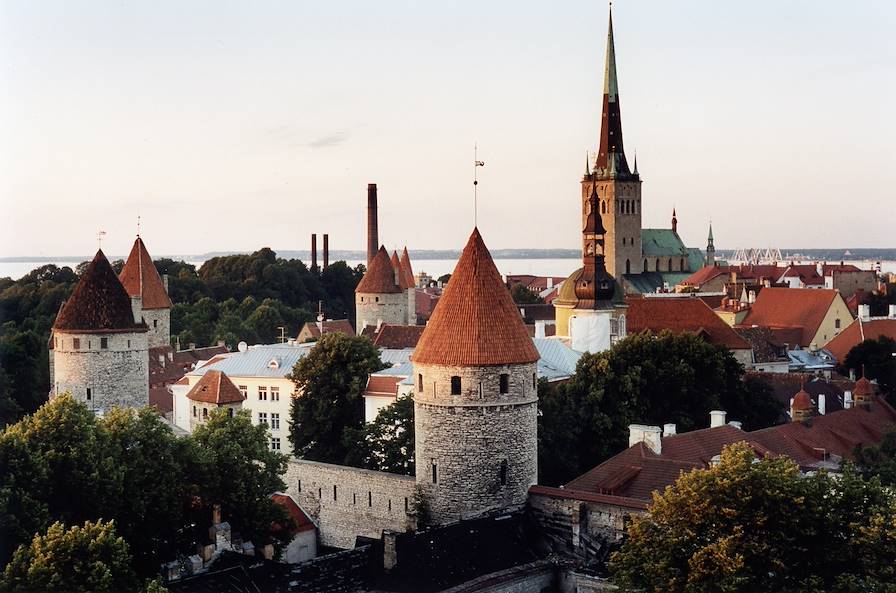
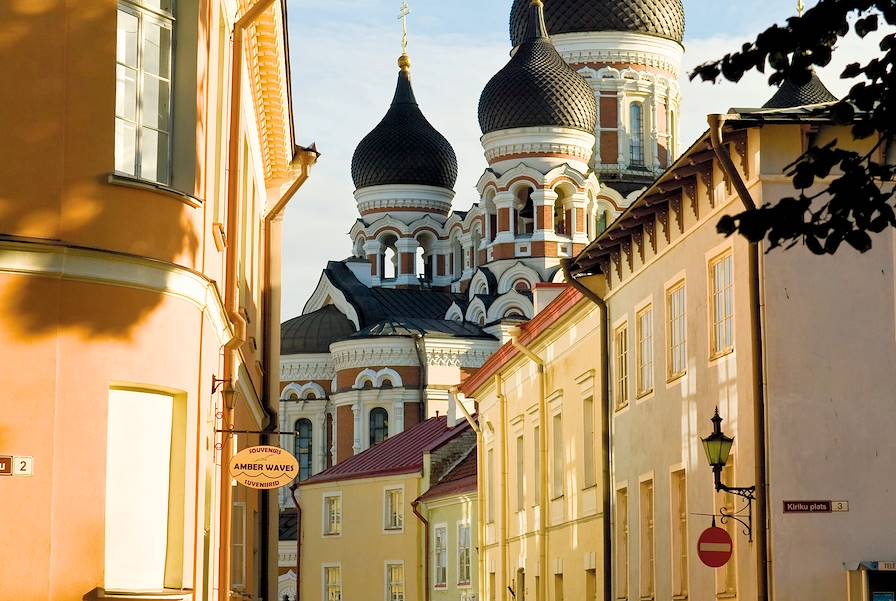
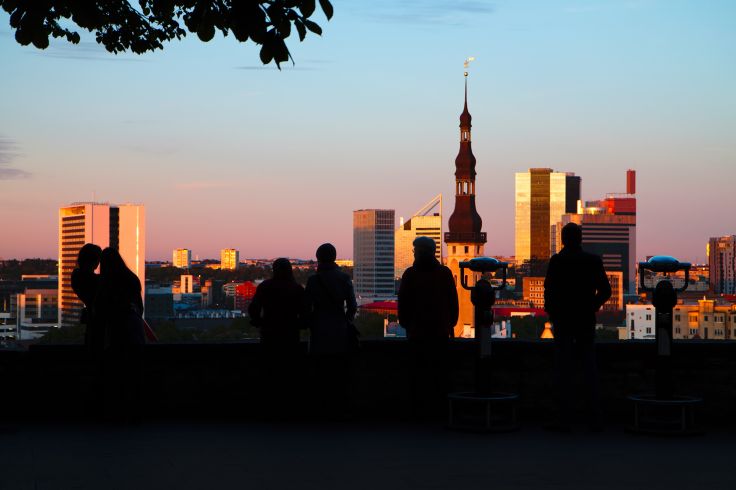
Already included in your itinerary - Tallinn like a local. The formula now holds no secrets for you. A sense of continuity? The city, like Riga, still has its House of the Blackheads - a late 16th-century hotel of a Livonian guild for unmarried merchants. Would you like more proof that Estonia has long been anchored in European culture? In Saint Nicholas Church, there is a famous Danse Macabre by Bernt Notke from the 15th century - a motif of wisdom that was born in Paris, at the Cemetery of the Innocents. Would you like to try Tallinn’s version of street food? The food trucks in the Kalamaja and Pelgulinn districts serve up unexpected dishes for you to enjoy on-the-go. With its slender spires, streets lined with houses that together form a living book of architecture, and its old town firmly enclosed within its ramparts, the Estonian capital has a luminous, elegant charm that is uniquely its own. Its artistic heritage impresses with its quality and fine condition. This does not confine it to the past, and it does not prevent it from fully embracing the present.
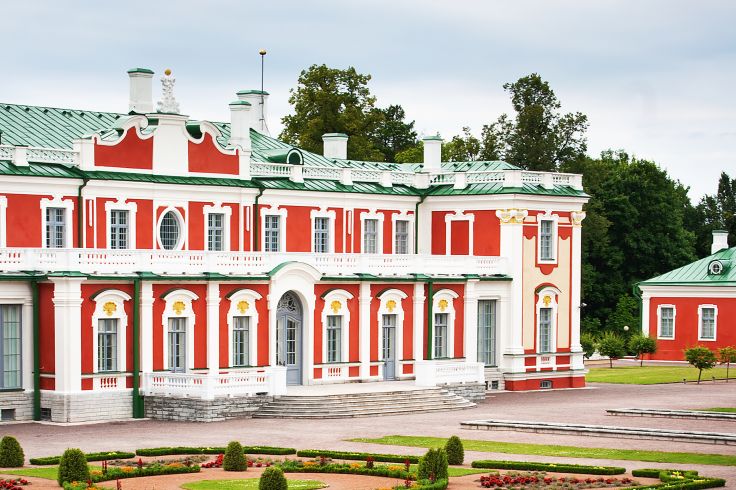
Also included - your tickets for Kadriorg Palace. A little to the east of old Tallinn is the district of Kadriorg (named after Empress Catherine). The vast park surrounding the elegant pink and white palace, designed by Nicola Michetti in 1718, is among the most beautiful in the capital. You’ll stroll here in an atmosphere steeped in northern romanticism. The castle houses the collections of the Estonian art museum.
Transfer to the airport and flight home.
This suggested itinerary can be customisable down to the smallest detail, including duration, stops and content. An à la carte menu of experiences is also available to create a journey that reflects who you are.
Every day, our travel specialists craft bespoke experiences shaped around each traveller's profile, desires and budget. These passionate experts design experiences delivered on the ground by a local network of Concierges and trusted contacts. These fully customisable, made-to-measure trips are complemented by a wide range of high-end services (lounges, 24/7 assistance, travel booklet, app, Wi-Fi, restaurant booking, etc.)
Let us create your trip
Every day, our travel specialists craft bespoke experiences shaped around each traveller's profile, desires and budget. These passionate experts design experiences delivered on the ground by a local network of Concierges and trusted contacts. These fully customisable, made-to-measure trips are complemented by a wide range of high-end services (lounges, 24/7 assistance, travel booklet, app, Wi-Fi, restaurant booking, etc.)
Let us create your trip
Every day, our travel specialists craft bespoke experiences shaped around each traveller's profile, desires and budget. These passionate experts design experiences delivered on the ground by a local network of Concierges and trusted contacts. These fully customisable, made-to-measure trips are complemented by a wide range of high-end services (lounges, 24/7 assistance, travel booklet, app, Wi-Fi, restaurant booking, etc.)
Let us create your trip
Travel with complete freedom, guided by your interests,
ideas and passions.
250 travel specialists, organised by country and region. Driven by a passion for beauty and never short of ideas, they inspire you and design an ultra-personalised journey: itineraries, accommodation, workshops, encounters, and more.
Always at your service: with a dedicated travel specialist, Concierge service and 24/7 assistance, our teams support you and adapt in real time, for a trip that is both flexible and expertly supported.
With family, as a couple, in a group of ten, on a road trip, by train, by boat, for a weekend or a round-the-world journey... Trips tailored to your preferences, enhanced by clever services, for ever smoother travel.