100% customisable travel idea
Balkans Transit Slovenia, Croatia, Bosnia and Montenegro as a family
Slovenia - Croatia - Bosnia - Montenegro
100% customisable travel idea
Slovenia - Croatia - Bosnia - Montenegro
100% customisable for you
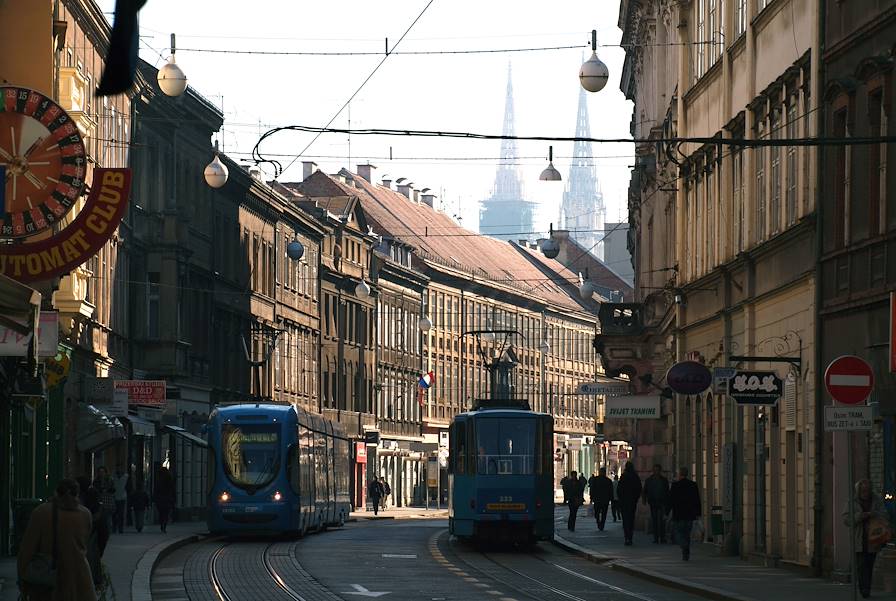
Welcome and transfer. Overnight stay in old Zagreb. Your hotel is housed in a beautiful early 19th-century mansion. The decor makes the most of the building itself. The taupe, tobacco, sisal and blue tones lend a chromatic elegance, to which the furniture adds its own touch of chic. The rooms exude a serene classicism and offer every comfort. The trees and fountain in the courtyard garden provide a lovely setting for the café. The old Europe atmosphere and greenery combine to give the start of the trip some of its tone and charm.
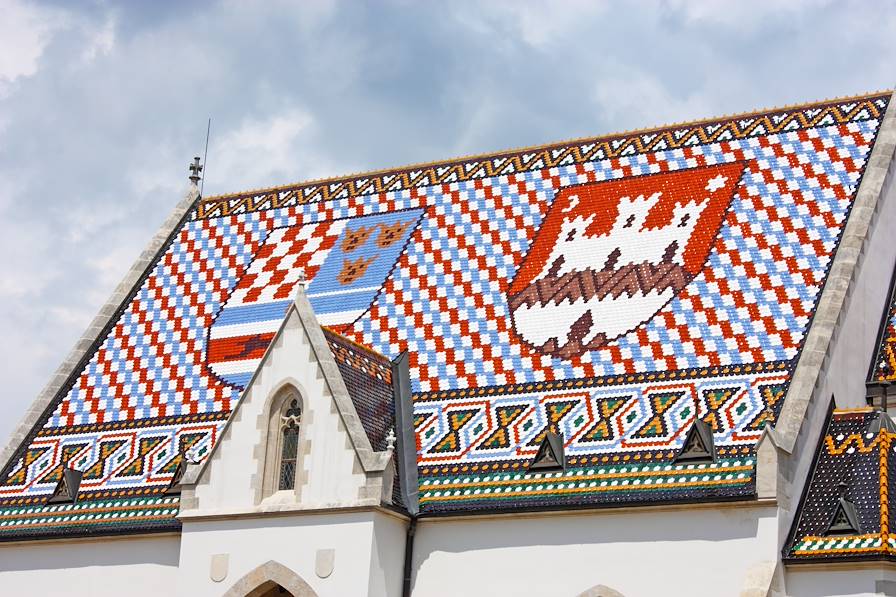
See and do - If you don't have much time, the best thing to do is probably to visit Gradec, the upper town. It is one of the best-preserved old towns in Croatia. The 14th-century St. Mark's Church is a beautiful example of Gothic architecture without being overly ornate. The south portal is attributed to the Parler workshop in Prague. Otherwise, the capital of the Kingdom of Croatia-Slavonia was endowed by Austria-Hungary with buildings befitting its status.
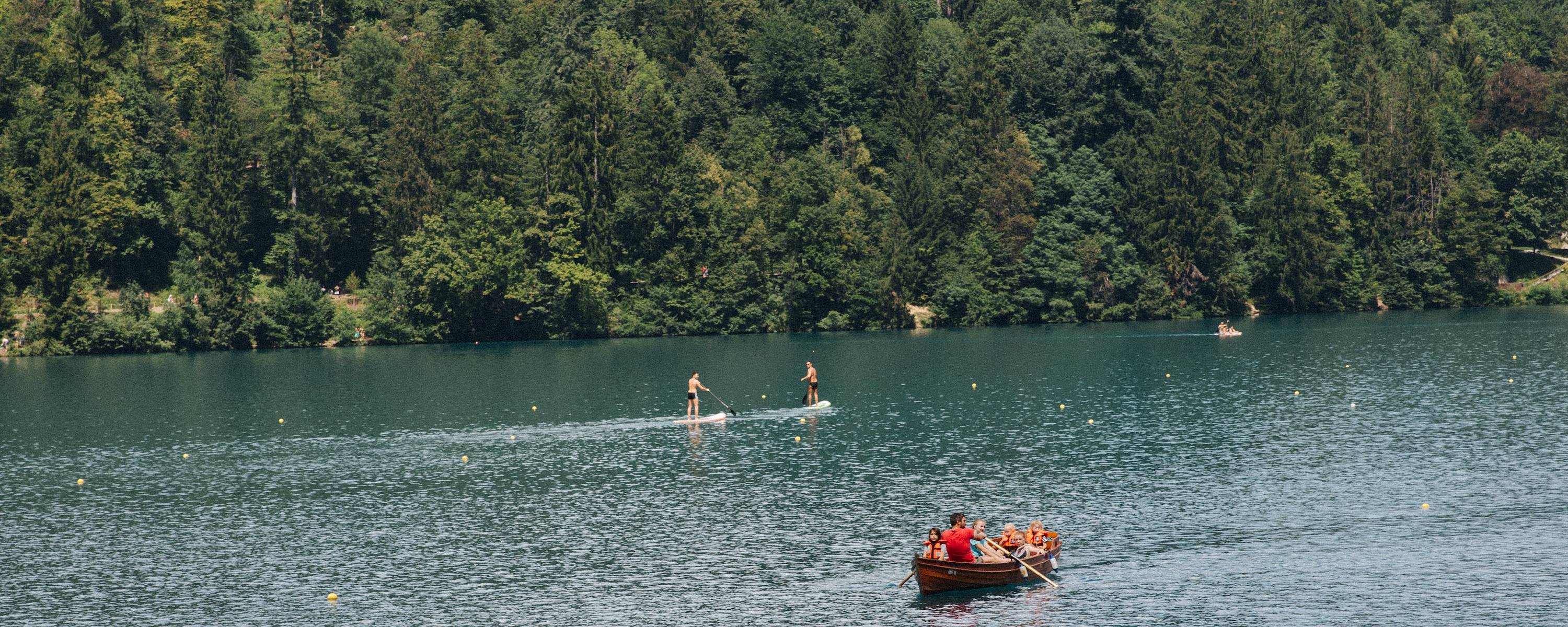
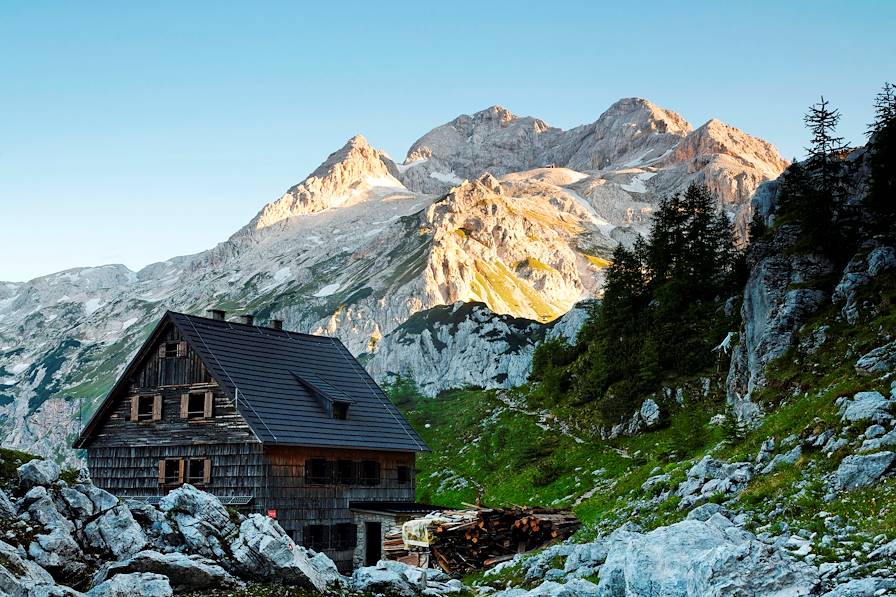
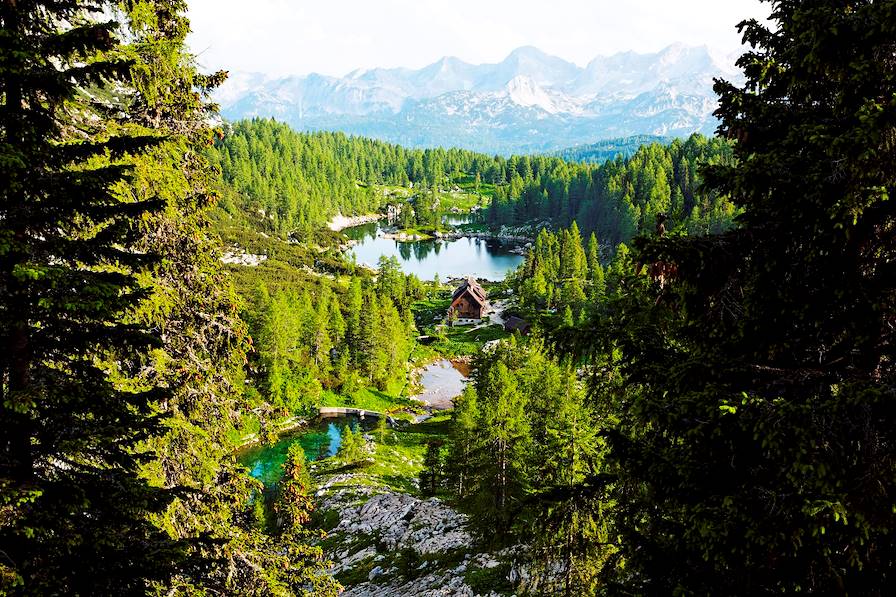
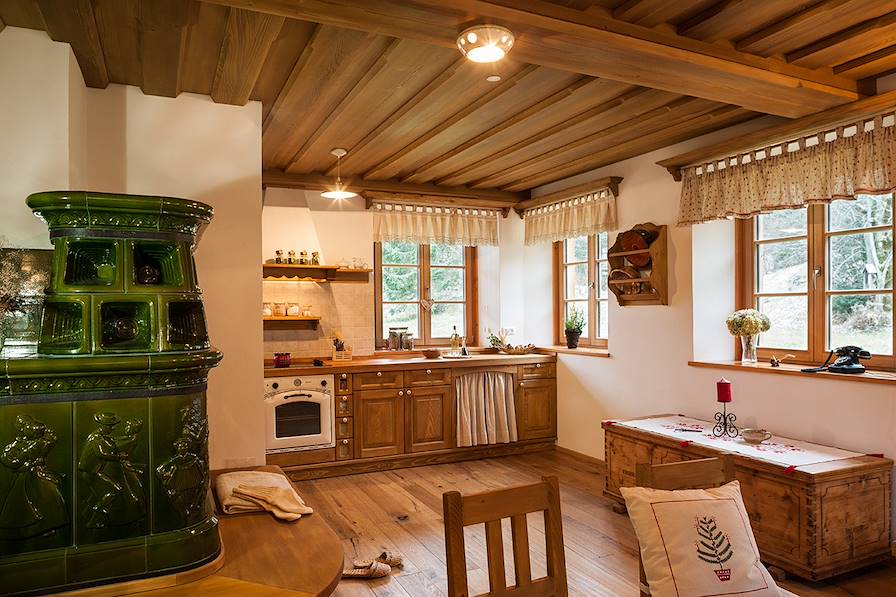
Pick up your rental car. Drive to Slovenia. Stay for two nights south-west of Bled, in Triglav National Park. The traditional style of the house fits perfectly with the natural surroundings. Inside, you'll find the same charming rusticity that the exterior suggests. Painted wood and earthenware decorate the interior. Standing near the ceramic stove, you feel as if you've stepped into a Grimm fairy tale. The rooms are cosy, offering privacy and space. At the stove, the chef serves up a delicious, updated version of Slovenian cuisine. You will discover that the country's cuisine has something to satisfy everyone's tastes. The outdoor barbecue adds a touch of warmth to the country atmosphere. While the children enjoy the outdoor games, parents can relax in the sauna or massage room.
Already on your itinerary - A private tour of Triglav Park. This park is certainly one of the most beautiful in the Alps. An English-speaking forest ranger will accompany you as you set off early in the morning or late in the afternoon (yes, marmot safaris are like lion safaris, best done at dawn or dusk). You are carefully following your guide when suddenly, you see a deer, a grouse, a badger! You are captivated and amazed. It's always like this in nature, where surprises are the norm, even when you're on the lookout. Appearances, sudden presences - everyone is moved. And the plants are just as surprising.
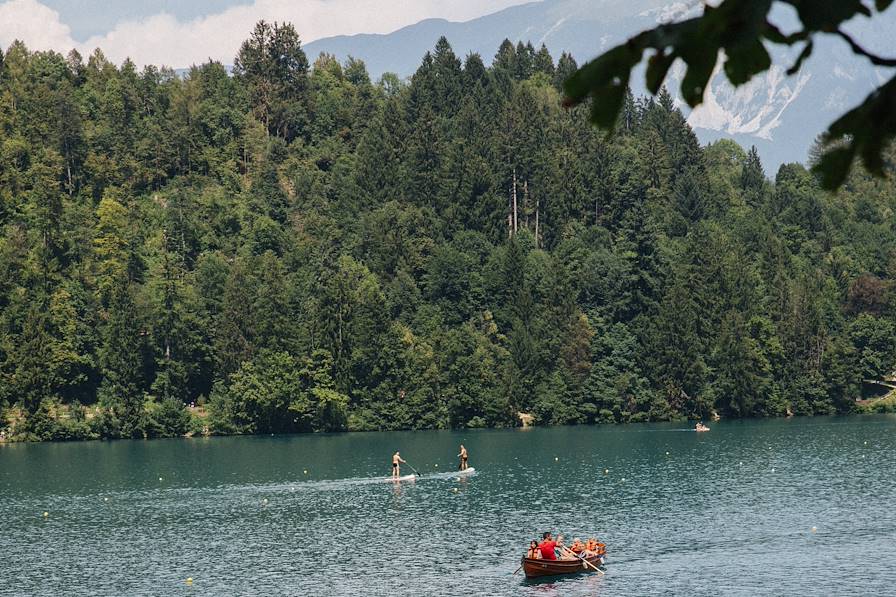
Not to be missed - The lakes of Bled and Bohinj are about 18 miles (30 kilometres) apart and are two romantic Slovenian gems. The first is more refined, the second more rustic. We recommend travelling between the two via the upper road, the Pokljuka forest plateau, which provides delightful views and kozolci, large traditional hay racks.
Drive to Bovec, in the Soca/Isonzo Valley. Stay for three nights in a contemporary chalet, 1.5 miles (2 km) north of the river. Wood, grey metal and clean lines provide urban rigour in the mountains and a vaguely Japanese atmosphere. The Kanin ski and hiking area is two miles (three kilometres) away. The apartment is equipped for complete self-sufficiency, with comfortable beds, bathroom, kitchenette and dining area. The in-house sauna allows you to recover from the healthy fatigue of long walks in the surrounding area. In the cellar, wine is happily paired with sheep's cheese, which has made the region famous among gourmets. Life at the hotel revolves around seasonal outdoor activities.
A little corner of the Alps still unknown to many, and yet! Lovers of snow-capped peaks, medieval heritage and deep-rooted traditions will fall in love with this region, which offers many opportunities for outdoor leisure activities and is dotted with quiet little villages. Vast forests provide a beautiful green backdrop to it all. And Triglav is always there. You have travelled from its eastern edge to its western edge. It provides travellers with a condensed version of alpine landscapes, which can be explored via well-maintained trails: alpine meadows, high-altitude lakes, gorges, peaks, caves, etc. Beech trees dominate the forest, with a fringe of spruce and larch trees higher up. At higher altitudes, you will find edelweiss, gentian and bellflowers. Chamois and capercaillie are emblematic of the alpine fauna, and griffon vultures search for food as they glide majestically through the open sky.
Already on your itinerary - Rafting on the Soca. The Soca is not only blue-green, but also fast and turbulent, so it’s ideal for adrenaline-fuelled descents. Triglav National Park is not just for walking. So, you set off in a raft that is flexible yet sturdy and equipped with the necessary gear, including neoprene wetsuits, helmets and waterproof shoes. Armed with paddles like the others, you launch yourselves breathlessly into the splashes and bursts of laughter. An English-speaking instructor who is capable of handling any situation accompanies the group. Professional safety conditions.
Optional - Hiking in the Soca Valley.
Drive to Bale. Stay for three nights just southwest of the medieval ring-shaped centre. The house has been functionally furnished in a way that respects its ancient features. The white everywhere highlights these ancient features. The rooms reflect the overall style as they are light without being too bright, have exposed walls in some cases - the reverse side of a plastered front - or structural elements, and freestanding bathtubs in keeping with contemporary codes. Careful attention has been paid to comfort. The indoor swimming pool and spa, and the small gym relieve fatigue and reboot the body. Meals are served in the dining room or outside in the courtyard. The sommelier pairs the delicious Croatian surf and turf cuisine with the perfect wine.
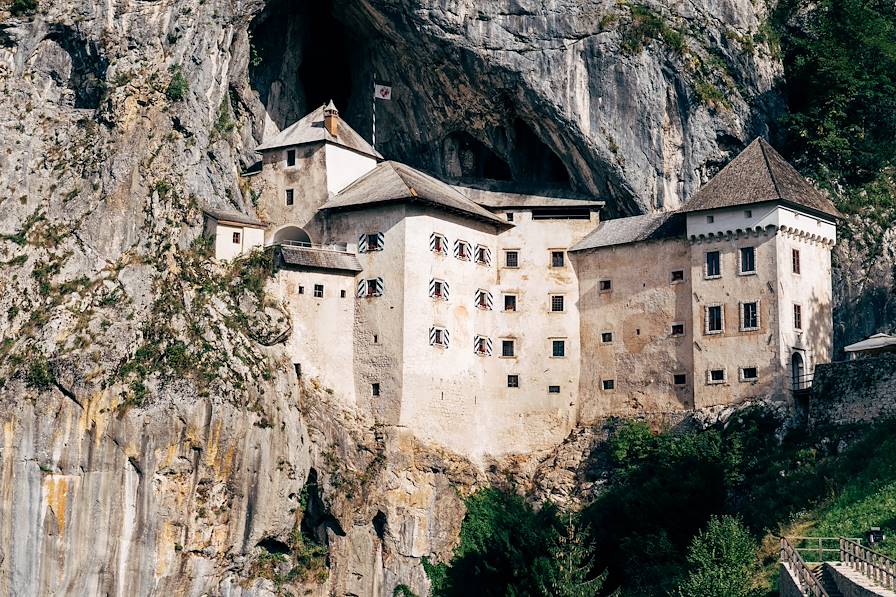
Bale provides an accurate picture of what Istrian establishments were like for a long time. The small 15th-century Church of the Holy Spirit has preserved some magnificent Gothic frescoes. Both seasoned and budding paleontologists will be interested to know that fossils of Histriasaurus, an enormous plant-eating dinosaur from the Cretaceous period, have been found in the area. A little exploration reveals many more things to discover. The 1st-century amphitheatre in Pula, for example, hosts numerous shows in the summer. The landscaped park at Cape Kamenjak, which protects the southern tip of the peninsula, is home to holm oaks, Aleppo pines, junipers and orchids, to name but a few. This is characteristic of a flora whose beautiful condition is a delight to behold, and several areas are classified as Natura 2000 sites. These are the big ones. The little ones aren't bed either: fuzzy chamomile, striped bindweed, Istarski serapias orchids. And then there's the sea all around!
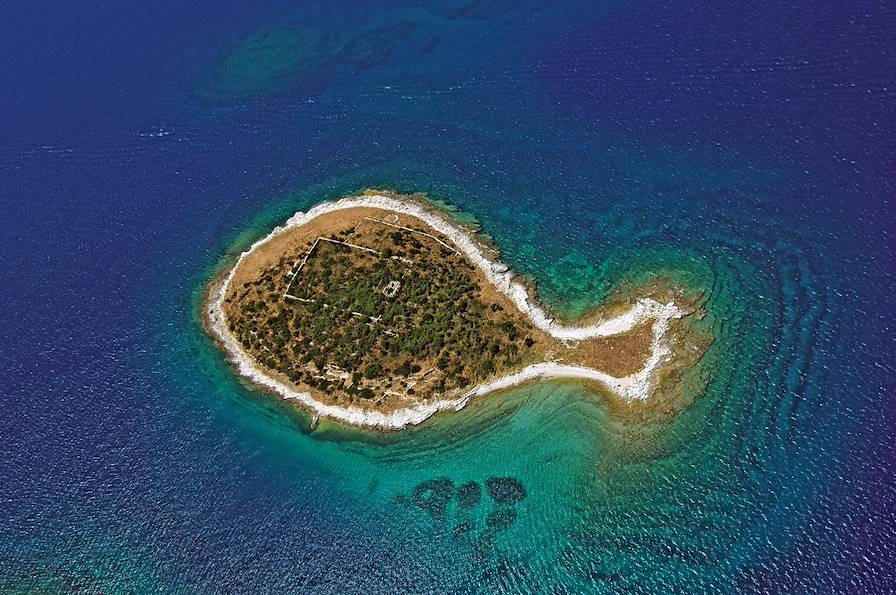
Already on your itinerary - Brijuni Islands National Park. The park is located on Veliki Brijuni, the largest of the archipelago's islands, and is covered with beautiful Mediterranean vegetation. The fauna, meanwhile, is perhaps the last Croatian expression of communist internationalism, with nilgai (Boselaphus tragocamelus), elephants, mountain zebras and waterbucks. They are descendants of diplomatic gifts to Tito and have mingled with mouflons, hares and chitals (Axis axis) that were introduced in the early 20th century, and wild and domestic native species (such as the large grey-coated Boskarin ox, which is one of the most venerable European cattle breeds). Dinosaur footprints can be seen in several places in the park. Day with a private guide.
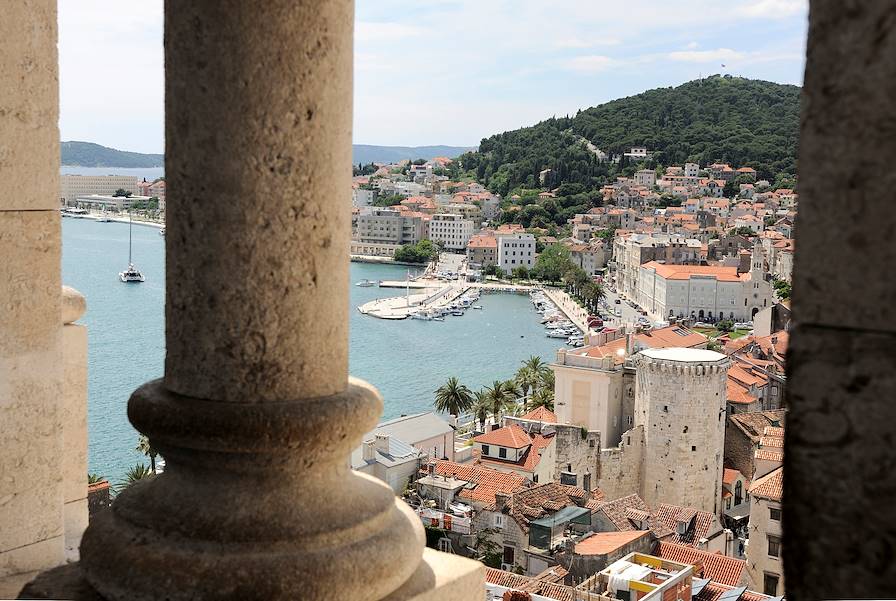
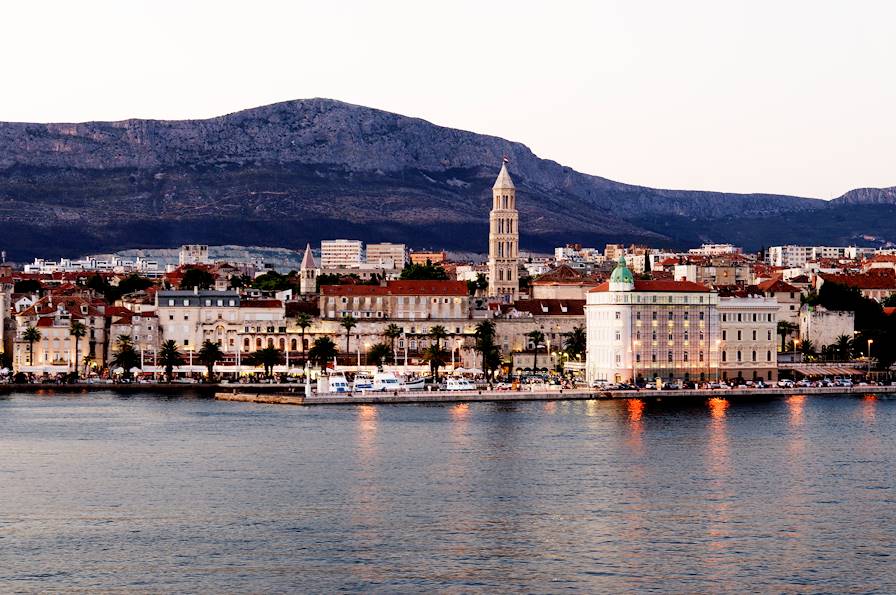
Drive to Split. Stay for three nights in an old house in the rural yet urban suburb of Veli Varos. This means proximity to both the old town and the (pebble) beach. Your rooms are stylish with white, natural wood, clean lines, designer furniture and immaculate bathrooms. You'll feel right at home here as the friendly staff contribute to the welcoming atmosphere. Breakfast is healthy. Massages and body treatments are provided by certified professionals. The yoga studio opens onto the garden through large windows, where Buddha meditates. The blend of past and present is perfectly balanced, and the tranquillity of the neighbourhood envelops the peacefulness of the place.
Already on your itinerary - A private tour of the old town. Split originated from a single monumental complex: the palace that Emperor Diocletian had built at the end of the 3rd century to spend his retirement in the country. It included residential buildings, a temple to Jupiter, thermal baths, barracks, etc. The walls of Diocletian's Palace still line the seafront today. In the Middle Ages, houses were built inside and outside the palace, causing it to crack at the joints and transform into a town. The emperor's mausoleum was converted into a Christian church (with a 12th-century bell tower and a 17th-century choir, it is now St. Domnius Cathedral). Venetian architects also came here to practise their craft. So there are plenty of nooks and crannies, venerable stones, columns, arches and small squares where you can drink maraschino and eat pancakes. UNESCO listed. A guide is available to show you around.
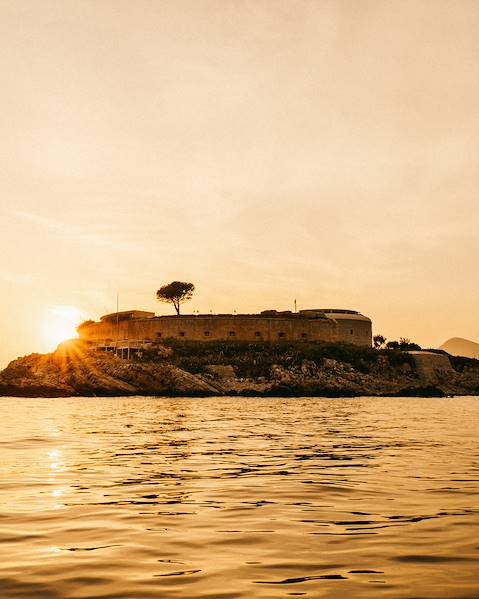
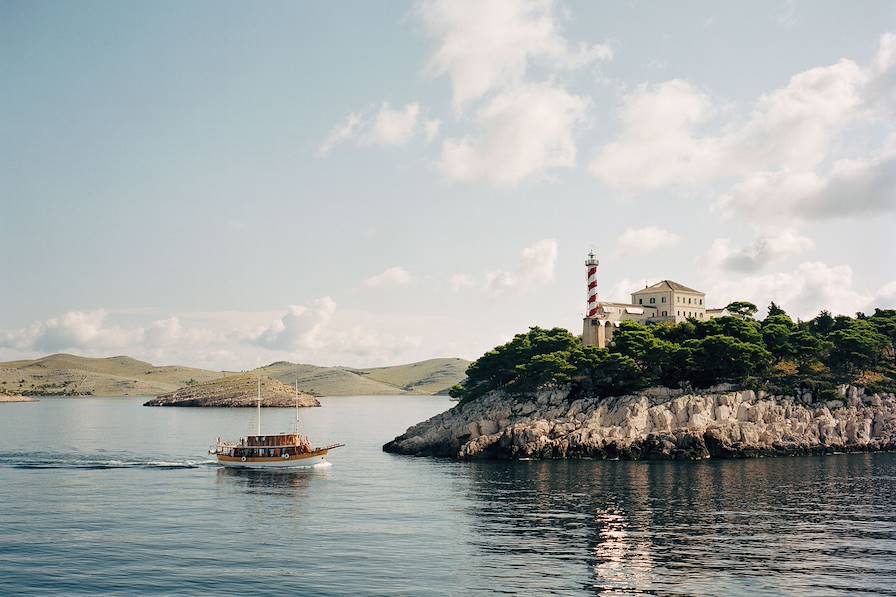
Just because Sibenik is less famous than Split or Dubrovnik doesn't mean you should snub it. It is located just north of Split, on the edge of a narrow bay that bears its name and is one of the best anchorages in the Adriatic. This unique feature has long attracted attention to the city. It is no coincidence that the Saint Anthony channel, which leads to the sea, is defended by the Saint Nicholas fortress. The fortress is one of the Venetian defence works of the 16th and 17th centuries listed as a UNESCO World Heritage Site. Another UNESCO site is the Gothic-Renaissance Saint Jacques Cathedral, whose main architect was Georges le Dalmate. The north portal is splendid and superimposes two lions, Adam and Eve, the patriarch Jacob and Saint Peter. Fort Saint Michel was built in the 15th century and has since had further adaptations. It crowns the old city with striking sobriety. It was functionalist before its time. And then, you can enjoy a pleasant stroll through the narrow streets along the water's edge. You can admire the white stone that catches the light so beautifully. You can also visit the beautiful waterfalls in Krka National Park, at Skradinski buk or Roski slap.
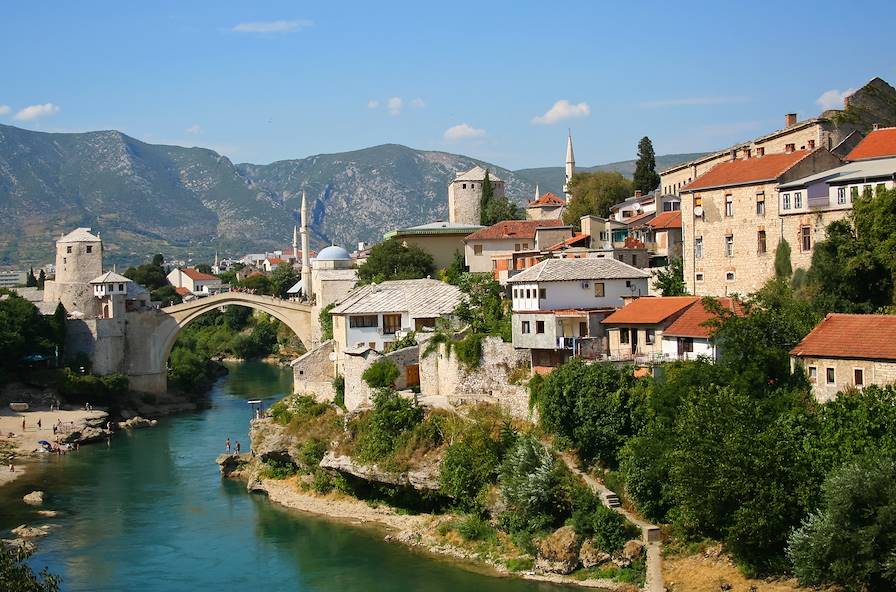
Drive to Mostar and Bosnia. Stay on the west bank of the Neretva River, on the edge of the UNESCO perimeter. The building is modern and designed in keeping with today's international Bosnian spirit with electric touches. Comfortable accommodation. The dining room in the large garden has been built with old materials in the traditional style. With heavy waxed wooden tables and old rifles on the walls, the atmosphere is reminiscent of Bosnia of yesteryear, and the cuisine is equally authentic.
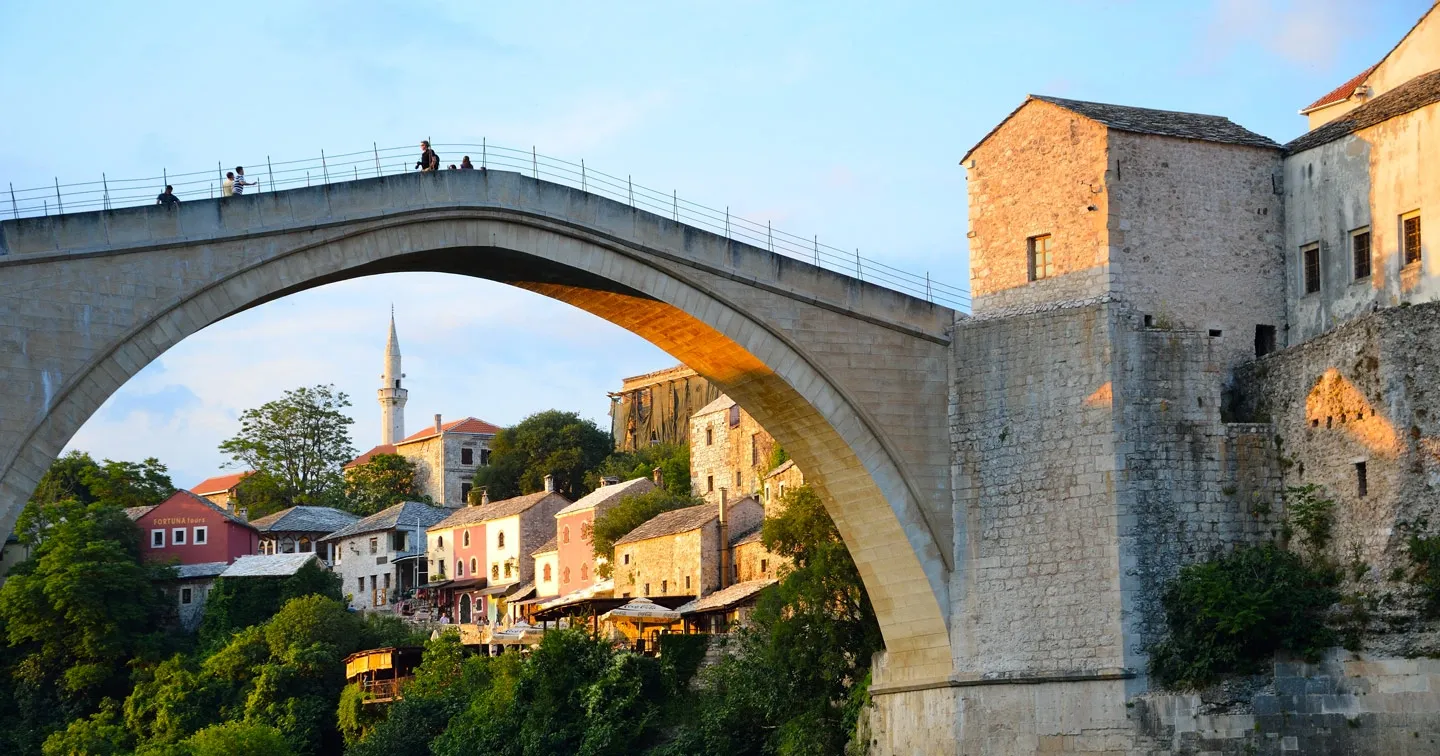
Already on your itinerary - Ottoman and multicultural Mostar, with a private guide. A treasure trove of Ottoman architecture and a martyred city, Mostar is undergoing major restoration work. The Old Bridge (Stari Most, 16th century) over the Neretva River is not only a Bosnian emblem but also an international one listed as a World Heritage Site. It is also a fine example of architecture blending into the landscape. Crossing it today to discover the picturesque beauty of the old bazaar, mosques, inns and shops that made up this large border town of the Sublime Porte is both enchanting and a privilege. Beautiful Secession buildings in the Austro-Hungarian part of the city.
Drive to Sarajevo. On the way, you can visit the stecci, which are medieval funerary monuments located in Radimlja, a village in Osanjici. Or swim at the beautiful Kravica waterfalls on the Trebizat River.
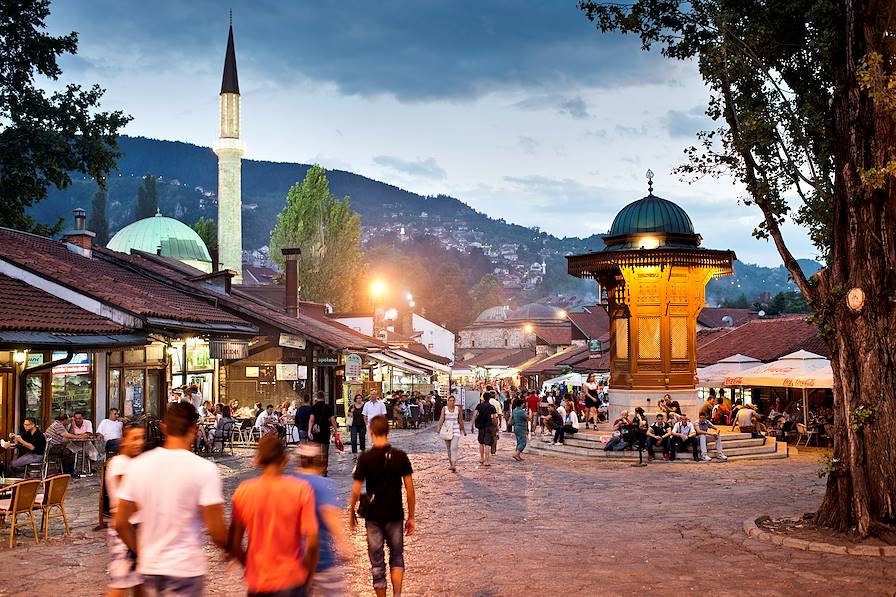
Stay for two nights in the historic centre. The hotel is located in the oldest hammam in the city, which is said to have been founded in the 15th century. After a turbulent history, it was rebuilt in 1891, then restored and converted at the beginning of this century. It still functions as a bathhouse offering steam baths and massages. The decor is rich and ornate, reminiscent of the splendour of the Ottoman Empire. The rooms are furnished with beautiful carved wooden furniture, carpets and drapes. It feels a little like being in another world, with all the comforts of this one (including beautiful modern bathrooms). Turkish breakfast served on site.
Already on your itinerary - Sarajevo, a city under reconstruction. The Gazi Husrev-beg Mosque (Sinan, 1530-31), the Catholic Cathedral of the Sacred Heart (Josip Vancas, 1884-87), the Ashkenazi Synagogue (Karel Parik, 1902) and the Seher Cehaja Bridge (1585-86) are some of the iconic monuments that your private guide will take you to see. Between these prestigious buildings, you give barbers the attention they deserve and you can browse all kinds of shops, markets or large boutiques run by global giants. The marks left by the 1992-96 siege are also visible. There was a temptation to erase them completely. However, it is important not to forget, so the scars are kept as a reminder. But the atmosphere is not one of anxiety. The people of Sarajevo want to live. They are creative, ambitious and open-minded, and they are the most beautiful asset of their city.
Drive to Zabljak and Montenegro. Stay for two nights just a few miles away, in Durmitor National Park. The modern stone and wood chalet is yours. It is conveniently furnished, easy to live in and welcoming. The ubiquitous wood gives it a cosy mountain feel. Comfortable beds for a good night's sleep and showers to reinvigorate you. The sun warms the veranda. Outside, on the terrace, there is a large table where you can gather. You can cook your own meals, but you can also ask your hosts to prepare them for you. The trees, meadows, rocks and landscape invite you to go hiking in the great outdoors. The simplicity of beautiful nature.
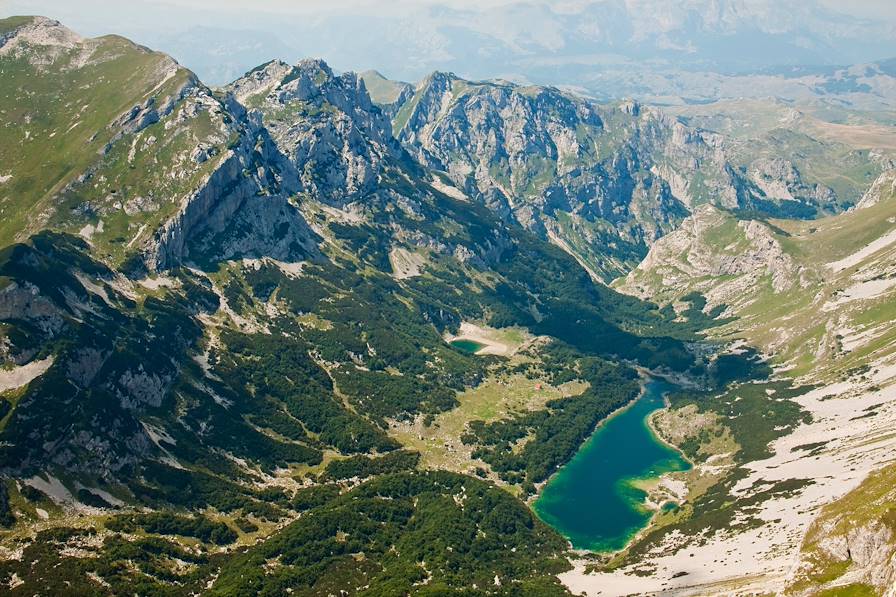
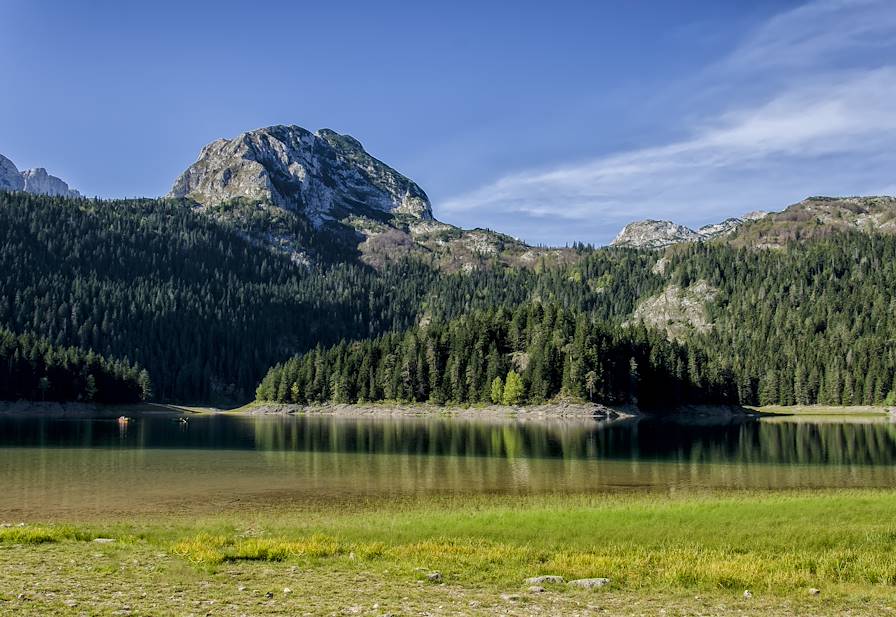
Already on your itinerary - Hiking in Durmitor. The national park protects the high karst reliefs of the Dinaric Alps. UNESCO has listed it as a World Heritage Site for its flora (Bosnian pine, Balkan maple and blue alpine thistle, mountain avens) and its fauna (chamois, bears, wolves, capercaillies, vultures, etc.). To the north of the massif is a phenomenon: the Tara River Canyon, one of the deepest in Europe. You travel with a private English-speaking guide. Several routes and levels of difficulty are possible, from 200 to 700 m of elevation gain, from four to seven hours of walking. Mount Curevac (1,625 m) provides a breathtaking view of the mountains and the canyon. You can reach it by car and reduce the walking time to 20 minutes. Taking the trail of the three lakes, including the famous Black Lake, will lead you to romantic sites. At the foot of Obla Glava peak (2,303 m), the ice cave and its strange formations can be reached after a seven-hour hike.
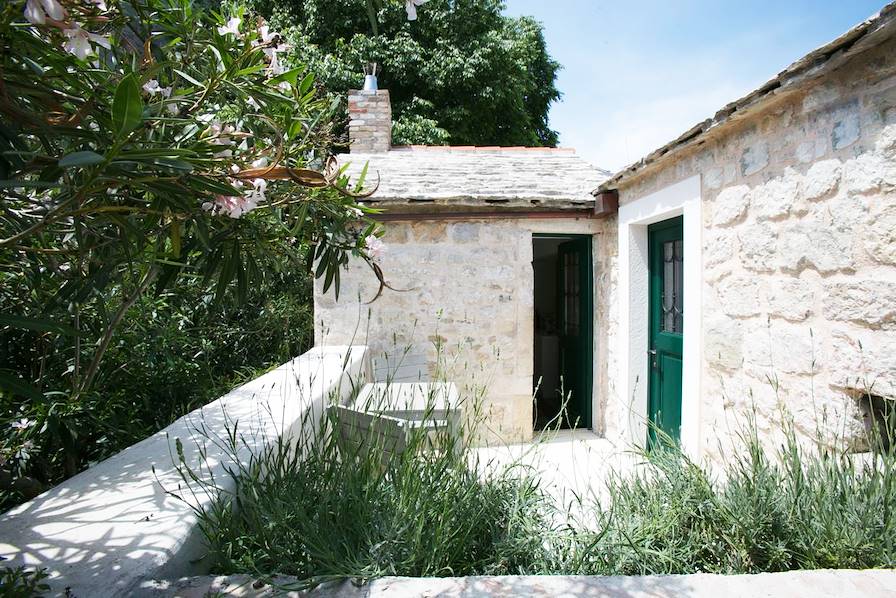
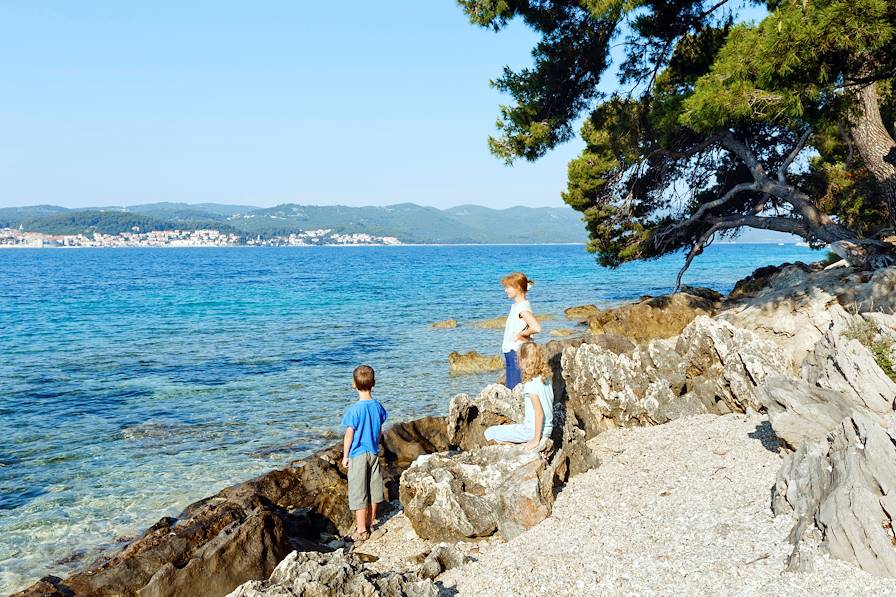
Drive to the Lustica peninsula, at the entrance to the Bay of Kotor. Stay for three nights in a village where a few stone houses have been converted into a hotel. There are olive trees, pomegranate trees and laurels everywhere, filling the air with the scent of the Adriatic. Your apartment with a balcony overlooking the sea is beautifully set up with a bedroom, bathroom, living room and small equipped kitchen. It is charming with a touch of rusticity that suits it well. The restaurant serves selected organic ingredients and seasonal recipes. Natural flavours are not compromised. Two swimming pools invite you to relax to the sound of cicadas. However, an easy walk takes you to the nearest beach, just two miles (three kilometres) away.
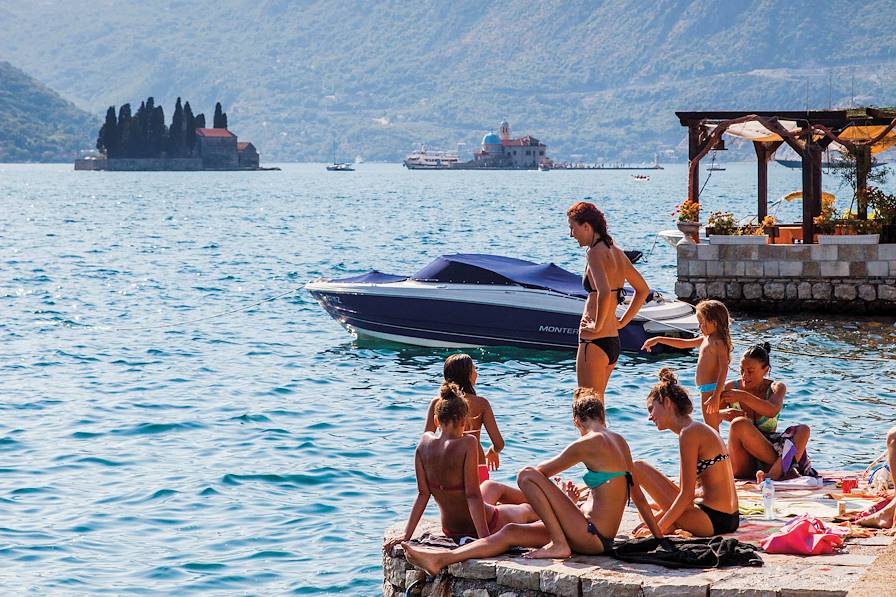
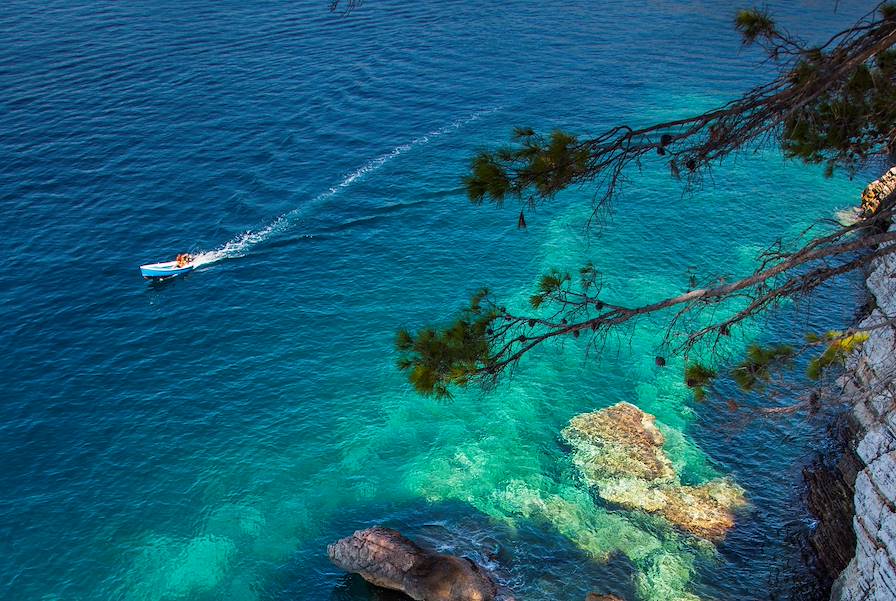
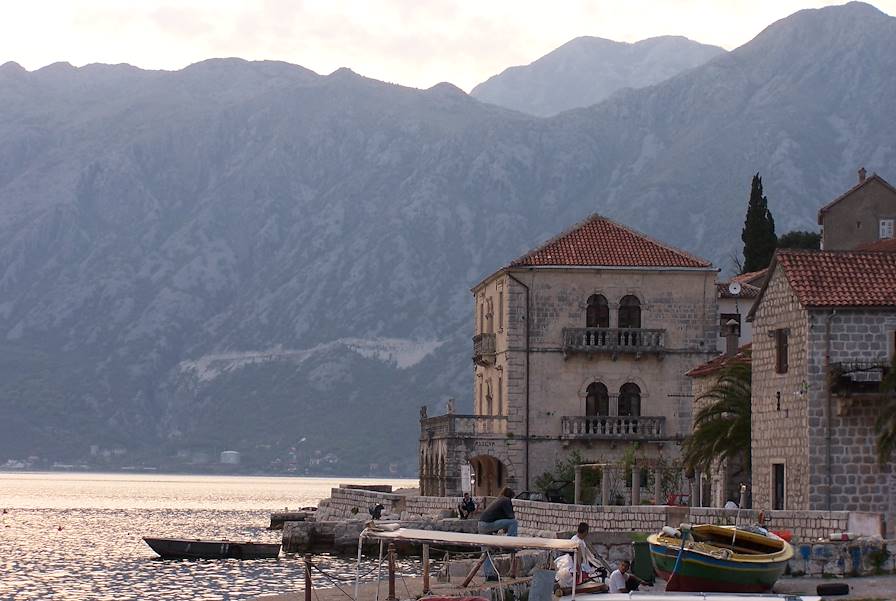
Already on your itinerary - The Bay of Kotor by motorboat.. It could be called the harbour of Kotor. This system of vast bodies of water and narrow passes is thought to have originated as a ria. In any case, this vast and harmonious landscape is a moving sight and, like the Scandinavian fjords, balances powerful reliefs and liquid surfaces. When the water reflects the image of the mountains, the effect is stunning. You set sail with an English-speaking skipper and, as you cruise along the coast, you’ll spot villages, churches and monasteries. Numerous ancient religious foundations dot the coastline around the bays, and it must be said that these are truly uplifting. Off the coast of Perast, stop at Our Lady of the Rocks, which was built on an artificial island in the 18th century. You can also swim at San Marco, in the Cartolle archipelago in Tivat Bay.
Drive to Ulcinj, on the maritime border with Albania. Stay for two nights by the water in one of the houses that were once the second homes of the town's wealthy residents. Today, they have been converted for tourism. The rooms and apartments all feature a balcony or terrace overlooking the sea. The rest is dedicated to contemplating the Adriatic. The layout, facilities and decor are all modern. Only the large sofas are reminiscent of the civilisation of the divan. An on-site restaurant serves Mediterranean cuisine exclusively for guests. Guests also have access to an outdoor swimming pool, a private rocky beach and a beach bar. They can hire canoes and boats. And old Ulcinj is only a few hundred metres to the south.
Already on your itinerary - A private tour of Skadar Lake. The lake straddles the Albanian-Montenegrin border. It is protected for various reasons, including its important birdlife. While sailing with an English-speaking guide, you can hope to see the glossy ibis, the black-throated diver or the griffon vulture. You can expect to see Anatidae given the context, but also garganeys, northern shovelers, tufted ducks, red-crested pochards and more. However, the star and symbol of the lake is the rare Dalmatian pelican, which is a heavyweight among birds. White and yellow water lilies can be admired along the way. Dragonfly enthusiasts are in for a treat, as they can spot the white-faced darter, the red-eyed damselfly and the emperor dragonfly. You will have lunch of fish from the lake in the village of Krnjice. A little later, with the spectre of thermal shock banished, a swim is planned near Radus, a village where a fault brings the depth of the lake to around 60 metres. Then you head back, from fishing village to fishing village.
Drive to Tivat airport and drop off the car. Return flight.
This suggested itinerary can be customisable down to the smallest detail, including duration, stops and content. An à la carte menu of experiences is also available to create a journey that reflects who you are.
Every day, our travel specialists craft bespoke experiences shaped around each traveller's profile, desires and budget. These passionate experts design experiences delivered on the ground by a local network of Concierges and trusted contacts. These fully customisable, made-to-measure trips are complemented by a wide range of high-end services (lounges, 24/7 assistance, travel booklet, app, Wi-Fi, restaurant booking, etc.)
Let us create your trip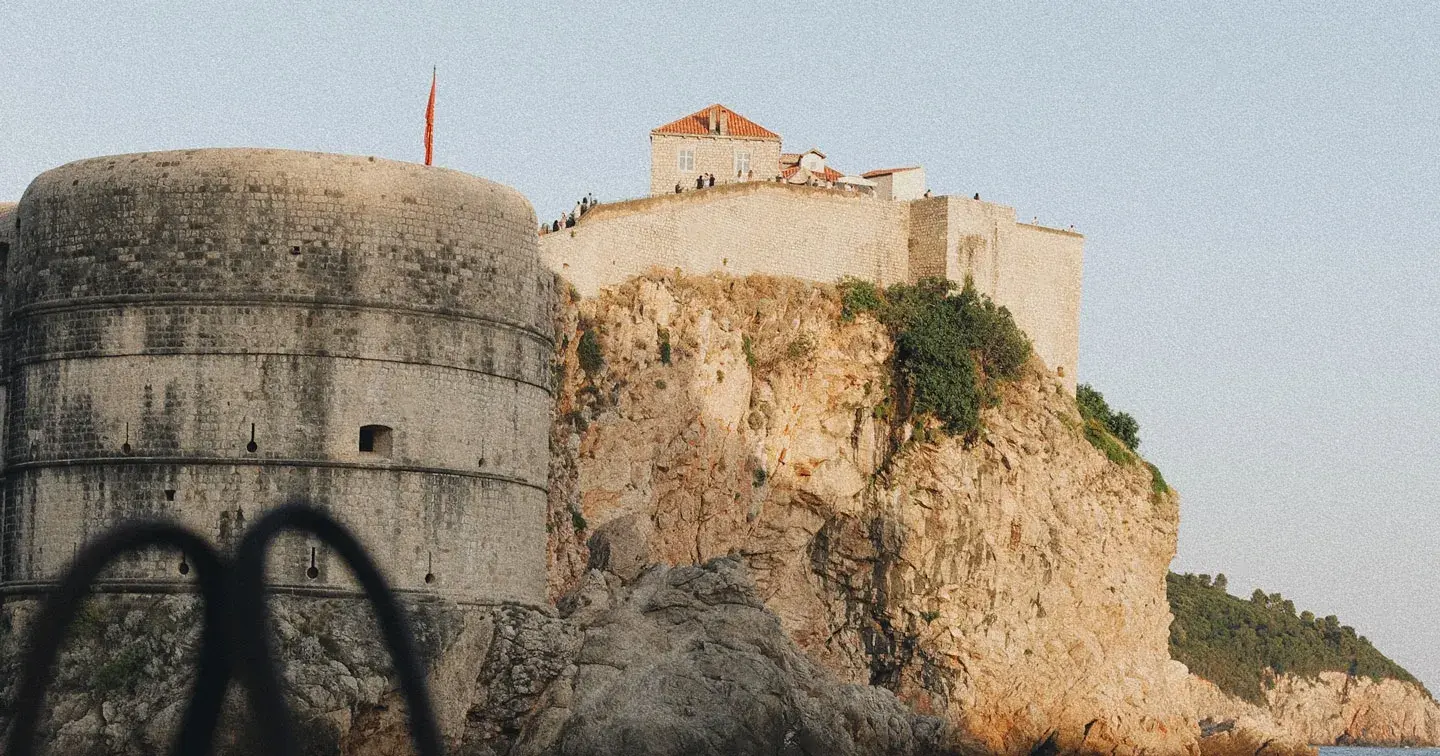
Every day, our travel specialists craft bespoke experiences shaped around each traveller's profile, desires and budget. These passionate experts design experiences delivered on the ground by a local network of Concierges and trusted contacts. These fully customisable, made-to-measure trips are complemented by a wide range of high-end services (lounges, 24/7 assistance, travel booklet, app, Wi-Fi, restaurant booking, etc.)
Let us create your trip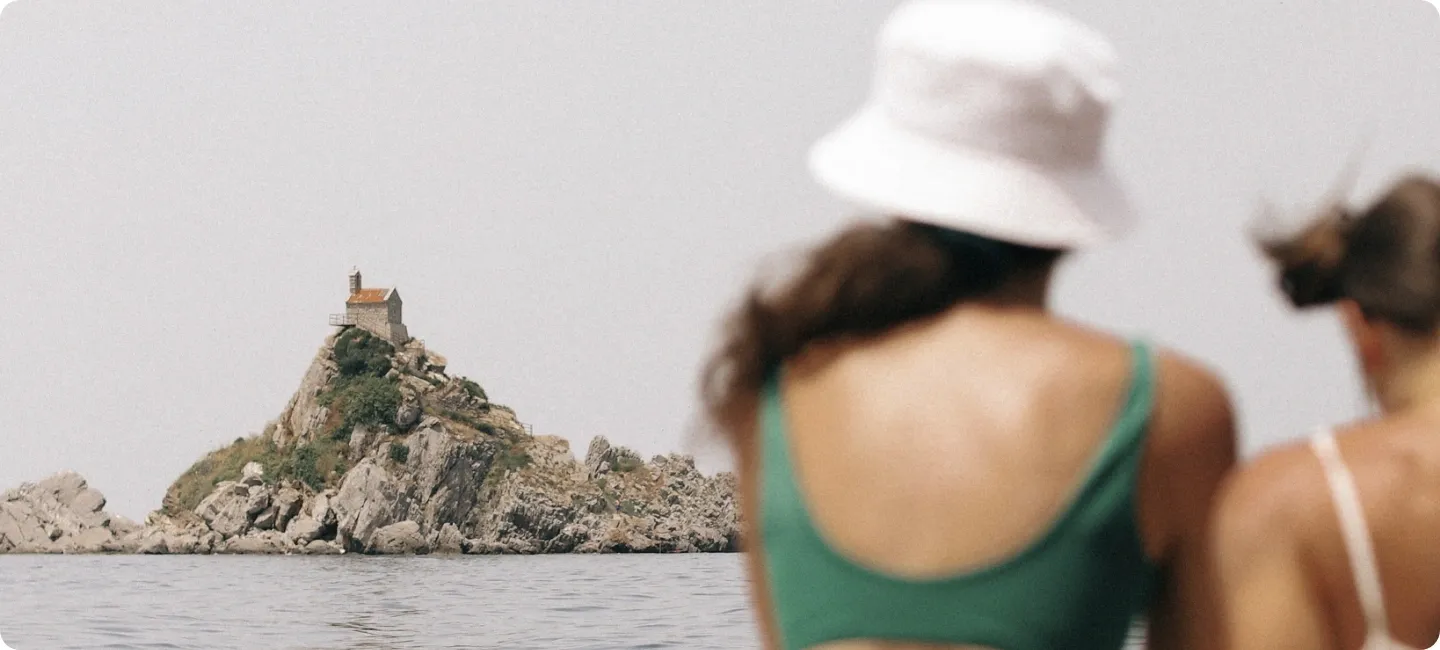
Every day, our travel specialists craft bespoke experiences shaped around each traveller's profile, desires and budget. These passionate experts design experiences delivered on the ground by a local network of Concierges and trusted contacts. These fully customisable, made-to-measure trips are complemented by a wide range of high-end services (lounges, 24/7 assistance, travel booklet, app, Wi-Fi, restaurant booking, etc.)
Let us create your trip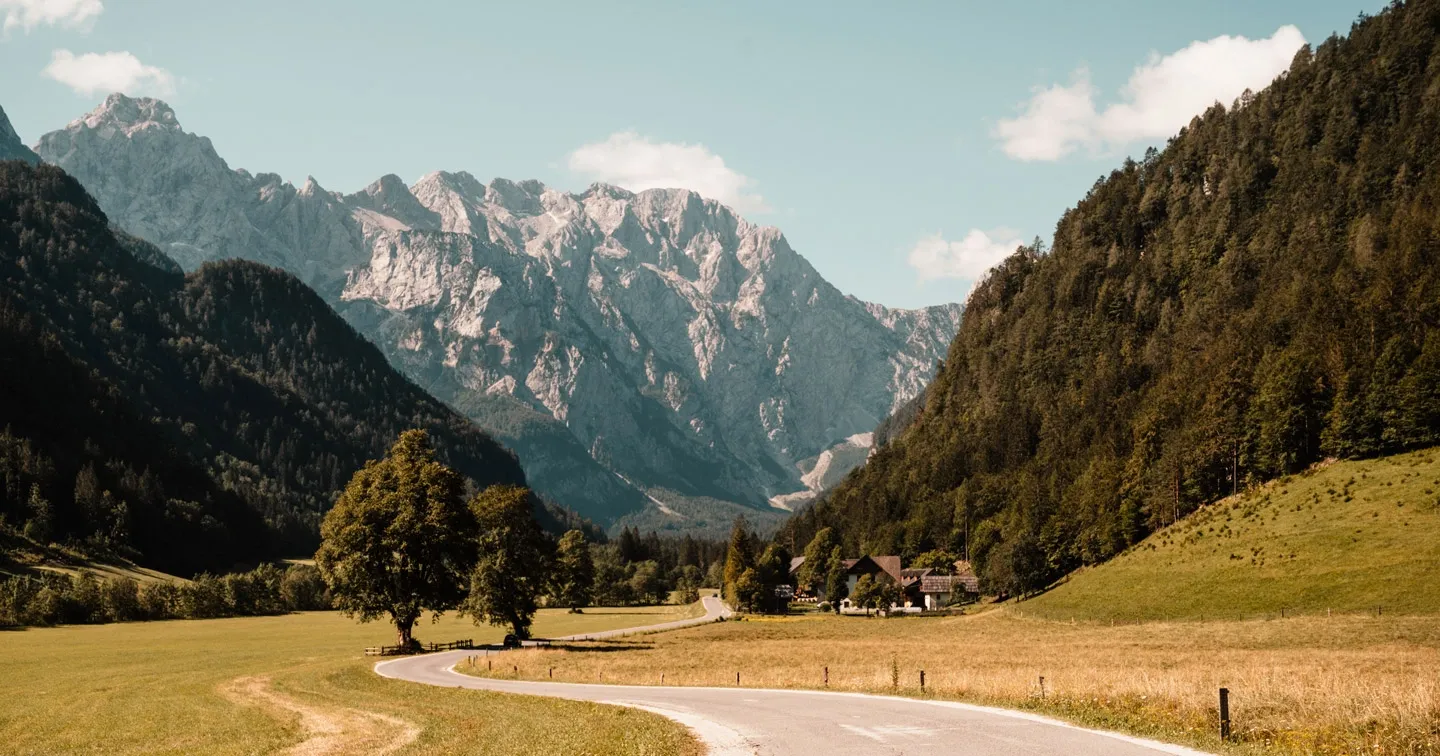
Every day, our travel specialists craft bespoke experiences shaped around each traveller's profile, desires and budget. These passionate experts design experiences delivered on the ground by a local network of Concierges and trusted contacts. These fully customisable, made-to-measure trips are complemented by a wide range of high-end services (lounges, 24/7 assistance, travel booklet, app, Wi-Fi, restaurant booking, etc.)
Let us create your trip
Travel with complete freedom, guided by your interests,
ideas and passions.
250 travel specialists, organised by country and region. Driven by a passion for beauty and never short of ideas, they inspire you and design an ultra-personalised journey: itineraries, accommodation, workshops, encounters, and more.
Always at your service: with a dedicated travel specialist, Concierge service and 24/7 assistance, our teams support you and adapt in real time, for a trip that is both flexible and expertly supported.
With family, as a couple, in a group of ten, on a road trip, by train, by boat, for a weekend or a round-the-world journey... Trips tailored to your preferences, enhanced by clever services, for ever smoother travel.