100% customisable travel idea
Road trip through Bulgaria’s interior Sofia: nature and history
Bulgaria - Sofia - Melnik - Trigrad - Veliko Tarnovo - Koprivshtitsa
Journey to the heart of Bulgaria
Your journey
Travel is by car and the itineraries will be easy to follow. We have planned the stop-offs so that they are not tiring or monotonous: the visits allow you to take a break and relax, while spectacular landscapes unfold one after another. In the evening, you’ll stay at well-located hotels so that you can explore the surroundings by foot. From visiting a medieval church listed as a UNESCO World Heritage site to tasting an exceptional cheese that has now become rare, the experiences planned in your travel booklet invite you to truly delve into each discovery. And if along the way an unexpected wish or a minor setback arises, you have the contact details of our on-site Concierge to assist you.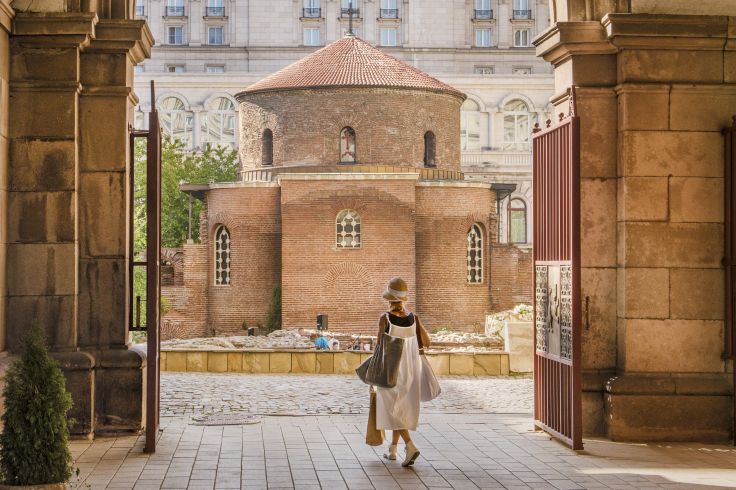
Itinerary
100% customisable for you
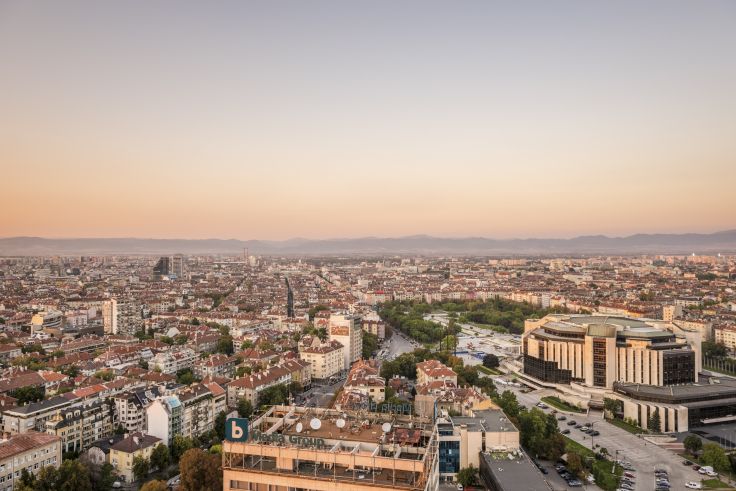
Transfer. Overnight stay in the city centre. A view of Saint Alexander Nevsky Cathedral from the rooftop bar. The glass façade of the building reflects its contemporary style, which you can see inside in the white, grey, anthracite and wood with pop accents here and there. The rooms have a clean, uncluttered design, without frills, but are still comfortable. Floor-to-ceiling windows let in light and views of the cityscape. Swimming pool, spa service and gym are available for fitness. The cuisine is also pleasant.
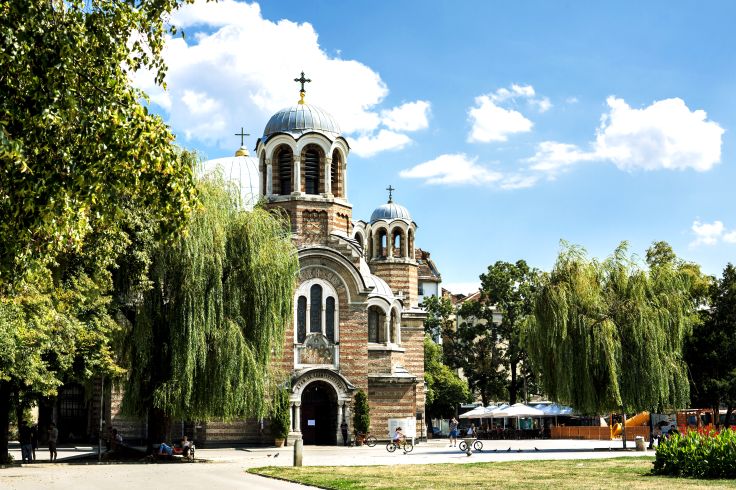
Already on your itinerary - Boyana Church. Visit one of the most authentic medieval monuments in Europe with a private guide. The Greek cross-shaped church was built in the 10th century and expanded in the 13th century. Inside, there is a dazzling array of ancient frescoes, the best of which was made by anonymous painters from the Tarnovo school and dates from the period of expansion. The artistic quality and integrity of these paintings cannot fail to impress. Accompanied by a private guide, you will set off on a tour to discover other highlights. The Orthodox Cathedral of Saint Alexander Nevsky was built between 1882 and 1912 in a muscular neo-Byzantine style to celebrate the decline of the Ottoman Empire and the role played by the Russians in this decline. The National Assembly is from the same period, as are the Ivan Vazov Theatre and the university from the 1920s. The architecture of these buildings reflects the European aspirations of the time. Finally, dinner is planned at the Moma restaurant, which skilfully revamps Bulgarian culinary and decorative traditions.
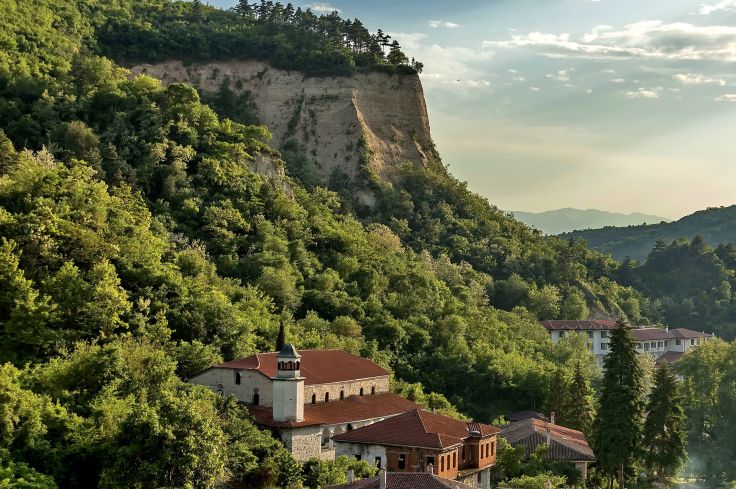
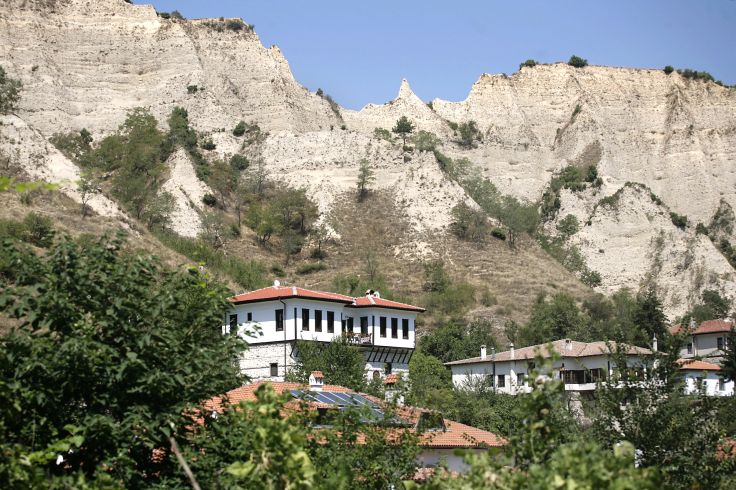
Pick up your rental car and drive to Melnik. One night in a splendid traditional house (built against one side of the famous pyramids). The stone base and corbelled superstructure of the building make it extremely impressive. The interior has been restored with inspired precision. Paintings, stained glass windows and fabrics burst with colour against the white walls. The furniture is in harmony with the surroundings. Comfort is a given. In the mehana, a large brick fireplace stands out against the stone and mortar of the walls. Bulgarian cuisine is at home in such a setting.
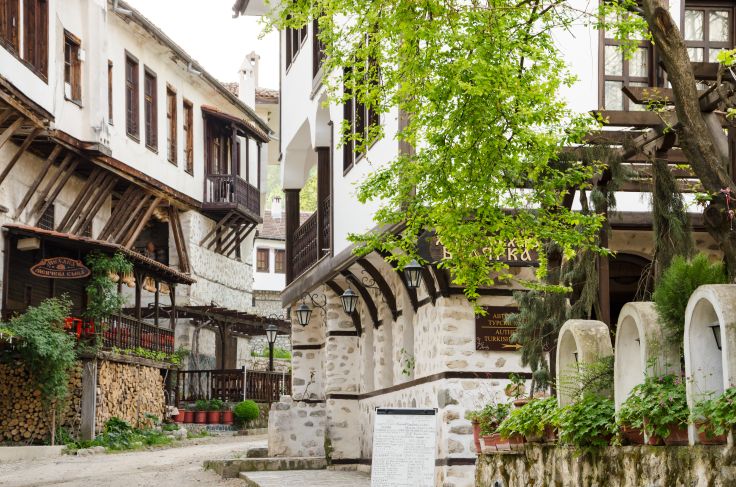
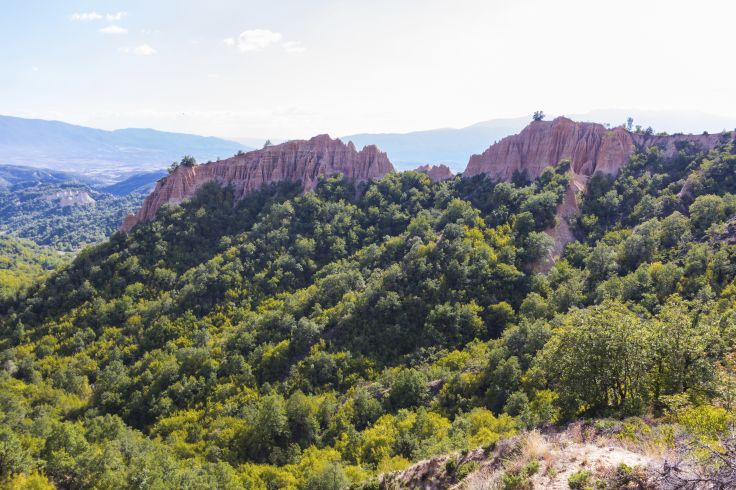
The sandy pyramids of Melnik are a spectacular geological phenomenon, making Pirin Macedonia look like a piece of Cappadocia in Bulgaria. They are located right behind the hotel. The small town itself has a rich architectural heritage. It is a real pleasure to walk around. The Kordopoulov and Pachova houses are famous. At Rojen Monastery, don't miss the 16th, 17th and 18th century frescoes and the unrivalled view of the pyramids.
Drive to Trigrad. Upon arriving in the Rhodope Mountains, take the time to climb up to the villages of Lechten and Kovatchevitsa, where you’ll see stone walls, slate roofs, whitewashed walls and cobbled alleys full of vernacular charm. One night at the top of the village of Trigrad, in a modern hotel with a chalet feel. The decor retains something of its socialist past as instead of removing it, they have given it a stylish makeover. This contrasts with the ordinary and somewhat lazy neo-rustic style. The rooms are comfortable and not very large but are extended by a terrace. A sauna, hammam and jacuzzi provide a welcome relaxation area. The restaurant serves professional Bulgarian cuisine.
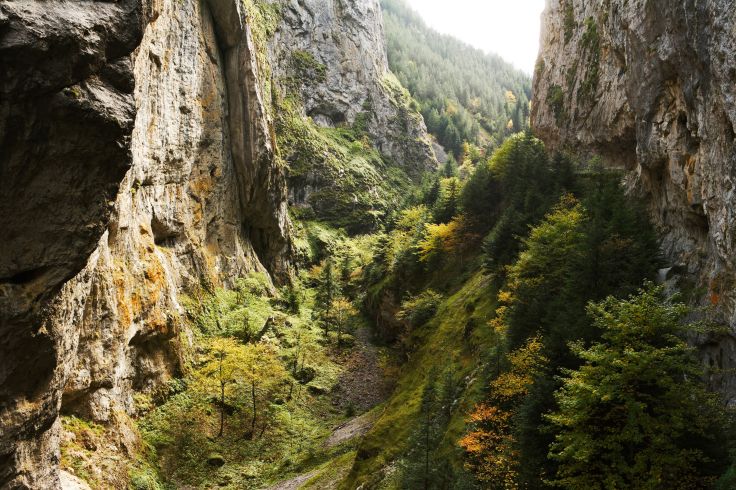
The Trigrad flows at the bottom of vertiginous green marble gorges. This vertical, green landscape exudes a powerful romanticism. All the more so as the river plunges into the Devil's Gorge, through which Orpheus is said to have descended into the underworld. After going through the caves, the river resurfaces as a spring 500 metres below.
Optional - Hiking around Trigrad.
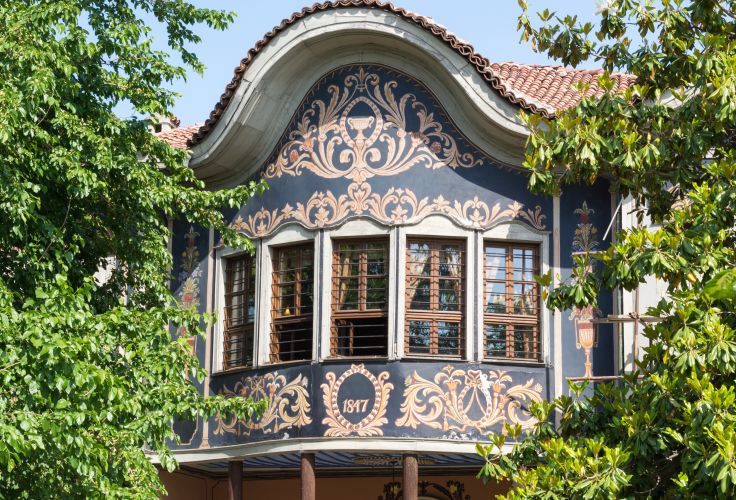
Head north-east. On the way, stop at the Wonderful Bridges, which are 50 miles (80 kilometres) before Plovdiv, near the village of Zabardo. These three karst tunnels over the Aidarsko Dere river are a striking reminder of the power of erosion! Stay for two nights in the historic centre of Plovdiv, north of the Roman theatre. The house's raspberry-coloured façade is a pretty 19th-century feature. Inside, while preserving the structure, we opted for contemporary simplicity. The rooms are immaculate. They share shades of white, grey and yellow, wood and brick. Breakfast is served in the dining room.
Optional - Wine tasting in Brestovitsa.
Already on your itinerary - Multicultural Plovdiv in private. Plovdiv is believed to have been continuously occupied since the 2nd millennium BC. European champion. It was a Thracian city that became the capital of Thracia, a praetorian province, during the Roman era as it was a regional hub crossed by an important military road. The remains of this period, such as the theatre and the odeon, are among the highlights. Plovdiv then became Bulgarian in the 9th century. Byzantium took control of it. Then the Ottoman Empire. Minarets and Turkish baths were added to the Orthodox churches, and the Djumaya Mosque dates from the 14th century. In the 19th century, the national revival movement built beautiful Bulgarian houses. The Sephardic synagogue also reflects the community's past with its Moorish style. All this constitutes a diverse and coherent whole that has borne witness to a long, eventful and, ultimately, shared history. Tour with a guide.
Optional - Kapana, Plovdiv’s colourful neighbourhood.
Drive to Arbanassi. Stay for two nights in the village. The two houses that make up the hotel are Ottoman in style, with one of them dating back to the 17th century. They are surrounded by a pleasant garden with a gazebo. The interior design gives pride of place to wood, which is also a prominent feature of the décor, along with carpets and a few mosaics. The rooms are charmingly rustic, offering space and comfort. There is also an inn where grilled meats are the highlights of the traditional dishes. The spa is well equipped and staffed by qualified personnel. The hammam is a must, but there is also a sauna.
Optional - Dryanovo valley.
Already on your itinerary - Veliko Tarnovo and the surrounding areas. Arbanassi is only 2.5 miles (4 km) from Veliko Tarnovo. So, let's start there. The village has a few wonders, such as the Church of the Nativity of Christ (15th-17th centuries), the Church of the Holy Archangels Michael and Gabriel (16th-18th centuries), the Konstantsaliev House (17th century) and fortified farms. Then, in Veliko Tarnovo itself, the great Tsarevets Fortress was the political centre of the Second Bulgarian Empire. The restorations undertaken in the 20th century demonstrate the continuity of the state. We visit this to contribute, in a way, to the symbolic monument that doubles as the venerable castle. There are also frescoes in the Church of St. Peter and St. Paul (13th and 15th centuries) and picturesque old shopping streets. Five hours in the company of a private guide.
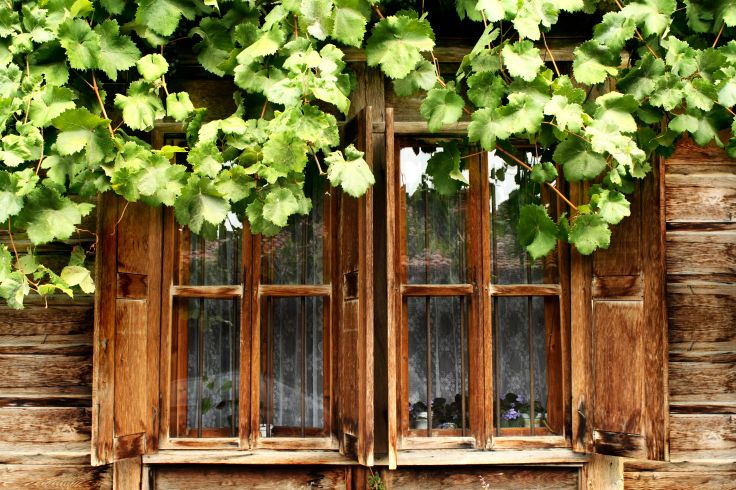
Drive to Koprivshtitsa. One night in a revival family house with a pretty flower garden in the town. Once again, carved wood is the main feature of the decoration, with soft coloured accents. Your room is simple and comfortable. Breakfast is served on site.
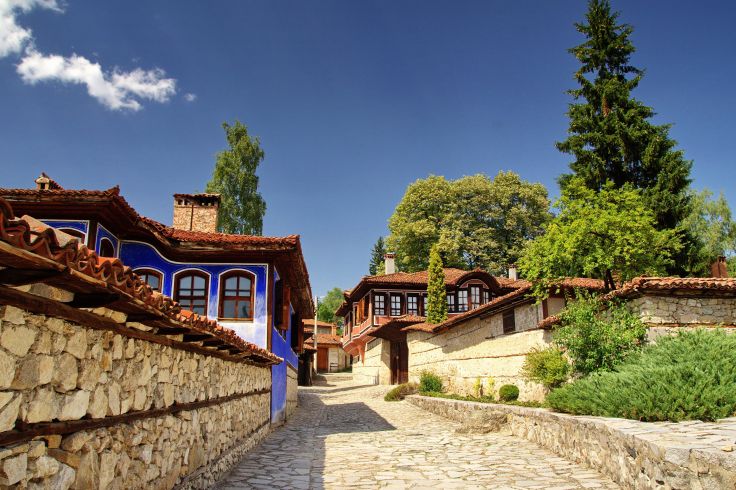
Koprivshtitsa, in the Sredna Gora, has been classified as a national architectural reserve for its collection of national Renaissance houses. It is an open-air museum that also preserves the memory of many revolutionary intellectuals who lived there. These include linguist Nayden Gerov, poet Dimcho Debelyanov and anti-Ottoman leader Georgi Benkovski. The memory of the patriotic uprising of April 1876 is very much alive here.
Sights along the way - Troyan Monastery (17th century), which is surrounded by a fabulous forest setting and considered the largest Orthodox monastery in the Balkans. It is a highlight in the region as it houses some beautiful religious works, including frescoes by Zakhari Zograf, the most famous Bulgarian painter.
Drive to Sofia Airport. Car drop-off and return flight.
À la carte
This suggested itinerary can be customisable down to the smallest detail, including duration, stops and content. An à la carte menu of experiences is also available to create a journey that reflects who you are.
Hiking around Trigrad
Meadows, beech and conifer forests - the surroundings of Trigrad are in excellent health. Add to that a varied landscape, gorges and caves, and you can imagine a hiking area full of surprises, beauty and viewpoints so breathtaking they will leave you stunned. Accompanied by a private guide, you set out on the trails to discover all of this. About 15 km (9 miles) with 260 metres of elevation gain: easy! You just need to have good shoes and be in ordinary shape. It’s not much to ask to experience the most beautiful mountains in Bulgaria. And then you enter the Devil’s Gorge, like Orpheus.Optional - half-day.
Plovdiv - Wine tasting in Brestovitsa
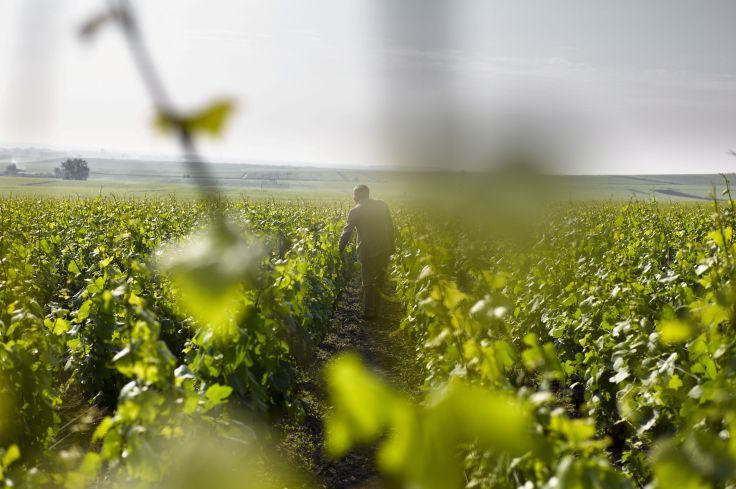
This area of the Rhodopes, just a 30-minute drive from Plovdiv, is a major centre of Bulgarian winemaking. The family estate Villa Vinifera was established in 1936. It has never stopped producing quality wines using cabernet sauvignon, chardonnay, muscat, traminer, merlot, but above all mavrud, an ancient Thracian grape variety. The tour allows you to discover the facilities and taste five types of wine, accompanied by cheese and house specialities.Optional - Two hours and 30 minutes.
Kapana, the colourful district of Plovdiv
Once the district of guilds and trade, Kapana has accompanied the highs and lows of Plovdiv since the end of the Middle Ages. The locals are deeply attached to it. After a period of relative decline, it has come back to life and become trendy and artistic. The authorities have done their part; creatives and entrepreneurs have as well. And what we feared might happen did not take place. Kapana has not only kept its soul, but its modern makeover and social media presence have brought back its smile. It is clearly the most pleasant spot in town, with its cafés, restaurants, shops, art galleries and artisans. Day and night. Private tour with a guide.Optional - Half-day.
Arbanassi - The Dryanovo Valley
Numerous walking itineraries lead travellers through the wild landscape of this beautiful valley in Bulgarka Nature Park. Nature trails lead to charming clearings, pass through woods or cross ancient Roman sites. Six km (4 miles) from Dryanovo City, in the forest, there is a monastery famous for the support its monks gave to the Bulgarian national movement (it should be noted that its founding in the 12th century celebrated a Bulgarian victory over the Byzantines). Hiking with a private guide.Optional - Half-day.
Why visit Bulgaria with Voyageurs du monde?
Every day, our travel specialists craft bespoke experiences shaped around each traveller's profile, desires and budget. These passionate experts design experiences delivered on the ground by a local network of Concierges and trusted contacts. These fully customisable, made-to-measure trips are complemented by a wide range of high-end services (lounges, 24/7 assistance, travel booklet, app, Wi-Fi, restaurant booking, etc.)
Let us create your tripA few of the advantages of travelling with us to Bulgaria
- CO2 absorption