100% customisable travel idea
North Luzon and Busuanga The Philippines, rice fields & virgin islands
Manila - Banaue - Busuanga
Rice fields and lagoons
YOUR JOURNEY
In Manila, you’ll have a private visit of Intramuros, the former colonial district. You’ll then head north to Luzon - a car and driver are at your disposal for the five days of travel in the region. Visits to Baguio market - the summer capital of the Philippines, known for its cool mountain air - the burial caves of Sagada, the ethnological museum of Bontoc, and the terraced rice fields are already included in your trip. On Busuanga Island, we have arranged a visit to the hot springs and a day on a private banca in Coron Bay. On the private island of Dimakya, however, we have nothing planned; Philippine nature itself will enrich these four days at the end of the world: golden sandy beaches, turquoise horizons and coral gardens teeming with parrotfish.
Itinerary
100% customisable for you
Arrival in the afternoon. Welcome at the airport and private transfer to your hotel/accommodation. Welcome by our local representative and stay for two nights at your hotel, located in front of Manila Bay. It was opened in 1912 and recently renovated, but it has retained all the colonial charm of its past.
On your itinerary - Private tour of the Spanish colonial district of Intramuros with a private guide. In the heart of one of the most populous cities in the world, away from the main roads and buildings, the old Spanish city is an oasis of calm. Of the seven churches in the Spanish city, which was razed by American bombing intended to dislodge the Japanese who had retreated there during the Pacific War, only two remain. You will visit San Agustin, with its 16th-century corrugated iron roof cloister, and the cathedral, as well as the central market in Quiapo, where a colourful crowd jostles between the stalls.
Meet your private driver, who will accompany you for the next five days, and drive to Baguio (150 miles, six hours). The cool altitude and alpine charm of Baguio make it the summer resort of the Philippine upper class, nestled in the Cordillera Valley. Stay for the night at your hotel, which is located in a large pine-tree park, where you can breathe in the cool mountain breeze.
Already planned - A visit to Baguio, the “summer capital of the Philippines”, with a stop at the market, where the stalls overflow with fruit and vegetables, rice and coffee grown on the fertile land surrounding the town.
You will travel to Sagada (90 miles, six to seven hours) via a spectacular road that is the highest in the country and features hairpin bends along the ridge. It winds through a landscape of small mountains reminiscent of the Caribbean hills, with vegetation of pine trees, oaks, arums and banana trees. Stay the night at your hotel, which is run by the Episcopal Church of Sagada. You will stay in a bungalow in a large wooded garden in the heart of the village, with a beautiful view of the valley and its splendid terraced rice fields.
Drive to Bontoc (one hour), then on to Banaue via Mount Pulis Pass (three hours), overlooking the splendid rice terraces.
See and do on the way - Visit the burial caves of Sagada - reconciling animism and Christianity, the Ifugao people live in a world populated by spirits. For two millennia, they have perpetuated the custom of second funerals, where coffins are suspended on the side of a cliff to prevent the deceased from being devoured by wild animals and to allow them to be closer to the spirits of their ancestors. Visit the ethnological museum in Bontoc, which showcases the richness and diversity of everyday life among the ethnic groups of the mountains, some of whom were once “headhunters”. Everyday objects and adornments are on display, such as bark loincloths and bows belonging to the Negritos, the island's first inhabitants.
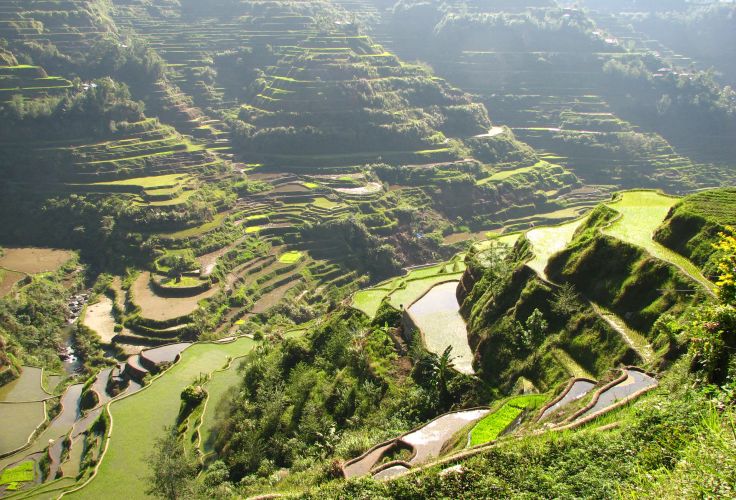
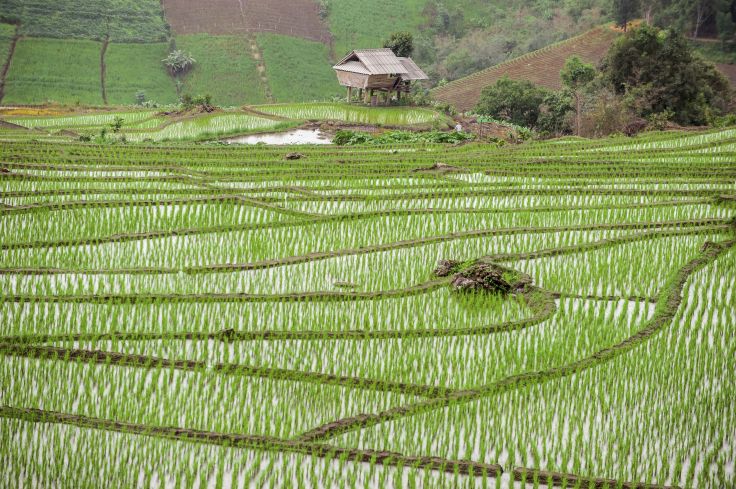
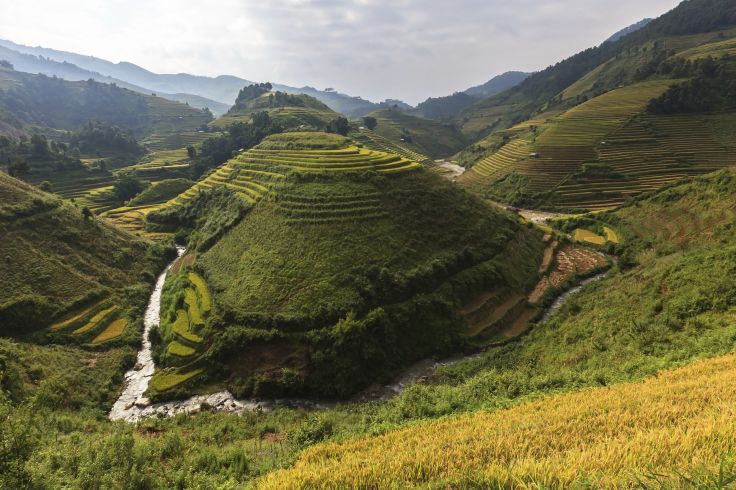
Located on the slopes of the mountains, between 700 and 1,500 metres above sea level, the terraced rice fields cover 12,400 square miles (20,000 square kilometres). The terraces are viable thanks to a sophisticated irrigation system, with mountain springs and streams channelled into ditches that criss-cross the rice fields, and bamboo pipes with holes in them spreading the water across the plantations.
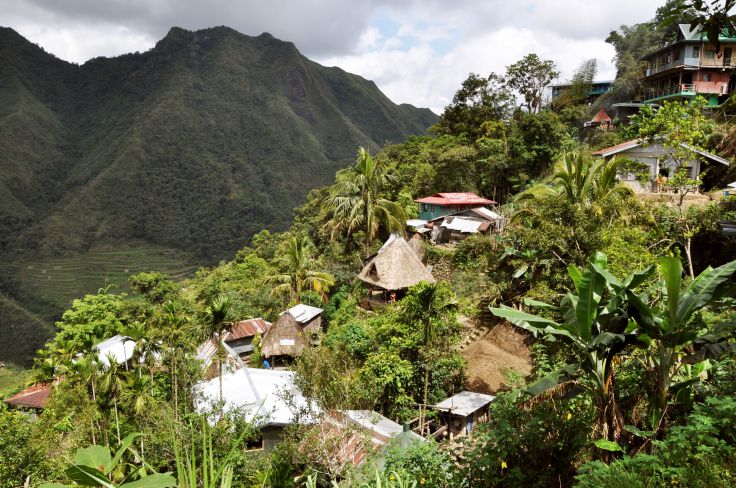
Already planned - A walking tour of the UNESCO-listed village of Banga-an, in the heart of the Ifugao region, with its stilt houses with thatched roofs surrounded by rice fields.
Overnight stay in your comfortable hotel.
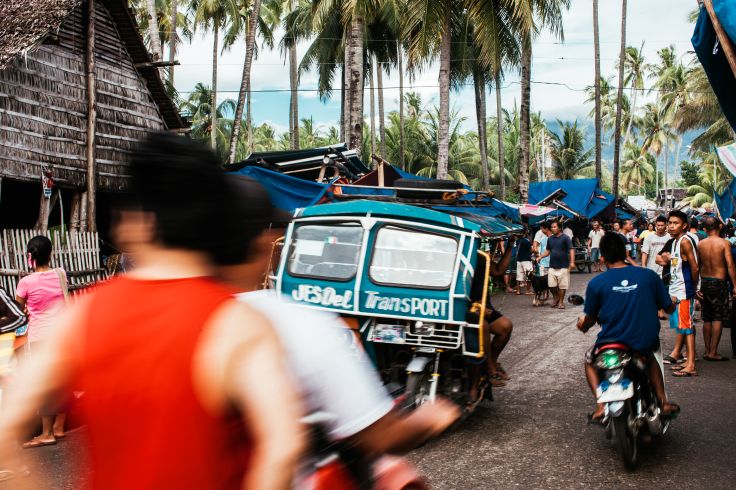
Drive to Manila. A day trip through the sumptuous landscapes of Luzon. You will encounter colourful jeepneys decorated with religious charms and precepts and crowded buses laden with passengers and a jumble of suitcases, sacks of rice, vegetables and chickens. You will stop off in villages. Stay the night at your hotel, which is located in front of Manila Bay. It was opened in 1912 and recently renovated, but it has retained all the colonial charm of its past.
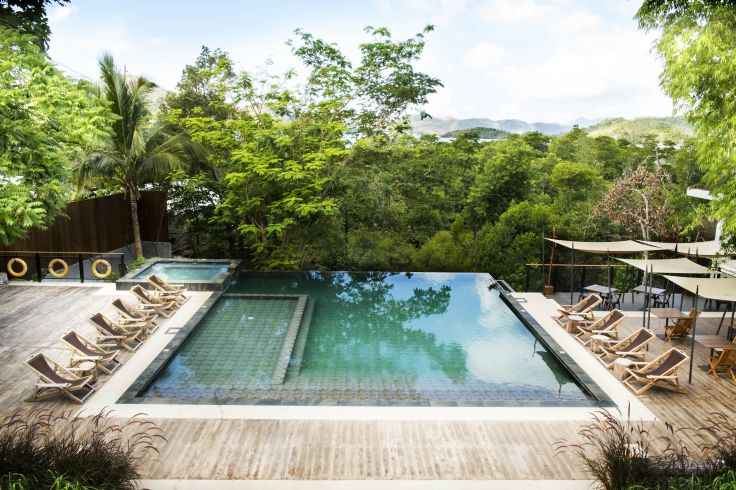
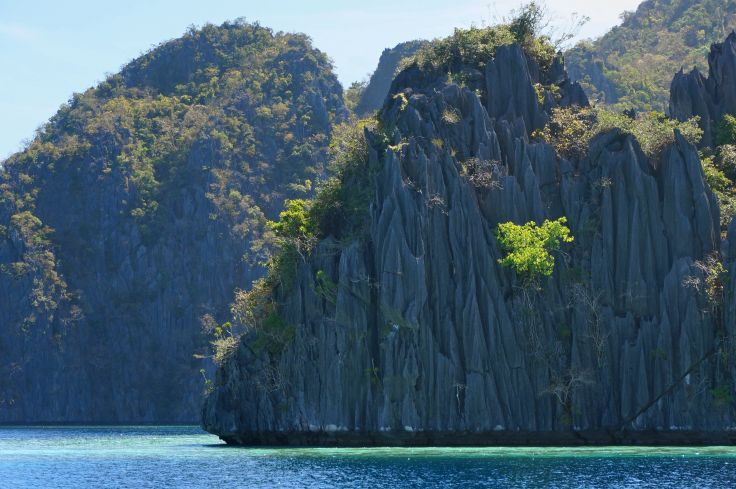
Private transfer to the airport, then flight to Busuanga (1 hour and 30 minutes). Private transfer and stay for two nights at your hotel in Coron City, just a few minutes from the port. The rooms are spacious and bright, and the staff are professional and attentive. The island of Busuanga extends from Palawan, a long mountainous ridge in the South China Sea, to the west of the archipelago. With high black limestone cliffs and golden bays dotted with islets, the landscapes of Busuanga are similar to those of Palawan as they are picture-postcard perfect, but the island is even more remote.
Already planned - Discover the hot springs, which can be reached via wooden walkways through the mangrove forest.
See and do - Island hopping from island to island - Snorkelling above Second World War wrecks lying at the bottom of the sea, covered in coral gardens and colonised by schools of grouper, lionfish and scorpion fish. They attract divers from all over the world, but a mask and snorkel are enough to enjoy the spectacle.
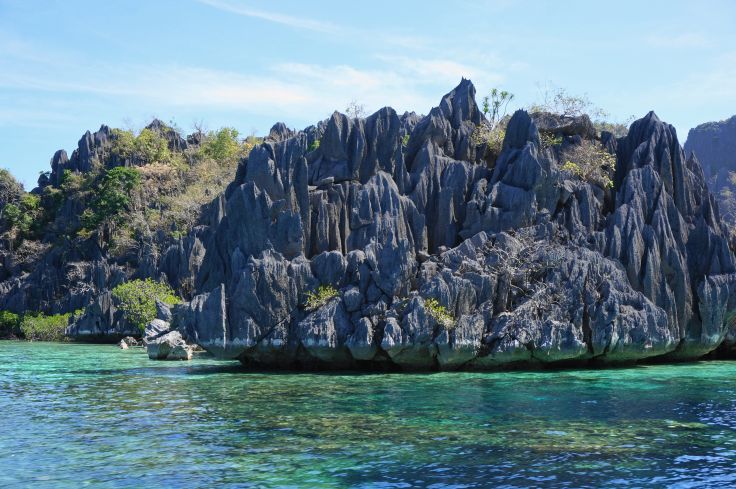
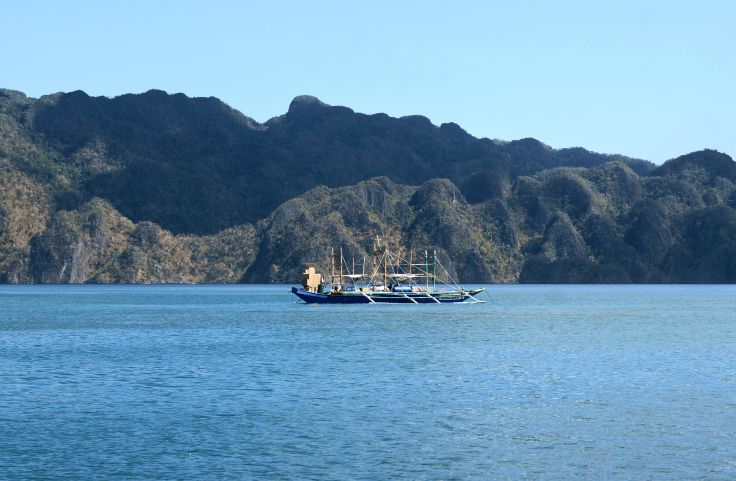
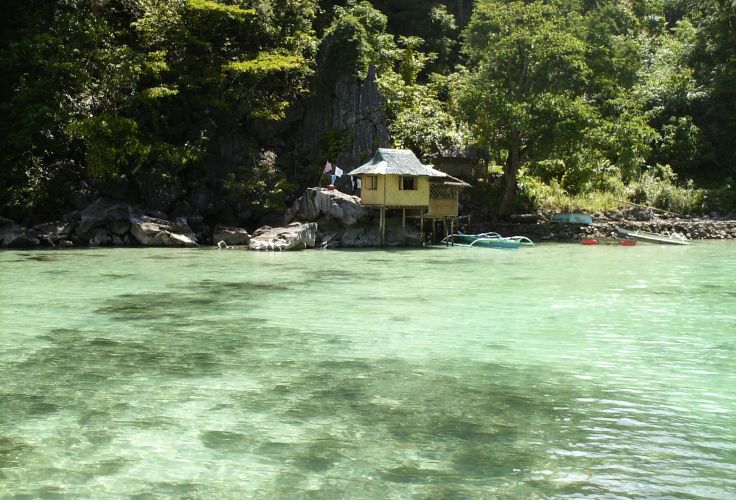
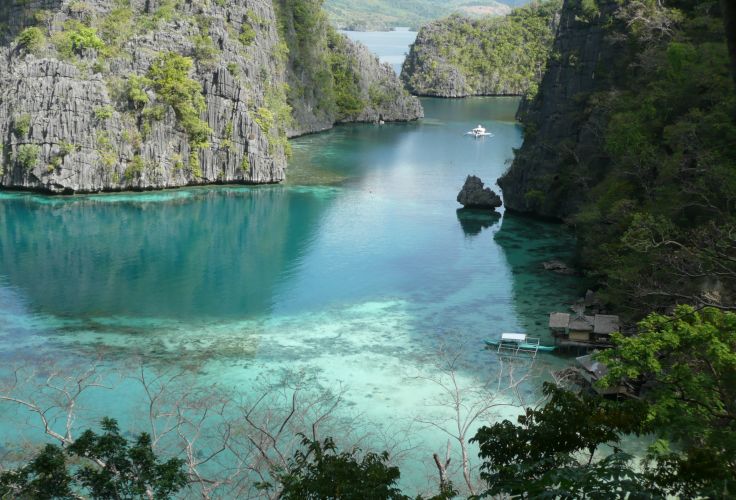
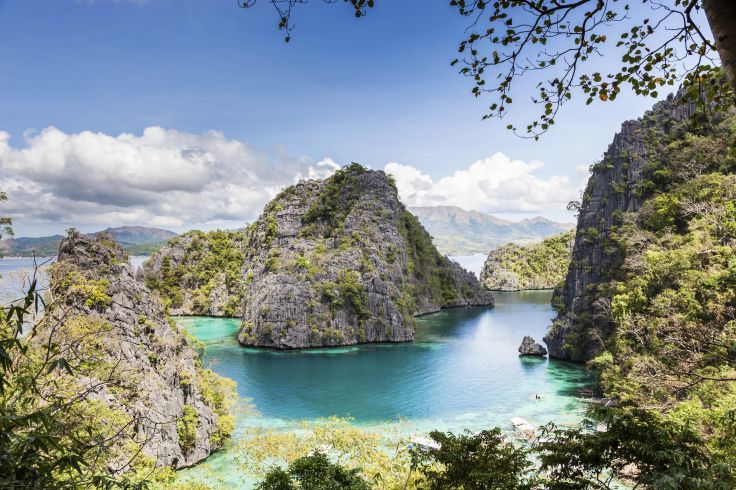
On your itinerary - A day exploring Coron Bay and Coron Island in a banca, which is a traditional outrigger canoe flanked by bamboo floats. Giant cliffs, beaches and lagoons. Grab your mask and snorkel and dive in! You'll be greeted by an explosion of colour: green, blue, purple and yellow corals, and hundreds of fish everywhere. Schools of barracuda, giant turtles. And on Coron Island, jade-coloured lakes, enclosed between high, jagged rock faces.
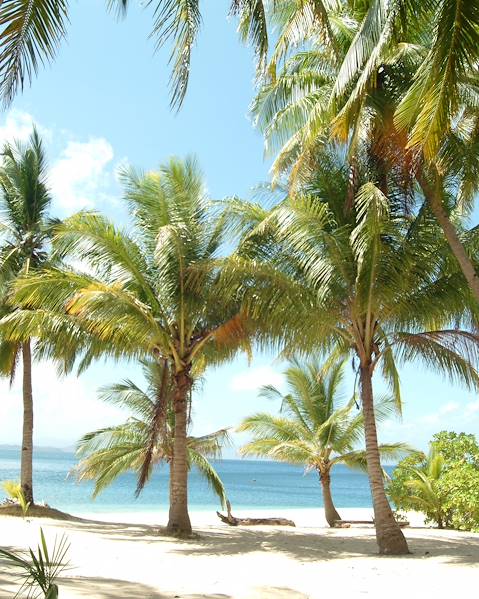
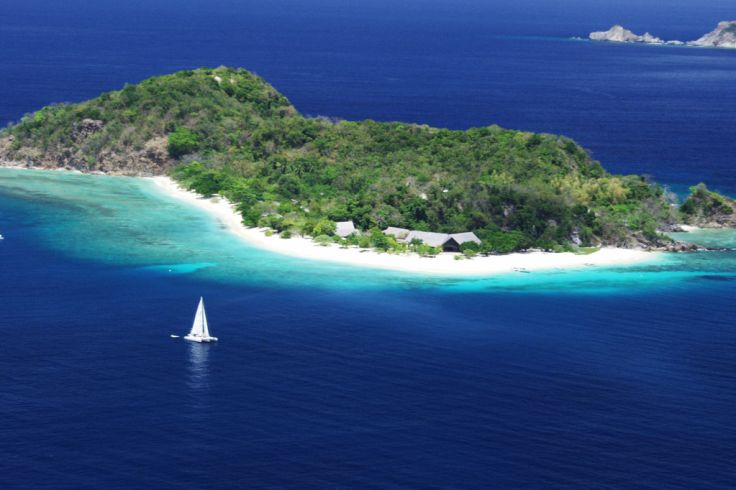
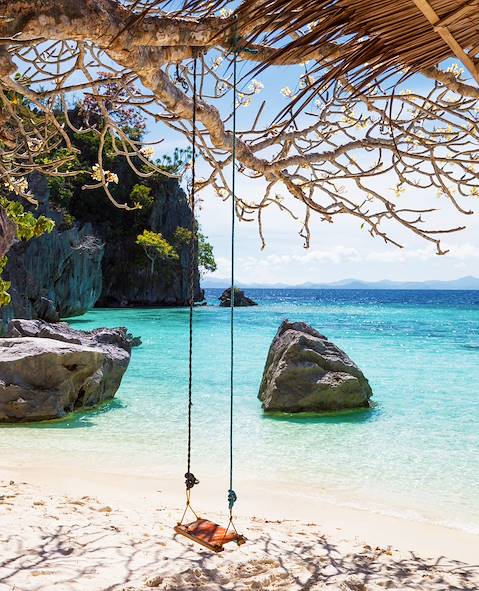
Private transfer by car, then banca, and stay for three nights at your hotel, which is set on the sand of Dimakya, with the turquoise sea as your only horizon. It is a private island with white sandy beaches and crystal clear waters where you can swim with turtles and beautiful fish. An atmosphere like the end of the world.
Flight to Manila and return via Hong Kong. Night on board, arrival the next day.
À la carte
This suggested itinerary can be customisable down to the smallest detail, including duration, stops and content. An à la carte menu of experiences is also available to create a journey that reflects who you are.
WITH TWO EXTRA DAYS
VIGAN, A SPANISH CITY ON THE SOUTH CHINA SEA
A piece of Spain imported to Asia. On the island of Luzon, the Spanish conquest is evident in the streets of the old city of Vigan, which have remained intact. The long white one-storey houses, with shuttered windows and intricately carved wooden balconies, line the cobbled streets. On Plazza Burgos, the town hall stands opposite the bishop’s palace, and the governor’s palace faces Saint Paul’s Cathedral. The houses, churches and palaces elegantly bear witness to the 16th and 18th centuries.
Why visit Philippines with Voyageurs du monde?
Every day, our travel specialists craft bespoke experiences shaped around each traveller's profile, desires and budget. These passionate experts design experiences delivered on the ground by a local network of Concierges and trusted contacts. These fully customisable, made-to-measure trips are complemented by a wide range of high-end services (lounges, 24/7 assistance, travel booklet, app, Wi-Fi, restaurant booking, etc.)
Let us create your tripA few of the advantages of travelling with us to Philippines
- CO2 absorption